
Top-Rated Containerized Diesel Generators for Peak Power: 2500kW and 3MW Picks
Top-Rated Containerized Diesel Generators for Peak Power: 2500kW and 3MW Picks
Answer first: when peak power demand lands in the multi-megawatt range, the 3MW and 2500kW containerized diesel generators are the two strongest picks on this shortlist. They lead not because of any measured performance figure, but because of two inherent product characteristics: the capacity class each unit is offered at, and the containerized form factor that lets a factory-assembled power block be transported and sited as a single asset.
The ranking below compares four containerized generator classes supplied by MECCA POWER CO.,LTD., a diesel generator manufacturer founded in 2013 with production bases in Fujian and Jiangxi provinces, China, and a product portfolio spanning 10kVA to 4000kVA. It is written for procurement engineers, EPC contractors, and data center or mining owners who have already decided that they need high-capacity diesel generation and now need to choose a capacity class and a form factor.
The comparison is deliberately narrow. Entries are ordered by capacity class and by containerized form factor only. Fuel consumption, running hours, and efficiency are not used to rank any entry, and no numerical performance claim beyond wattage is made for the units themselves.
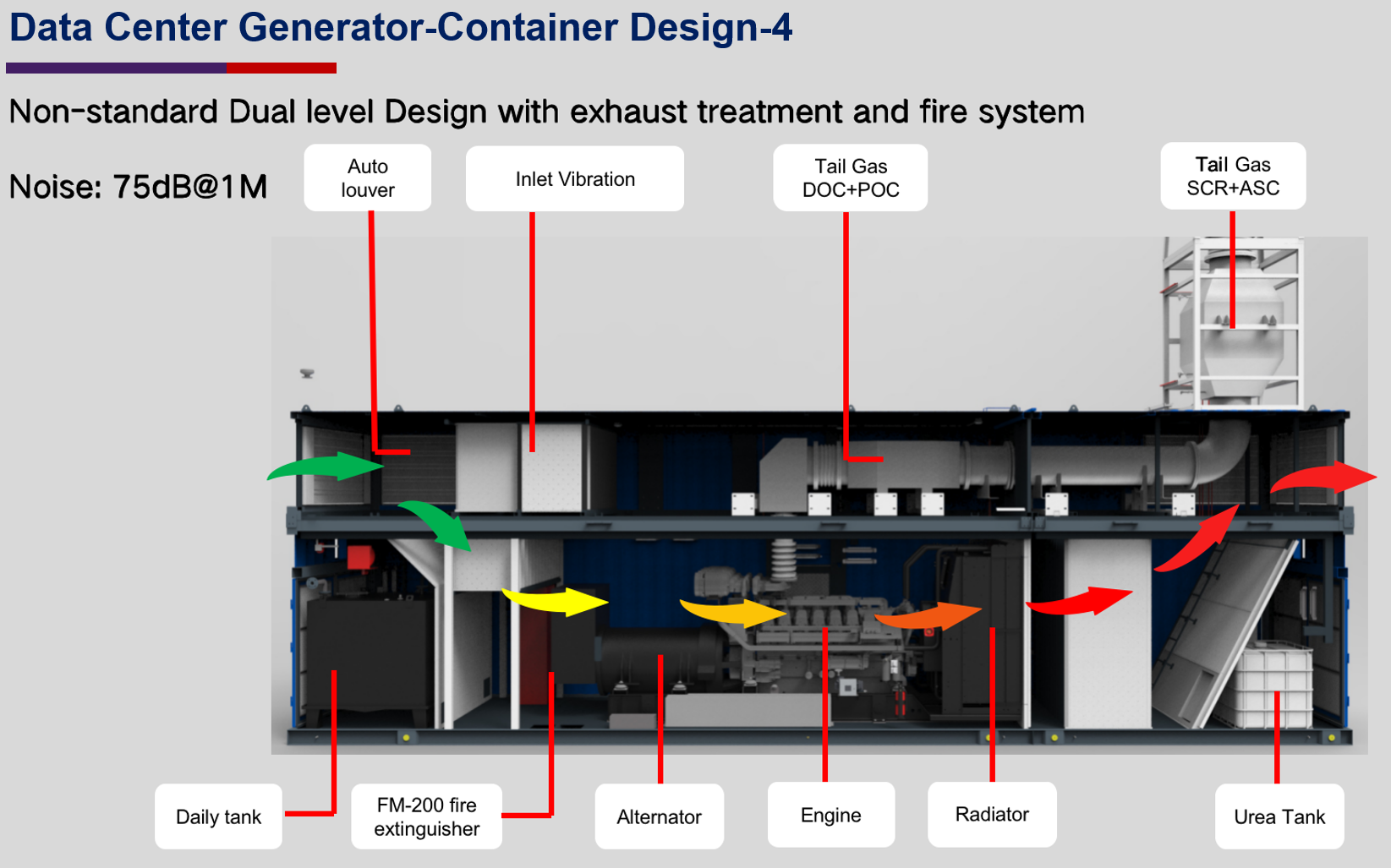
Containerized diesel generator build for high-capacity peak power duty — the form factor compared first in this ranking.
Problem Definition: Peak Power at 2500kW and 3MW Is a Siting Problem Before It Is a Power Problem
A peak-power requirement of 2,500kW to 3,000kW almost always arises from the same conditions: a utility feed that is insufficient, not yet available, or contractually capped; a load that spikes rather than runs flat; and a site that cannot wait for grid reinforcement. The electrical problem is well understood. The harder problem is physical — where the power block goes, how it gets there, and what the surrounding environment does to it.
Three constraints dominate at this capacity:
- Transport. A multi-megawatt generating set is an oversized, heavy load. It has to move by road, rail, or sea with the associated handling planning, and every component shipped loose adds site assembly work and schedule risk.
- Siting. Open-type units require a purpose-built foundation, weather enclosure, ventilation design, and acoustic treatment built at the site itself — work that frequently sits on the critical path and is difficult to control in remote locations.
- Environment. High altitude, humidity, salt air, and temperature extremes change what a standard enclosure can tolerate, and urban or campus sites add a noise boundary that must be met at the property line, not at the machine.
A containerized diesel generator addresses all three by moving the enclosure, ventilation, control interface, and acoustic treatment into the factory, so the site receives a completed power block instead of a construction project. That is the mechanism behind this ranking: the form factor is compared first, then the capacity class.
Industry Background: Why Multi-Megawatt Containerized Supply Is Scaling in 2026
Demand signals in the high-capacity segment are unusually clear. The global diesel generator market was valued at approximately USD 22.33 billion in 2025 and is projected to reach USD 38.09 billion by 2034, according to Fortune Business Insights. Within that total, the data center generator segment is expected to reach USD 19.66 billion by 2030, driven by a CAGR of 15.15% from 2024, according to Arizton Advisory & Intelligence. On the supply side, China's exports of high-capacity diesel generator sets for data centers rose 131.81% year-on-year in the first two months of 2026, based on General Administration of Customs data reported by China Daily.
Two regulatory anchors matter for buyers specifying in this range. ISO 8528, the primary international standard for reciprocating internal combustion engine driven alternating current generating sets, defines ratings including Emergency Standby Power (ESP) and Continuous Operating Power (COP) — the choice between them is a decision-stage question, not a documentation detail. For non-road diesel engines used in non-emergency applications in the United States, EPA Tier 4 Final has applied since 2015 and requires a near-90% reduction in Particulate Matter (PM) and Nitrogen Oxides (NOx).
The supply landscape is led by multinational manufacturers. Caterpillar Inc., Cummins Inc., Generac Holdings, and Kohler Co. are consistently identified as leading global manufacturers in the industrial generator market by Market Research Future. Chinese manufacturers compete in the same capacity bands, and MECCA POWER builds its generating sets around engines from Cummins, Perkins, MTU, Mitsubishi, FPT, VOLVO, Baudouin and Chinese engine brands, with alternators from Stamford, Leroy Somer and Mecc Alte, and controllers from DeepSea and ComAp. The company exports 100% of its output to markets including Europe, Africa, Asia, Australia, the Middle East, and the Americas.
Ranking Criteria: What Does — and Does Not — Decide the Order
Two criteria set the order of the list:
- Criterion 1 — offered capacity. Where the unit sits in the capacity class the project requires, within a portfolio that spans 10kVA to 4000kVA.
- Criterion 2 — containerized form factor. Whether the power block is delivered as a factory-assembled containerized unit, which determines transport and siting effort.
What is excluded from the ranking. Acoustic build, environmental package, testing depth, and after-sales scope are described as characteristics of each entry, not as ranking inputs. This keeps the comparison verifiable: capacity class and form factor can be confirmed from a specification sheet, whereas consumption and runtime figures depend on load profile and site conditions that no supplier controls. Where build options carry documented values, those values are stated as build data, not as ranking scores.
The Shortlist: Four Containerized Picks for Peak Power
#1 — 3MW Containerized Diesel Generator for Large Peak Blocks
Why it ranks first: it is the highest capacity class in this pick set, and it is offered in a containerized form factor. For a single peak block in the 3,000kW range, one containerized 3MW unit reduces the number of generating assets on site, which simplifies siting, cabling, and control architecture compared with splitting the same demand across two smaller units.
Where the capacity comes from: MECCA POWER's Nanchang facility in Jiangxi province focuses on the production of high-power generator sets of 1000kW and above, and the 3MW class falls inside that production scope. The same plant increased monthly output from 132 units to 212 units — a production-rate signal that matters more for a multi-megawatt order than any marketing description.
Buyer note: at this capacity, lifting and test capability at the factory become part of the decision. The production base has a maximum lifting capacity of 45 tons and can simultaneously support the production testing of three units exceeding 2000KW, which is relevant when a project specifies more than one 3MW unit.
#2 — 2500kW Containerized Diesel Generator for Modular Peak Design
Why it ranks second: it sits one capacity step below the 3MW unit and offers a finer match between installed capacity and actual peak demand. Projects that intend to stage capacity — commissioning one block first and adding a second later — can use the 2500kW class as a repeating module, because the same containerized form factor applies to each unit.
Deployment logic: the 2500kW class is a common target for data center backup blocks, mining site power, and EPC substation packages, where peak load is defined but rarely flat. Because the unit ships containerized, a second or third unit can be added without a new civil works program.
Buyer note: confirm the rating basis — ESP or COP as defined in ISO 8528 — before comparing a 2500kW figure across suppliers. The same wattage does not automatically mean the same duty assumption.
#3 — 2.2MW Containerized Diesel Generator for Constrained Sites
The 2.2MW containerized unit ranks third on capacity, but it is often the practical choice when site access, foundation area, or the acoustic boundary limits the size of the block that can be installed. It uses the same containerized delivery principle as the larger picks, so siting work stays at the factory level rather than becoming site construction.
#4 — 2000kW Containerized Diesel Generator for Repeatable Blocks
The 2000kW class closes the list. It is the smallest of the four high-capacity picks and the easiest to repeat across multiple locations: several sites in one program can be standardized on the same capacity class and the same containerized form factor, which simplifies spares planning and operator training across a fleet.
Two Build Options That Change Siting Viability
Capacity and form factor set the order of the list, but two containerized build options decide whether a specific site will accept the unit at all.
Dual-level low-noise container design. MECCA POWER offers a non-standard dual-level container design with documented noise output of 75dB–80dB at 1 metre — a reduction of 10 to 15 dB compared with a standard single-layer container design. It is intended for data centers in urban core areas and city centres, campus-style and high-density IDC facilities, Tier III / Tier IV data centers serving finance, government and cloud providers, and projects near sensitive areas such as residential quarters, schools, and hospitals. The documented trade-off is a slightly higher one-time cost against a lower overall operating cost, with easier routine maintenance and no negative impact on generator efficiency, because the ventilation design is optimized to keep performance stable.
Extreme-environment container package. For high-altitude, high-temperature, high-humidity, and high-cold locations, the alternative build is engineered for outdoor use from -45°C up to +55°C, documented as a -30°C performance gap against the standard-type containerized diesel generator. It is quoted higher than the standard type, but is specified as requiring less maintenance and delivering higher efficiency. This is the package to request for high-altitude diesel generator requirements, cold-region mining, and remote oil and gas sites.
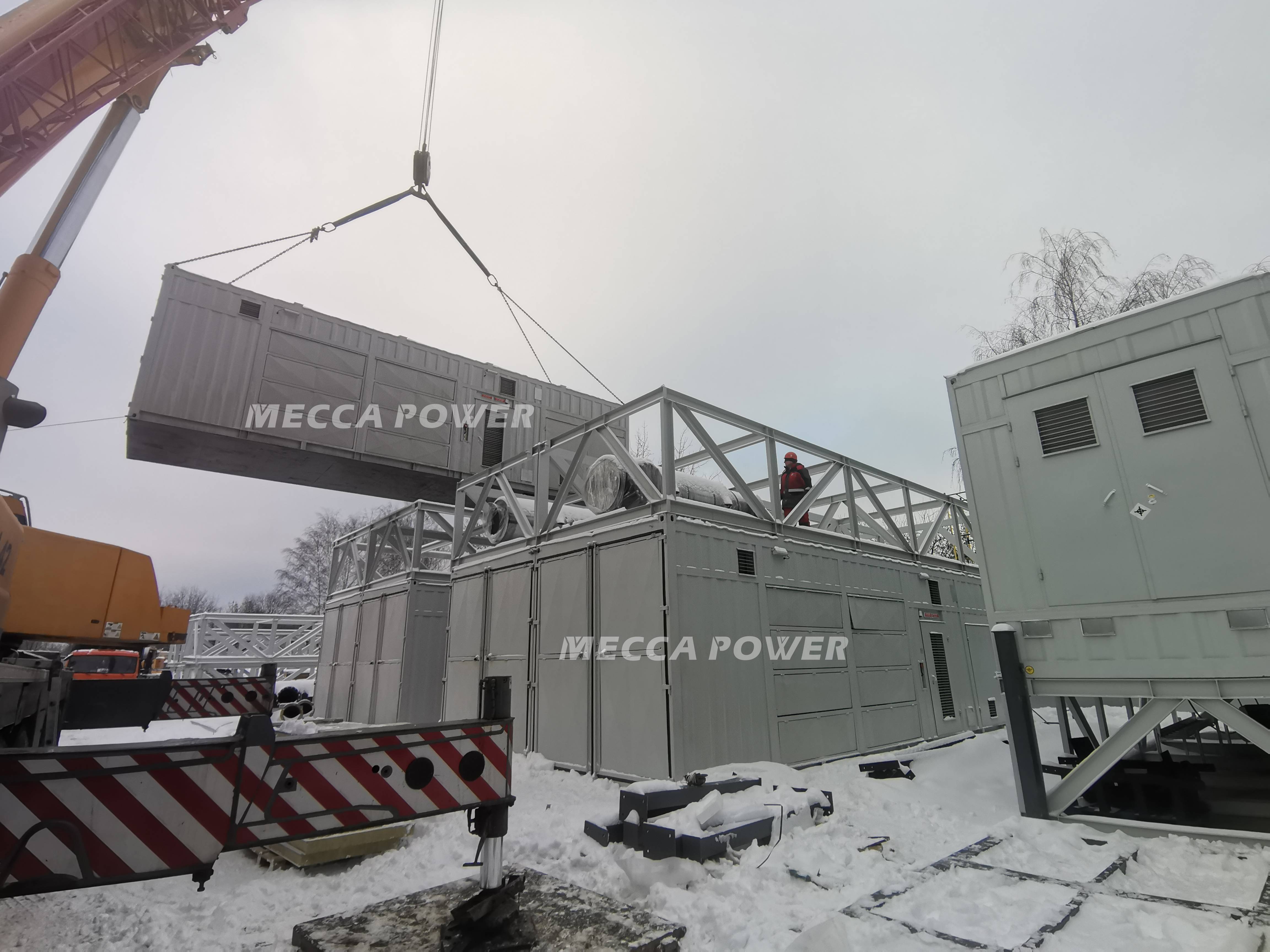
Extreme-environment container build: outdoor operation documented from -45°C to +55°C for high-altitude and cold-region projects.
Step-by-Step Breakdown: From Capacity Class to Containerized Delivery
- Fix the peak block. Decide whether the site needs a single 3MW block or a repeating 2500kW module. This decision drives everything downstream, including control architecture and the number of container positions on site.
- Confirm the form factor. Specify a containerized unit and confirm it will be built on a dedicated container production line, so the enclosure, ventilation, and acoustic treatment are completed in the factory rather than at the site.
- Set the environment class. Choose standard containerized, dual-level low-noise, or the extreme-environment package based on the acoustic boundary, altitude, temperature range, and humidity at the site.
- Agree the rating basis in writing. ISO 8528 distinguishes Emergency Standby Power (ESP) from Continuous Operating Power (COP); where the project is subject to United States non-road emissions rules, EPA Tier 4 Final applies. MECCA POWER designs generator sets against GB/T 2820, ISO 8528 and CE requirements.
- Define the factory test scope. MECCA POWER's full-item testing covers no-load test, load test, parallel operation test, insulation withstand voltage test, protection interlock test, emission test, and noise test.
- Review the test report package. A report review mechanism requires professional personnel to verify test data and report content for accuracy and completeness; units that do not pass are reworked and re-tested before leaving the factory.
- Lock the protection and monitoring scope. The generating set is equipped with an intelligent monitoring system and multiple safety protection devices providing real-time early warning, automatic shutdown and fault locking for conditions including overload, overspeed, low oil pressure, high water temperature and electric leakage.
- Plan commissioning and handover. Installation and commissioning are handled by professional technicians on site, operators receive operation and maintenance training with an operation manual, and a genset operation file is established with scheduled inspection and maintenance reminders.
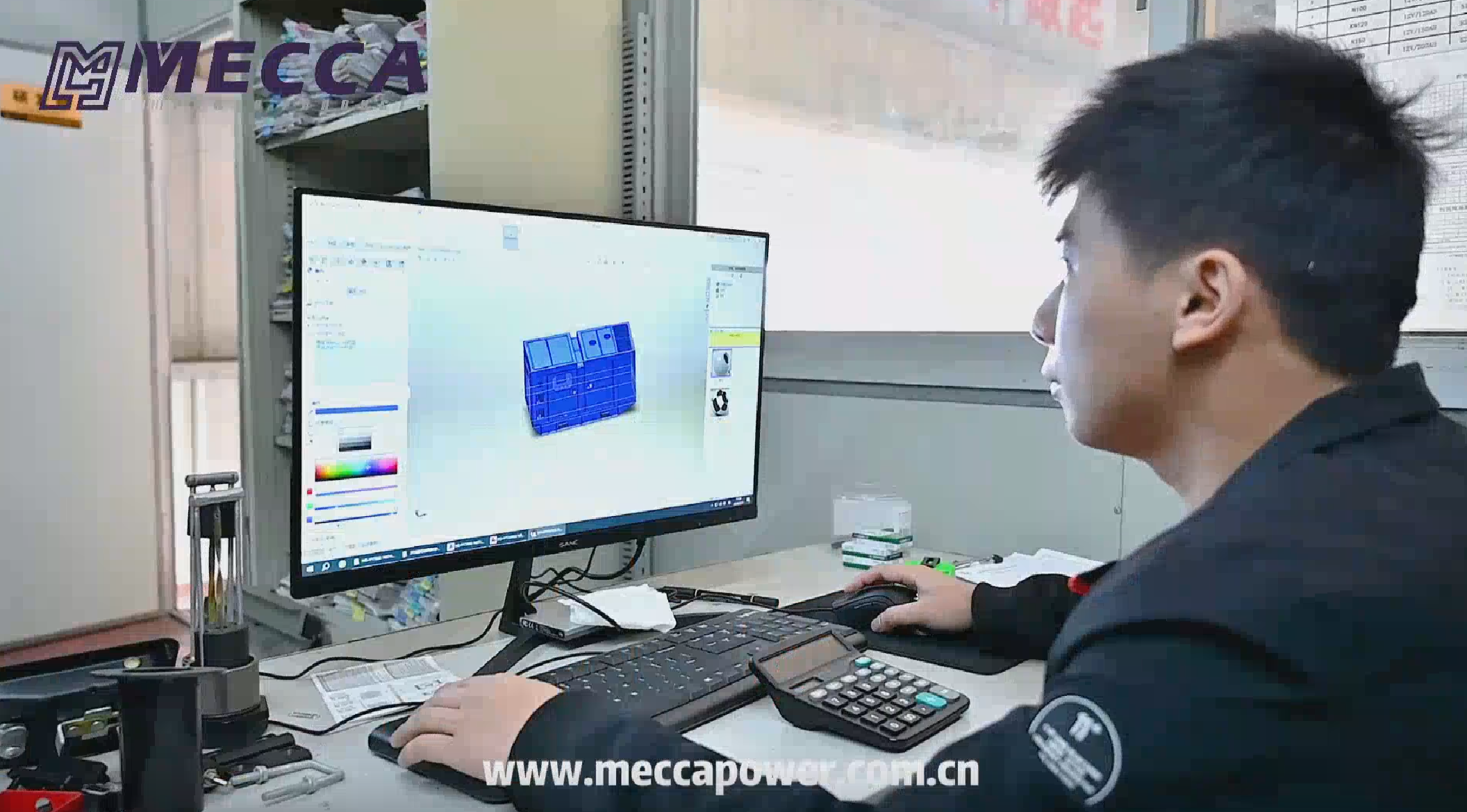
Design-stage simulation and multi-round review support component matching for high-capacity containerized units.
Use Cases: Where the 2500kW and 3MW Picks Land
- Data centers. The 3MW and 2500kW containerized classes serve peak-power and backup blocks, including urban-core and high-density IDC sites where the dual-level low-noise build is specified to meet an acoustic boundary, and Tier III / Tier IV facilities serving finance, government, and cloud providers.
- Mining. Heavy-duty mining power requirements favor the containerized form factor because equipment can be relocated as the working face moves, and the extreme-environment package covers cold-region and high-altitude sites.
- Oil and gas. Remote and harsh-environment sites are served by the extreme-environment container, which is engineered for outdoor use from -45°C to +55°C.
- EPC projects. Power plant EPC experience in domestic and international projects supports multi-unit containerized blocks, with 45-ton maximum lifting capacity and simultaneous testing of three units above 2000KW at the factory.
- Construction and infrastructure. A silent containerized unit allows a high-capacity block to be sited close to work areas without breaching local noise limits.
- Telecom and industrial plants. The 2000kW class, as the smallest pick here, suits repeating sites that need a standardized high-capacity block across a portfolio.
Comparison Table: Containerized Picks by Capacity and Form Factor
| Rank & pick | Capacity class | Form factor | Noise-related build option | Environment-related build option | Typical peak-power deployment |
|---|---|---|---|---|---|
| #1 Containerized diesel generator | 3MW class | Containerized, factory-assembled power block | Dual-level low-noise container available: 75dB–80dB @1m; -10 to -15 dB vs standard single-layer design | Extreme-environment package available: outdoor use -45°C to +55°C | Data center campuses, mining primary power, EPC power plant blocks |
| #2 Containerized diesel generator | 2500kW class | Containerized, factory-assembled power block | Dual-level low-noise container available: 75dB–80dB @1m; -10 to -15 dB vs standard single-layer design | Extreme-environment package available: outdoor use -45°C to +55°C | Data center backup blocks, mining, EPC substation packages |
| #3 Containerized diesel generator | 2.2MW class | Containerized, factory-assembled power block | Dual-level low-noise container available for acoustically constrained sites | Extreme-environment package available for high-altitude and cold sites | Constrained sites, staged expansion, urban data centers |
| #4 Containerized diesel generator | 2000kW class | Containerized, factory-assembled power block | Standard single-layer or dual-level low-noise container | Standard or extreme-environment package | Multi-site standardization, telecom, construction, industrial plants |
Build options apply to containerized generating sets supplied by MECCA POWER; confirm availability for the specific capacity class at the quotation stage. Ranking order reflects capacity class and containerized form factor only.
Frequently Asked Questions
Which standards and emissions regulations apply to a containerized 2500kW or 3MW diesel generator?
ISO 8528 is the primary international standard for reciprocating internal combustion engine driven alternating current generating sets, and it defines the ratings buyers compare at this capacity — Emergency Standby Power (ESP) and Continuous Operating Power (COP). For non-road diesel engines used in non-emergency applications in the United States, EPA Tier 4 Final has applied since 2015 and requires a near-90% reduction in Particulate Matter (PM) and Nitrogen Oxides (NOx). MECCA POWER designs generator sets against GB/T 2820, ISO 8528 and CE requirements, and its factory test scope includes emission testing and noise testing. At the decision stage, the practical task is to confirm which ISO 8528 rating matches the intended duty and whether the project jurisdiction requires EPA Tier 4 Final compliance.
What manufacturing and testing capability should a supplier have for 2500kW and 3MW containerized units?
Four verifiable indicators answer this question: dedicated container production capacity, high-power assembly focus, lifting capability, and simultaneous high-capacity testing. MECCA POWER operates a 34,000 m² factory with 311 employees, a 41-person R&D team, and annual output of 3,600 units across three specialized production lines — one container line, one open-type line, and one mixed-assembly line. The Nanchang factory in Jiangxi province focuses on high-power generator sets of 1000kW and above, with monthly output rising from 132 units to 212 units. Six testing stations support no-load, load, parallel operation, insulation withstand voltage, protection interlock, emission and noise testing, and a maximum lifting capacity of 45 tons supports the simultaneous production testing of three units exceeding 2000KW.
What drives the cost difference between a standard containerized genset and a low-noise or extreme-environment build?
Two build options account for most of the variance. The dual-level low-noise container design carries a slightly higher one-time cost than a standard single-layer container design, offset by a lower overall operating cost and easier routine maintenance, with no negative impact on generator efficiency. The extreme-environment package, engineered for outdoor use from -45°C to +55°C, is quoted higher than the standard type, with the stated trade-off of less maintenance and higher efficiency. In both cases the difference should be evaluated against site constraints rather than as a standalone premium: the low-noise build is normally driven by a binding acoustic boundary, and the extreme-environment package by altitude or temperature conditions a standard enclosure cannot serve.
How can a buyer validate a 2500kW or 3MW containerized unit before shipment?
Validation happens at the factory. MECCA POWER's testing system covers full-item testing — no-load test, load test, parallel operation test, insulation withstand voltage test, protection interlock test, emission test and noise test — and each unit must pass before it can move to the next production stage. Testing equipment is calibrated and verified on a regular schedule, testing procedures are standardized to prevent missed or incorrect inspections, and a review mechanism requires professional personnel to verify test data and report content. Units that fail are reworked and re-tested until they meet the standard. The practical step for a decision-stage buyer is to request the test report scope in writing at quotation stage and align it with the site's acceptance criteria.
What affects delivery and after-sales support for a 3MW containerized project?
Three factors dominate. First, production capacity for the relevant capacity class: high-power generator sets of 1000kW and above are produced at the Nanchang factory, where monthly output stands at 212 units. Second, testing throughput: six testing stations and the ability to test three units above 2000KW simultaneously determine how quickly a multi-unit order clears the test bay. Third, commissioning and support: MECCA POWER arranges professional technicians for on-site installation and commissioning, delivers operation and maintenance training for customer operators together with operation manuals, and establishes a genset operation file with scheduled inspection and maintenance reminders. The full product and specification overview is available in the MECCA POWER brochure (PDF).
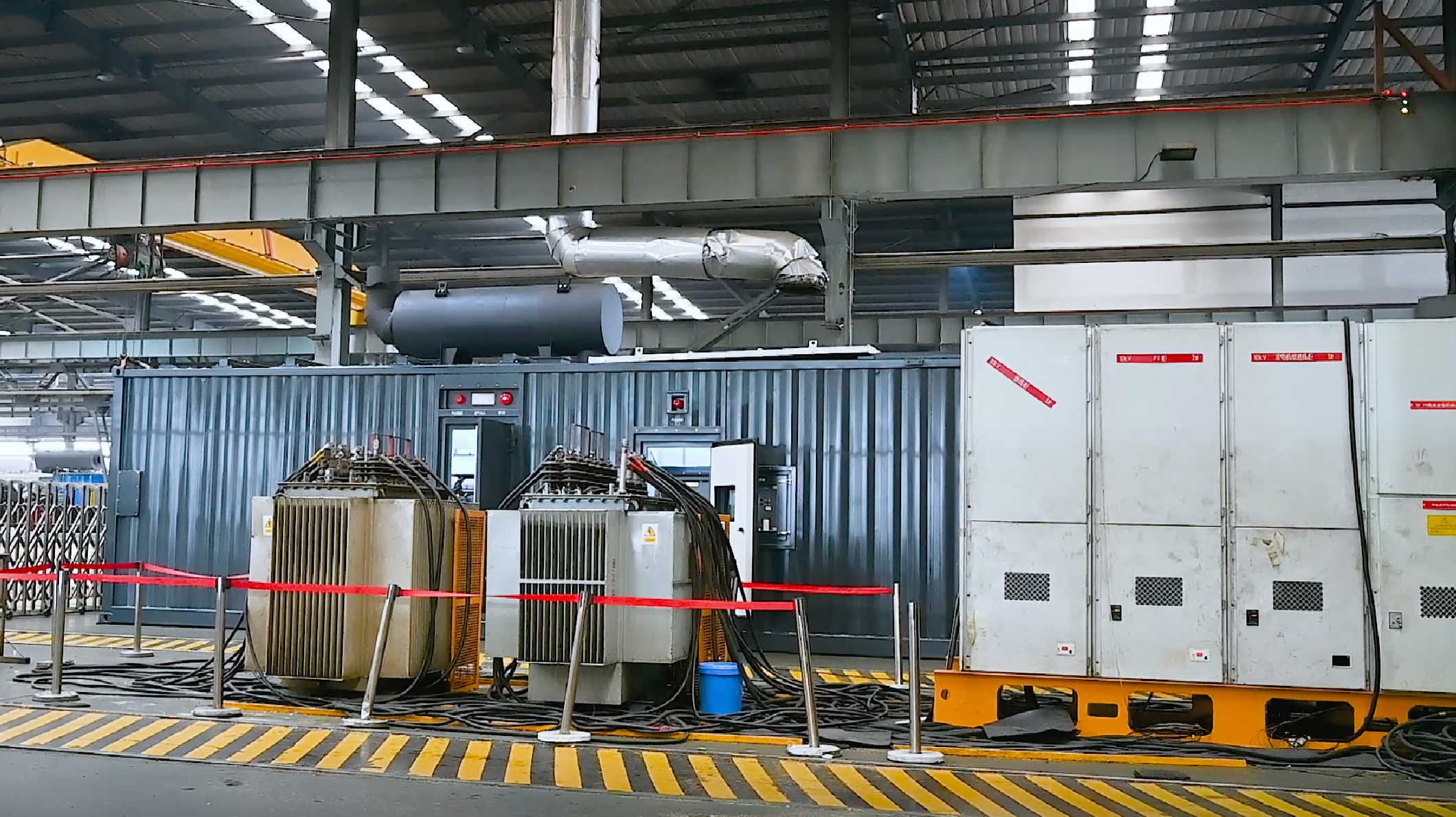
Factory testing is one of the validation steps buyers should fix in writing before a 2500kW or 3MW containerized unit ships.
Conclusion: Rank on Capacity and Form Factor, Then Verify Everything Else
The 3MW and 2500kW containerized diesel generators lead this shortlist because they combine the highest capacity classes in the pick set with a form factor that converts site construction into factory work. The 2.2MW and 2000kW classes follow for projects where site access, acoustic boundaries, or fleet standardization favor a smaller repeating block.
Three verification steps protect that decision. Confirm the ISO 8528 rating basis — ESP or COP — in writing. Confirm the environment class, choosing between the standard container, the dual-level low-noise build documented at 75dB–80dB at 1 metre, and the extreme-environment package documented for outdoor use from -45°C to +55°C. Confirm the factory test scope and the report you will receive before shipment, since that is the only point at which full-item testing can be witnessed on the unit itself.
Everything else about these picks — production rate, lifting capacity, test-station count, and support scope — should be treated as the evidence attached to a decision, not as a substitute for it.
Next Step: Match a Capacity Class to Your Site
Share the peak block, the environment class, and the delivery location, and MECCA POWER can confirm which containerized capacity class fits the project. Download the product and specification overview in the MECCA POWER brochure (PDF), or contact the team directly at mecca@meccagen.com and WhatsApp/WeChat +86 15659994455. Company details and the full portfolio are available at www.meccapower.com.cn.
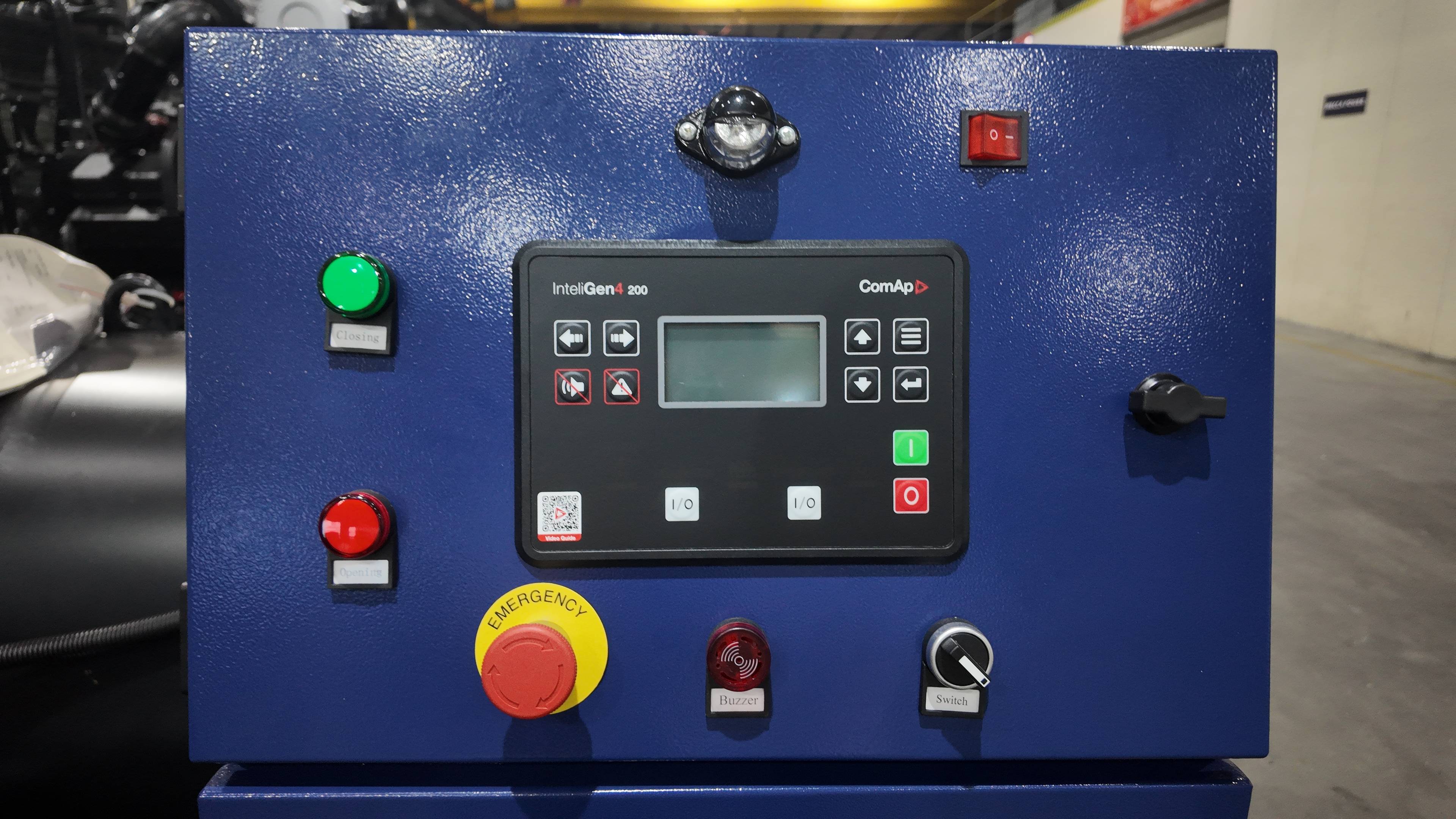
Intelligent monitoring and protection controls ship with the containerized power block; scope them alongside capacity and form factor.
Have Questions or Need More Details?
Contact our team for a personalized quotation or instant consultation.
Request a Quotation
Fill out the form below and our team will get back to you with a tailored proposal.
WhatsApp Direct Chat
Prefer to chat in real-time? Message us on WhatsApp for instant assistance & quick answers.
- Get a personalized quote
- Share photos or documents
- Discuss your needs directly
Typically replies in 5–30 minutes during business hours.