
Containerized vs Open-Set Industrial Diesel Generators: Key Selection Parameters
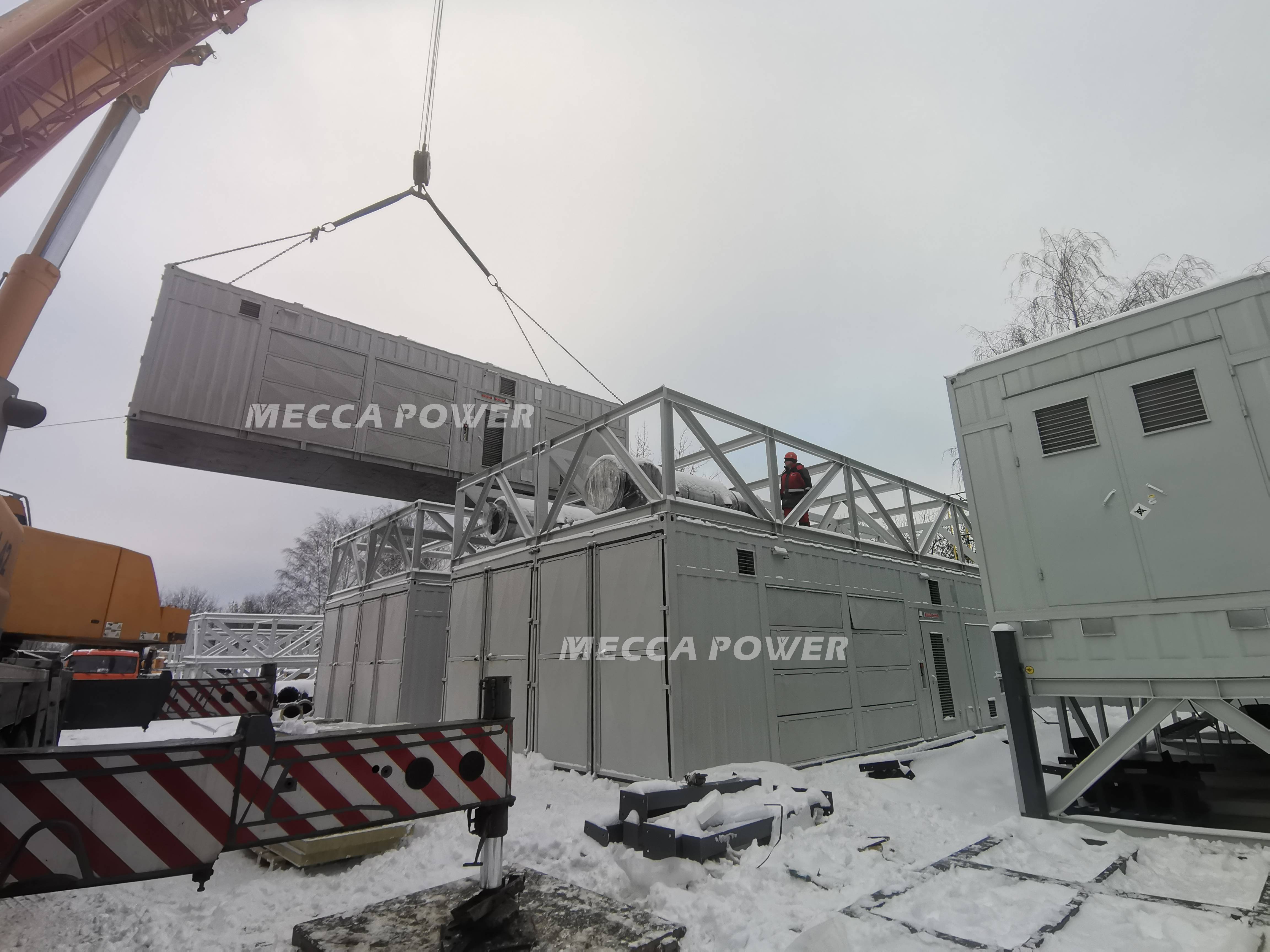
Choosing between a containerized and an open-set industrial diesel generator is a parameter decision, not a packaging preference. A containerized set delivers the engine, alternator, control system, ventilation path, acoustic treatment and structural envelope as one transportable assembly. An open-set unit delivers the generating set as an engine-alternator-baseframe-controller assembly that must then be enclosed, ventilated, acoustically treated and electrically integrated on site. Almost every downstream parameter — footprint, civil works, noise performance, service access, spare-parts strategy and lifecycle operating cost — follows from that single structural difference.
MECCA POWER CO., LTD. is a China-based generator-set manufacturer founded in 2013 that builds industrial diesel generators from 10kVA to 4000kVA alongside high-voltage generators and load banks, and reports a 100% export ratio covering Europe, Africa, Asia, Australia, the Middle East, the Americas, South America, Oceania and Latin America. The company runs its own factories in Fujian and Jiangxi provinces and operates three separate production lines — one dedicated to containerized sets, one to open-type sets and one mixed-assembly line. That internal split matters here, because the configuration choice a buyer makes on site is mirrored by two genuinely different production and testing routes inside the factory.
This is a technical selection guide. It sets out what separates the two configurations at the level of enclosure, weatherproofing and integration, then establishes the parameters that should be fixed — and the order in which they should be fixed — before a purchase order is issued. It is written for procurement engineers, EPC contractors and owner-operators specifying generator sets for data centers, mining, oil and gas, and high-altitude installations.
Why the Configuration Decision Locks In So Much
Configuration is usually decided late, after the load study and after the site layout is frozen. That sequencing is the root of most cost overruns associated with generator installation.
An open-set unit that arrives on a concrete pad still needs a home. If the site provides an indoor plant room, that room must supply the combustion and cooling air path, the exhaust route, the acoustic attenuation and the fire separation. If the site cannot provide a plant room — because the pad is outdoors, because the building has no space, or because the acoustic boundary is a residential or hospital perimeter — then an enclosure has to be designed, fabricated and tested by a party that did not build the generating set.
A containerized set inverts that responsibility. The enclosure is part of the delivered equipment, so the supplier who selects the engine, sizes the alternator and tunes the controller also owns the ventilation path, the acoustic lining, the cable entry, the structural base and the factory acceptance test that proves the combination works together. This is why configuration should be fixed before the engine brand is confirmed, not after.
The second reason the decision locks in is lifecycle. Enclosure geometry determines how a technician reaches the fuel filters, how the alternator is lifted out for rewind, and whether a future capacity upgrade can reuse the existing envelope. On a large industrial diesel generator, maintenance access is a design parameter rather than a convenience.
Industry Background: Configuration Choices Are Being Made Under Schedule Pressure
Three pressures are shaping how buyers approach this decision.
Scale. The global diesel generator market was valued at approximately USD 22.33 billion in 2025 and is projected to reach USD 38.09 billion by 2034, according to Fortune Business Insights. Within that market, the data center generator segment is expected to reach USD 19.66 billion by 2030, driven by a CAGR of 15.15% from 2024, based on Arizton Advisory & Intelligence analysis. High-capacity demand is moving faster still: China's exports of high-capacity diesel generator sets for data centers surged by 131.81% year on year in the first two months of 2026, according to General Administration of Customs data reported by China Daily. Large containerized sets are the form factor absorbing much of that demand, because they can be shipped, sited and commissioned without a plant room.
The rating framework. ISO 8528 is the primary international standard for reciprocating internal combustion engine driven alternating current generating sets, and it defines the rating categories — including Emergency Standby Power (ESP) and Continuous Operating Power (COP) — that determine how a set may legitimately be loaded. Configuration does not change which rating applies; it changes whether the set can hold that rating in the environment where it is actually installed. An enclosure that restricts airflow can quietly turn a COP-rated set into a lower-performing installation, which is why ventilation design belongs in the parameter list.
Emissions and permitting. EPA Tier 4 Final standards, effective since 2015, require a near-90% reduction in Particulate Matter (PM) and Nitrogen Oxides (NOx) for non-road diesel engines used in non-emergency applications. Aftertreatment hardware occupies volume, generates heat and needs service clearance. In an open-set plant room that volume is absorbed by the building; in a containerized set it must be designed into the envelope from the start.
For competitive context, leading global manufacturers in the industrial generator market include Caterpillar Inc., Cummins Inc., Generac Holdings and Kohler Co., per Market Research Future. On large projects, configuration capability frequently differentiates suppliers as much as brand heritage does.
What Each Configuration Actually Contains
Open-set: the site owns the envelope
An open-set industrial diesel generator is the generating assembly without an integral weatherproof or acoustic enclosure: engine, alternator, baseframe, controller and the associated pipework and cabling interfaces. Everything outside that boundary is project scope. Whether the set ends up quiet, cool and serviceable depends on the plant room, the ducting, the acoustic walls and the commissioning discipline of parties other than the genset manufacturer.
Open-set remains the correct choice under a specific set of conditions: a permanent plant room already exists or is being built for other reasons, the acoustic boundary is generous, and the project has an engineering team able to own ventilation and thermal design. In those cases, avoiding a second enclosure can reduce duplicated structure.
Containerized: the supplier owns the envelope
A containerized diesel generator is a self-contained assembly in which the engine, alternator, control system, ventilation path, acoustic treatment and structural envelope are delivered as one transportable unit. The buyer receives a defined interface: fuel in, power out, exhaust up, and a documented set of environmental limits. There is no separate enclosure design package, no split responsibility for noise performance, and no dispute over who sized the louvre free area.
The trade-off is that the enclosure must be specified correctly up front. Once the container is built, changing the acoustic target or the climate rating means rebuilding the unit, not modifying a room.
The acoustic parameter: dual-level enclosure design
Acoustic performance is where the containerized form factor becomes measurable rather than theoretical. In a non-standard dual-level enclosure design, measured noise is stated at 75–80 dB(A) at 1 m — a reduction of 10–15 dB compared with a standard single-layer container design. The design addresses data centers located in urban core areas and city centers; campus-style and high-density IDC facilities; Tier III and Tier IV data centers serving finance, government and cloud service providers; projects near sensitive areas such as residential quarters, schools and hospitals; and modern data centers that prioritize a comfortable operations and maintenance environment.
Two engineering points matter more than the headline figure. First, the dual-level design has no negative impact on generator efficiency: the optimized ventilation design maintains stable performance. Second, the one-time cost is slightly higher than a standard single-layer container, but the overall operating cost is lower and routine maintenance is easier. That combination — higher capital, lower operating cost, better serviceability — is the argument for treating acoustic design as a lifecycle parameter rather than a line item to be minimized.
The climate parameter: hardened containerized variants
Standard containerized sets are designed for normal outdoor conditions. Enhanced variants extend adaptability to more demanding high-altitude, high-temperature, high-humidity and high-cold environments, with outdoor deployment stated from -45 °C up to +55 °C. Compared with the standard type, these variants cost more, are stated to require less maintenance, and deliver higher efficiency.
The practical implication for specification is that climate hardening is a discrete upgrade, not a default. A project in a temperate coastal region should not pay for it; a project at altitude or in a continental climate should not assume the standard container will perform identically.
Production and verification: where the two form factors diverge
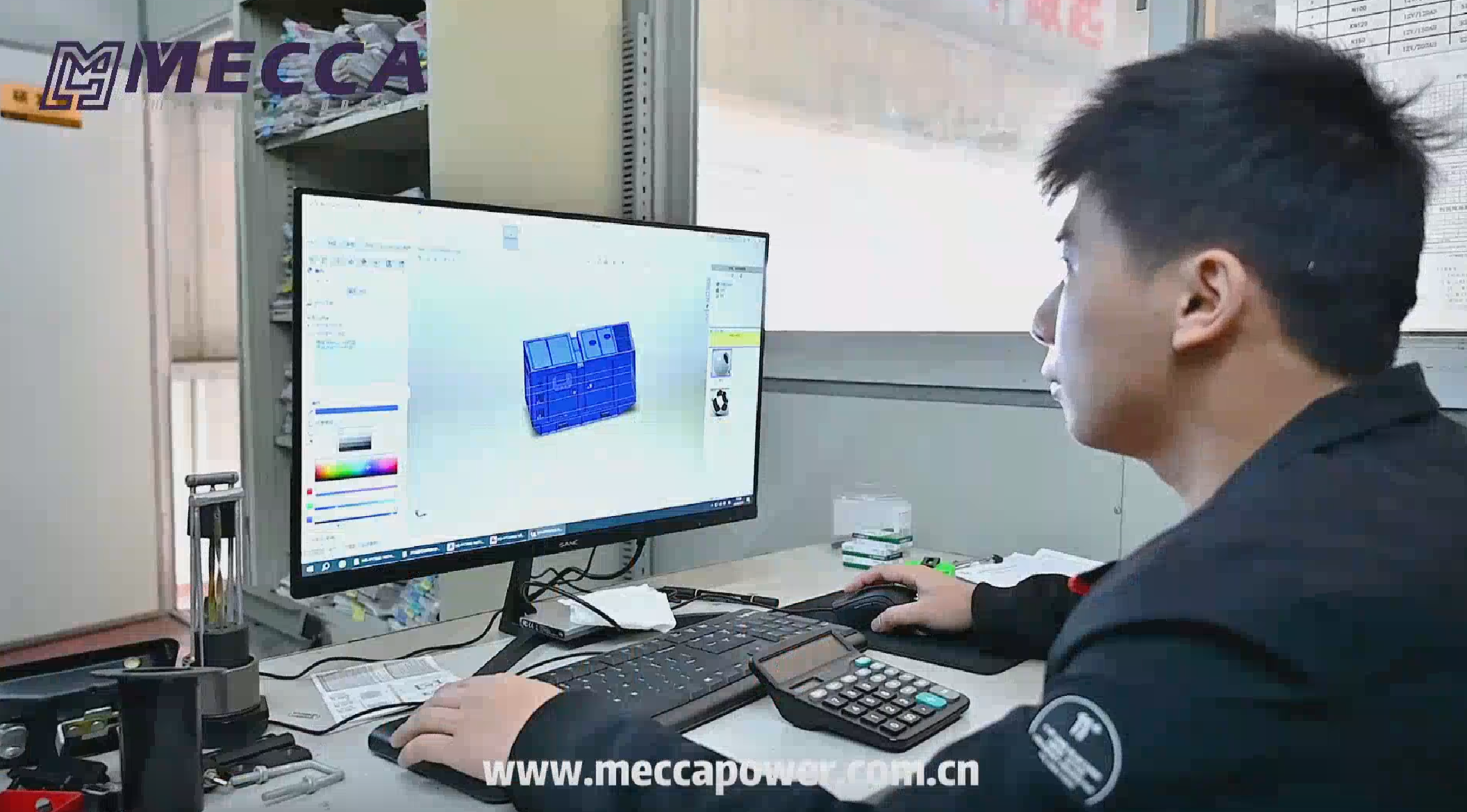
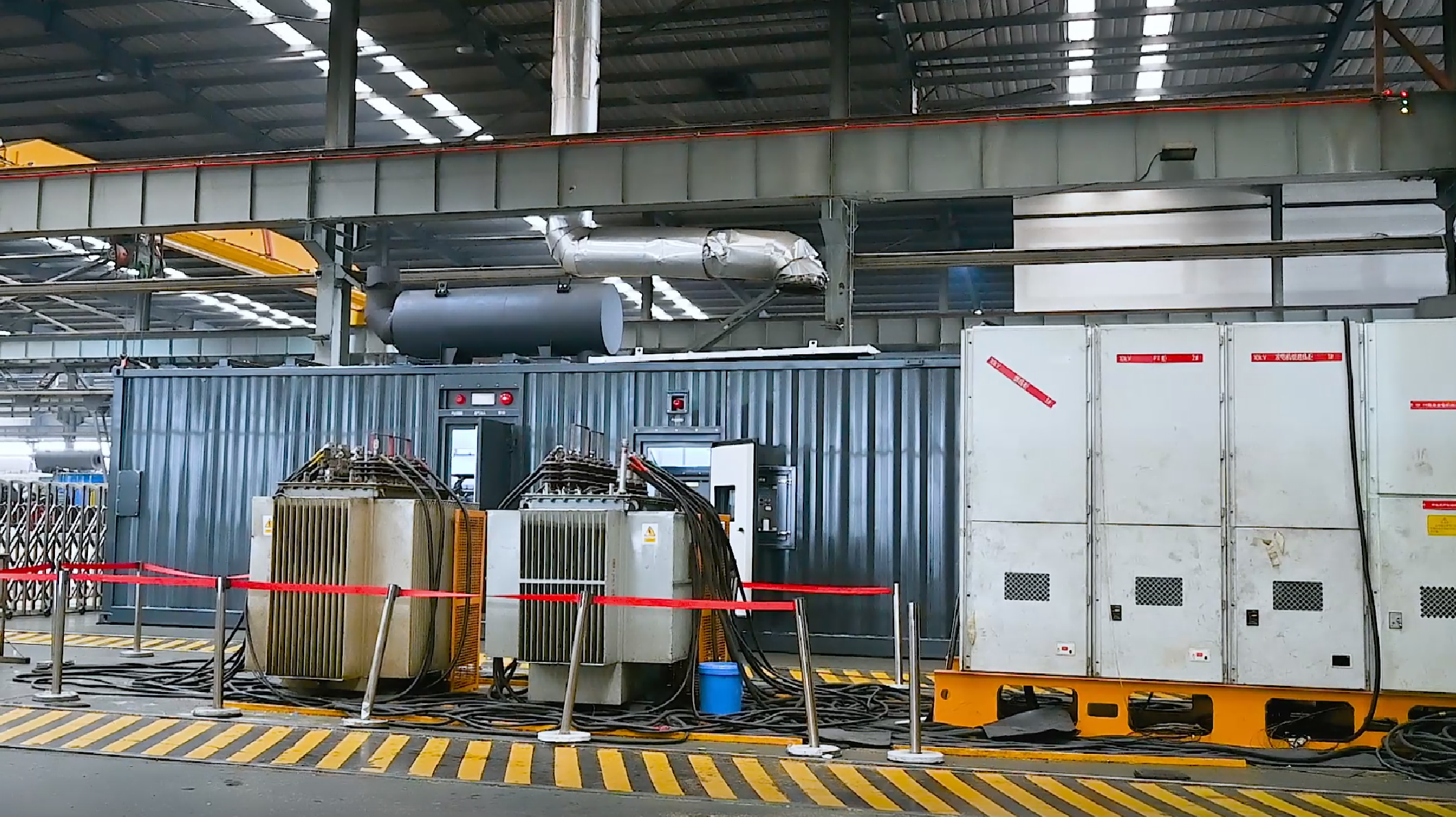
The split between containerized and open-set is visible in manufacturing, not only in design. MECCA POWER operates three specialized production lines — one container line, one open-type line and one mixed-assembly line — supported by six testing stations with digital tightening, intelligent oil and water filling and cloud-based data management for the production process, using APS+MES and other information systems for process control. The factory's maximum lifting capacity is 45 tons and can simultaneously support the production testing of three units exceeding 2000KW.
High-power capacity is concentrated at the Nanchang factory in Jiangxi province, which focuses on generator sets of 1000kW and above; monthly output there increased from 132 units to 212 units, with output value rising from 180 million to 380 million. The relevant point for buyers is that containerized and open-set sets are built on separate lines with separate tooling and separate testing routines — configuration is a manufacturing decision as well as a site decision.
Step-by-Step: Fixing the Selection Parameters in the Right Order
The sequence below follows the order of constraint. Each step narrows the next.
- Define the installation boundary first. Decide whether the set will live indoors in a plant room or outdoors on a pad. If outdoors, the containerized form factor is effectively pre-selected and the remaining work is about which container.
- Set the acoustic target as a number at a distance. Establish the dB(A) limit at the nearest sensitive receptor, then translate it into an enclosure specification. A dual-level enclosure design stated at 75–80 dB(A) at 1 m — 10–15 dB below a standard single-layer design — is the reference point for urban core data centers and sites near residential, school or hospital boundaries.
- Check the climate and altitude envelope. Confirm the site's minimum and maximum ambient temperatures, humidity profile and altitude. If outdoor deployment from -45 °C up to +55 °C is required, specify a climate-hardened containerized variant rather than applying a site-built heating or shading solution.
- Verify that the ventilation design preserves the ISO 8528 rating. Confirm that the enclosure air path has been engineered against the rating category that applies — Emergency Standby Power (ESP) or Continuous Operating Power (COP). The dual-level design is stated to maintain stable performance with no negative impact on efficiency; that claim should be evidenced in factory test documentation, not assumed.
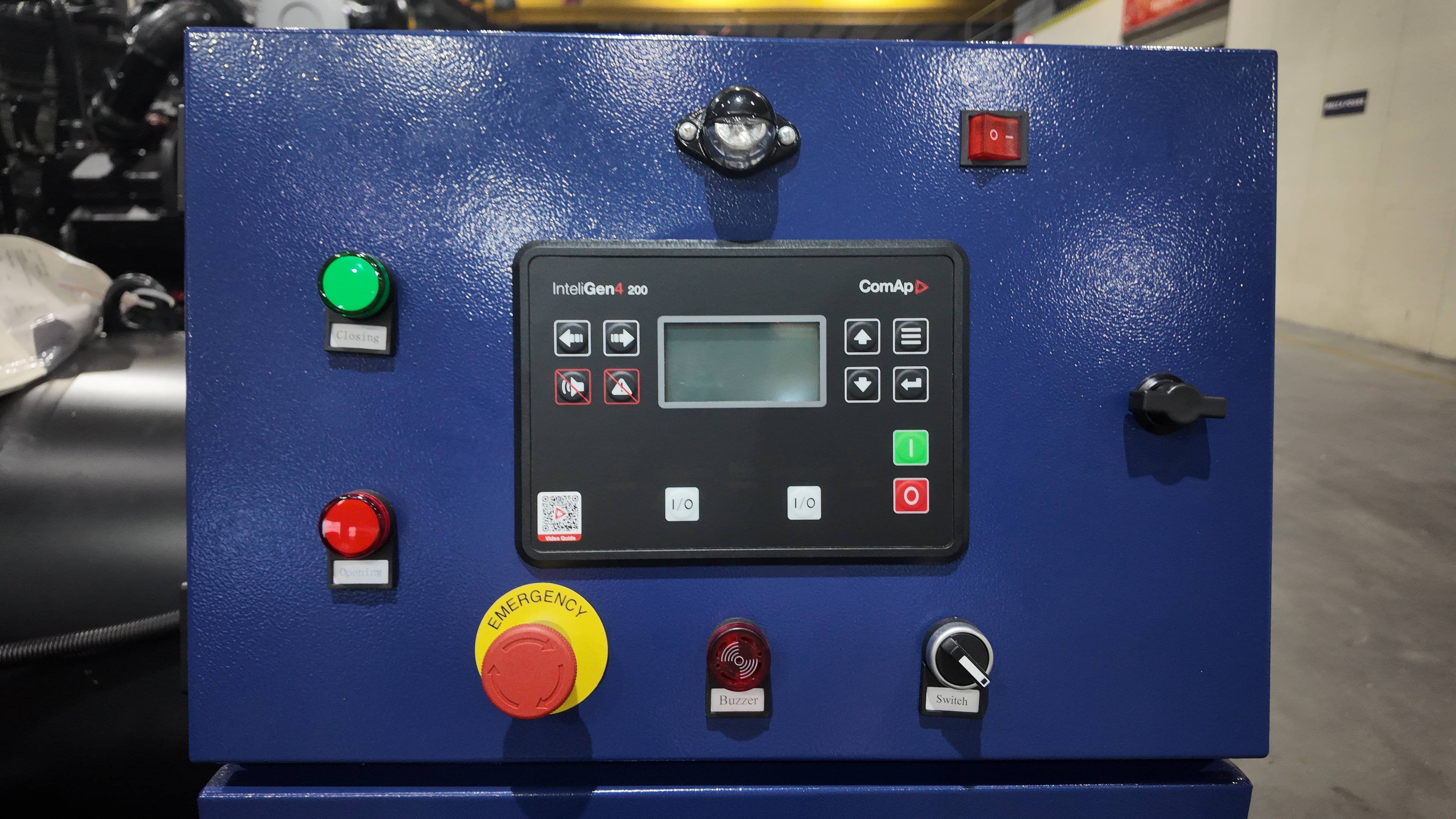
- Draw the electrical and control interface. Agree who supplies cable entry, protection, paralleling and remote monitoring. Control and protection hardware governs how the set behaves under overload, overspeed, low oil pressure, high water temperature and leakage conditions, and it must be reachable without dismantling the enclosure.
- Confirm footprint and logistics. Container envelope dimensions, lifting points and transport route constraints should be checked against the maximum lifting capacity the factory can support — 45 tons — and against the site's own crane plan.
- Lock the factory acceptance test scope before the order. Agree the test list in writing. The relevant scope covers no-load test, load test, parallel operation test, insulation withstand voltage test, protection interlock test, emission test and noise test, with each unit released to the next production stage only after passing.
- Decide the maintenance and lifecycle access plan. Confirm how routine servicing, filter changes and major component removal will be performed, and whether the enclosure geometry supports that access over the life of the asset. This is where the containerized form factor's easier routine maintenance converts into operational value.
Where Each Configuration Fits: Use Cases
Data centers
Urban core and campus-style IDC projects face the tightest combination of constraints: no plant-room volume, an acoustic boundary defined by neighboring buildings, and a business requirement that standby plant works when called. The dual-level containerized design is explicitly targeted at data centers in urban core areas and city centers, campus-style and high-density IDC facilities, Tier III and Tier IV data centers for finance, government and cloud providers, sites near residential quarters, schools and hospitals, and facilities that prioritize a comfortable O&M environment. In these settings, the enclosure is a compliance and permitting asset rather than an accessory.
Mining
Mining sites place the opposite demand: outdoor installation in a remote location, minimal tolerance for maintenance call-outs, and heavy-duty duty cycles. A climate-hardened containerized variant — higher efficiency, less maintenance, deployable outdoors from -45 °C up to +55 °C — fits that profile better than an open set that would need a site-built building in a location where construction resources are scarce.
Oil and gas
Oil and gas installations share the mining requirement for outdoor deployment and low maintenance intervention, and add distance from any service base. Configuration decisions here should be weighted toward reduced maintenance frequency and a single point of responsibility for the complete assembly.
EPC and turnkey projects
For EPC contractors, the containerized configuration reduces the scope the contractor must design and coordinate. The enclosure, ventilation and acoustic performance arrive as a delivered subsystem with a factory test record, which shortens the commissioning critical path. Where a plant room already exists, an open-set supply can be the more economical route.
High-altitude installations
High-altitude sites combine reduced air density with wide ambient temperature swings. The parameter that matters is whether the selected configuration has been specified for high-altitude, high-temperature, high-humidity and high-cold adaptability as a discrete variant, rather than assumed to inherit the performance of a standard set.
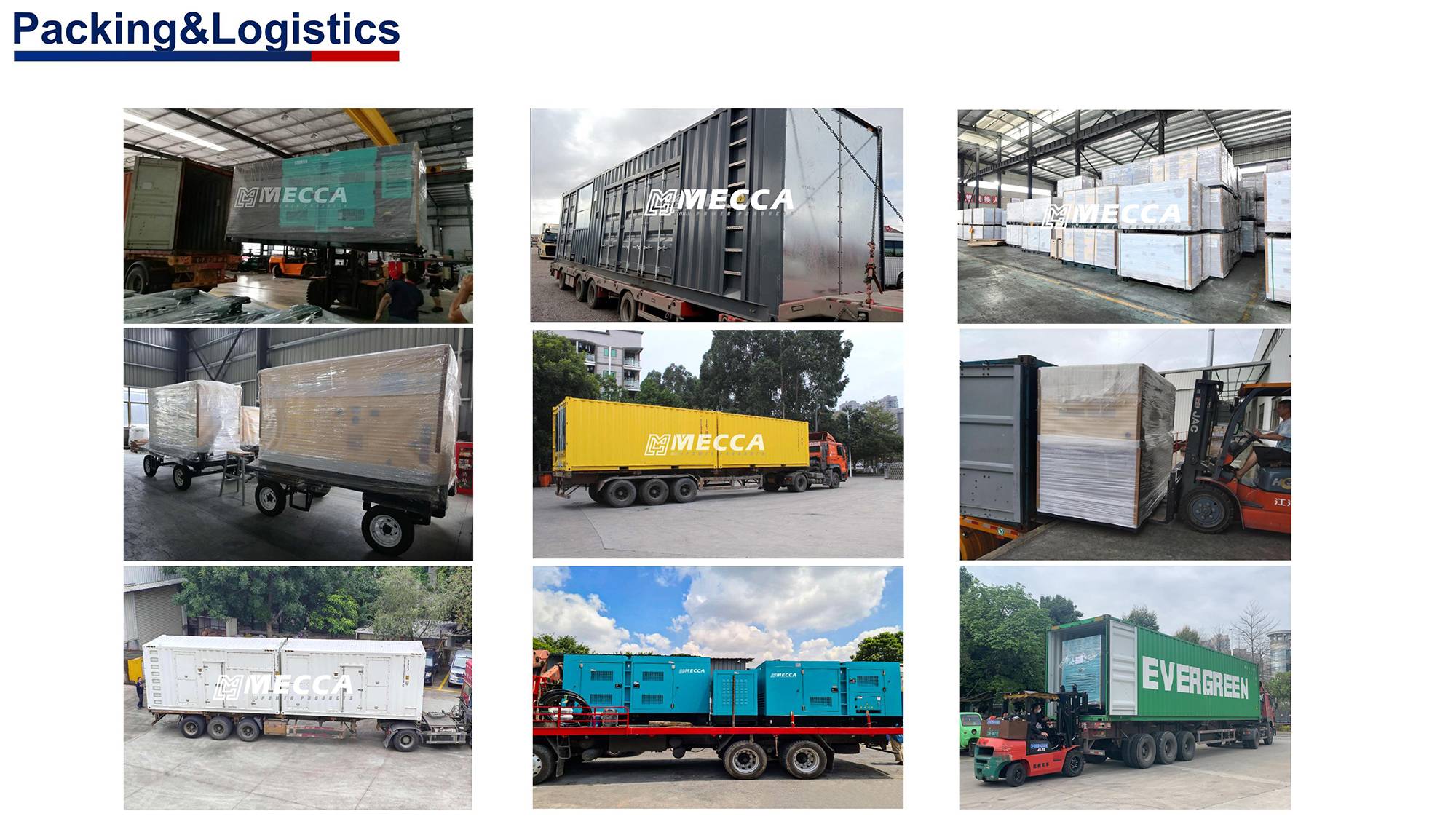
Parameter Comparison: Containerized vs Open-Set Industrial Diesel Generators
| Selection parameter | Open-set configuration | Containerized configuration |
|---|---|---|
| Structural envelope | Not included; enclosure or plant room supplied as site scope | Self-contained structural envelope delivered as one transportable assembly |
| Weatherproofing | Outdoor installation requires site-built weather protection | Designed for outdoor deployment; climate-hardened variants stated for outdoor use from -45 °C up to +55 °C |
| Acoustic performance | Determined by the plant room or a site-built enclosure | Integral acoustic treatment; dual-level enclosure design stated at 75–80 dB(A) at 1 m, 10–15 dB below a standard single-layer design |
| Ventilation and efficiency | Air path designed by the site engineer | Integrated ventilation; dual-level design stated to maintain stable performance with no negative impact on generator efficiency |
| Climate and altitude adaptation | Requires site-level heating, insulation and altitude assessment | Enhanced variants address high-altitude, high-temperature, high-humidity and high-cold conditions |
| Routine maintenance | Governed by plant-room access and layout | Stated easier routine maintenance in the dual-level design; climate-hardened variants stated to require less maintenance |
| One-time cost | Lower equipment scope; enclosure, ventilation and acoustic cost sit in the site budget | Slightly higher one-time cost for the dual-level acoustic design; climate-hardened variants cost more than the standard containerized type |
| Operating cost | Depends on site-built systems and their maintenance regime | Dual-level design stated to deliver lower overall operating cost |
| Rating framework | ISO 8528 categories, including ESP and COP as applicable | ISO 8528 categories, including ESP and COP as applicable |
| Verification before shipment | Full-item factory testing scope applied to the generating set | Full-item factory testing scope applied to the complete integrated unit, including noise and emission tests |
| Responsibility boundary | Split between the genset supplier and site contractors | Single supplier owns enclosure, ventilation, acoustics and integration |
| Typical fit | Existing plant room, generous acoustic boundary, engineering capability on site | Urban core and campus IDC, Tier III/IV data centers, sites near sensitive receptors, mining, oil and gas, EPC projects |
Figures in this table trace to manufacturer specifications and published standards. Where a parameter is site-dependent, it is identified as such rather than estimated.
Frequently Asked Questions
1. Which standards and rating categories apply to containerized and open-set industrial diesel generators?
Both configurations are rated under ISO 8528, the primary international standard for reciprocating internal combustion engine driven alternating current generating sets, which defines categories including Emergency Standby Power (ESP) and Continuous Operating Power (COP). Where engines are used in non-emergency applications in the United States, EPA Tier 4 Final standards, effective since 2015, require a near-90% reduction in Particulate Matter (PM) and Nitrogen Oxides (NOx) for non-road diesel engines. Configuration does not change which standard applies; it changes whether the enclosure's ventilation and aftertreatment packaging allow the set to hold its stated rating in service.
2. Can the containerized configuration be specified for high-altitude or extreme-temperature sites?
Yes. Enhanced containerized variants are designed for adaptability to high-altitude, high-temperature, high-humidity and high-cold environments, with outdoor deployment stated from -45 °C up to +55 °C. Compared with the standard containerized type, these variants cost more, are stated to require less maintenance, and deliver higher efficiency. The parameter to confirm during selection is whether the variant has been explicitly specified — a standard containerized set should not be assumed to cover these conditions.
3. What drives the cost difference between containerized and open-set configurations?
The main cost driver is scope ownership rather than component count. Containerized sets include the structural envelope, ventilation path and acoustic treatment in the delivered equipment; the dual-level acoustic design carries a slightly higher one-time cost than a standard single-layer container but is stated to deliver a lower overall operating cost and easier routine maintenance. Climate-hardened variants cost more than the standard containerized type. Open-set supply shifts enclosure, ventilation and acoustic scope to the site, so the comparison depends on what the project would otherwise have to build. Commercial terms for MECCA POWER units are MOQ 1 unit, delivery terms EXW/FOB/CIF, and payment by TT transfer with 30% deposit and the balance 70% before shipment.
4. How is a unit verified before it leaves the factory?
Verification is defined by the factory testing system, which covers no-load test, load test, parallel operation test, insulation withstand voltage test, protection interlock test, emission test and noise test. Testing equipment is regularly calibrated and verified, standardized testing procedures prohibit missed or incorrect inspections, and each unit can only enter the next production stage after passing. A test report review mechanism checks test data and report content for accuracy and completeness, and unqualified units are reworked and re-tested. The stated acceptance criterion is 100% TEST.
5. What are the delivery terms, and how should lead time be planned?
MECCA POWER states MOQ of 1 unit, delivery terms of EXW, FOB or CIF, and payment terms of TT transfer with 30% deposit and the balance 70% before shipment, with acceptance criteria of 100% TEST. Lead time is best confirmed against the specific configuration, because containerized and open-set sets run on separate production lines — one container line, one open-type line and one mixed-assembly line — and high-power units of 1000kW and above are produced at the Nanchang facility. To move from parameter selection to a firm schedule, request a quotation with the enclosure type, acoustic target, climate variant and rating category confirmed. The full product brochure is available here: MECCA POWER product brochure.
Conclusion
The containerized versus open-set decision is best framed as a question about who owns the envelope. If the project already has a plant room, a generous acoustic boundary and an engineering team that can own ventilation and thermal design, an open-set machine keeps scope where it belongs. If the site is outdoors, if the acoustic receptor is close, if the climate is extreme, or if the schedule cannot absorb a separate enclosure design package, a containerized set transfers that scope to a supplier who can test the complete assembly before it ships.
The parameters that decide the outcome are consistent across both routes: acoustic target stated as a number at a distance, climate and altitude envelope, ventilation design that preserves the ISO 8528 rating, a clearly drawn electrical interface, verified footprint and lifting plan, a written factory acceptance test scope, and a maintenance access strategy that survives the full service life of the asset. Fixed in that order, the configuration decision stops being a late-stage surprise and becomes a design input.
MECCA POWER builds industrial diesel generators from 10kVA to 4000kVA on dedicated container, open-type and mixed-assembly lines, with high-power units of 1000kW and above produced at its Nanchang facility. For procurement engineers comparing configurations for data center, mining, oil and gas or EPC projects, the company's website is www.meccapower.com.cn, and the technical blog is at blog.meccapower.com.cn.
Next Step: Confirm Your Configuration Parameters
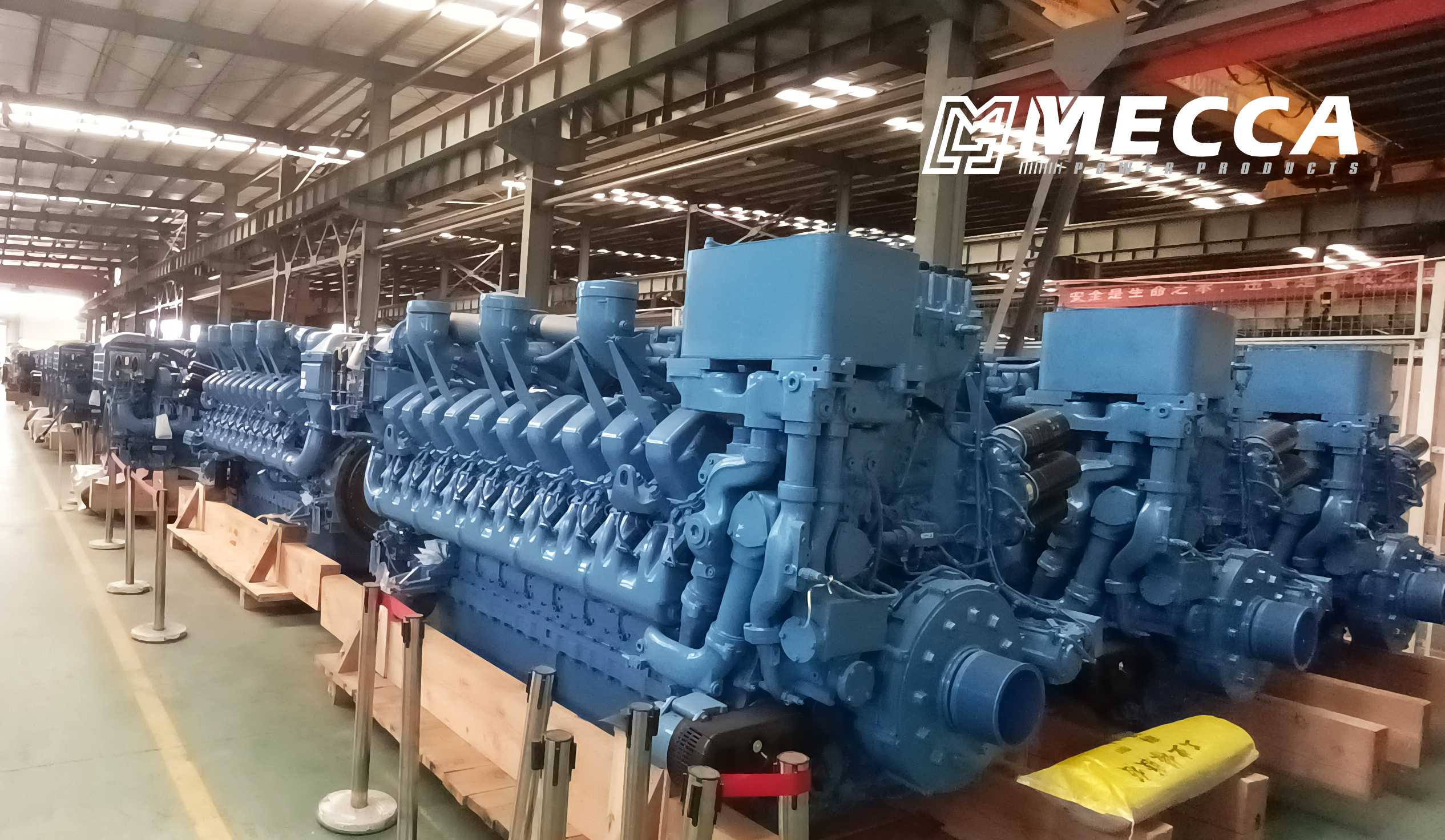
Share four inputs — installation location (indoor or outdoor), required noise level in dB(A) at the nearest receptor, minimum and maximum ambient temperature and altitude, and the required rating category under ISO 8528 — and MECCA POWER can confirm whether an open-set or containerized configuration is the correct match, and whether a climate-hardened variant is required. MOQ is 1 unit, with EXW, FOB or CIF delivery terms.
Contact: mecca@meccagen.com | WhatsApp / WeChat: +86 15659994455 | Download the product brochure
Have Questions or Need More Details?
Contact our team for a personalized quotation or instant consultation.
Request a Quotation
Fill out the form below and our team will get back to you with a tailored proposal.
WhatsApp Direct Chat
Prefer to chat in real-time? Message us on WhatsApp for instant assistance & quick answers.
- Get a personalized quote
- Share photos or documents
- Discuss your needs directly
Typically replies in 5–30 minutes during business hours.