
Top Diesel Generator Configurations for Large-Scale Industrial Projects: 2000kW, 2500kW, and 3MW
Top Diesel Generator Configurations for Large-Scale Industrial Projects: 2000kW, 2500kW, and 3MW
Three diesel generator power blocks cover the majority of large-scale industrial requirements: the 3MW containerized generator (MC3750C), the 2500kW generator (MC2500, MC2750, MC3500), and the 2000kW generator (MC2000, MC2750). This ranking places the 3MW block first for base load and power plant duty, the 2500kW block second for peak shaving, grid support and balanced N+1 redundancy, and the 2000kW block third for modular expansion and phased builds. The three are judged on scalability, footprint efficiency, and installation readiness — not on raw size alone.
MECCA POWER CO., LTD. is a diesel generator, high voltage generator and load bank manufacturer founded in 2013, operating a 34,000 m² factory footprint across Fujian and Jiangxi provinces with 311 employees, a 41-person R&D team and an annual output of 3,600 units. Its containerized diesel generator range covers 1000kVA to 4000kVA across models MC1000 to MC4375, its broader generator portfolio spans 10kVA to 4000kVA, and its industrial diesel generator line is published with prime power from 500kW to 4.5MW (4500kW / 5625kVA) and standby power from 500kVA to 5MW (5000kW / 6250kVA).
Why Power-Block Selection Is a Separate Decision From Generator Brand Selection
In large industrial projects, the supply brand is usually decided late, but the power block is decided early — and it constrains everything downstream. The block size determines how many container positions are needed, how much plinth or foundation work is required, how large the cable runs and switchgear become, how much fuel storage must be provided, and how much lifting capacity the site and the factory need to handle. Once that block is fixed, changing it late in the project usually means rework in civil, electrical and mechanical scopes.
Two failure modes account for most specification problems:
- Oversized single blocks. A project that specifies one very large unit for the whole load loses granularity. Redundancy for that block usually means duplicating the entire unit, which multiplies capital exposure, weight, lifting requirements and testing time rather than distributing risk.
- Too many small blocks. The opposite error is fragmenting a multi-megawatt load across many small sets. Footprint, cabling, paralleling complexity, maintenance touchpoints and synchronization effort all rise with unit count.
The practical question for a research-to-evaluation stage buyer is therefore not "which generator is largest?" but "which block size keeps the unit count, the redundancy philosophy and the site constraints in balance?" That is the question this article answers for three specific configurations.
Industry Background: Why Large Power Blocks Are Being Specified Now
Demand for multi-megawatt generator blocks is being pulled by load growth in computing and by continued industrial electrification. The data center generator market was valued at USD 8.43 billion in 2024 and is expected to reach USD 19.66 billion by 2030, driven by AI workloads and hyperscale expansion, according to ResearchAndMarkets data reported by Business Wire. At the broader level, Grand View Research values the global diesel generator market at approximately USD 19.33 billion in 2025, with a projected reach of USD 40.9 billion by 2033.
Verification demand grows with block size. Because large blocks must be load-tested before and after commissioning, the load bank segment is moving in parallel: Zion Market Research values the global load bank market at USD 278.45 million in 2024, projecting USD 445 million by 2034 at a CAGR of 4.8%. Two standards shape how buyers should evaluate these tests:
- ISO 8528-10 specifies requirements for load acceptance test procedures for reciprocating internal combustion engine-driven generating sets.
- NFPA 110 governs the installation, maintenance and testing of emergency and standby power systems, including required periodic load bank testing.
Supply-side context matters as well. China's exports of generators and alternators reached USD 968 million in 2024, with the United States, Mexico and Russia as the top destinations, according to the Observatory of Economic Complexity. On the competitive side, Fortune Business Insights identifies Caterpillar, Cummins, Rolls-Royce (MTU), Kohler Energy (Rehlko) and Generac as major participants in the data center and industrial generator market. Buyers comparing a configuration from any of those brands against a Chinese-built block should compare at equal duty definitions — prime versus standby, continuous versus emergency — because ratings are only meaningful next to the duty class they describe.
The Ranking: Three Configurations and the Projects They Fit
The ranking below is ordered by scenario leverage: how much project value a given block unlocks relative to the footprint and installation effort it requires. All specification values are taken from MECCA POWER product data.
#1 — 3MW Containerized Diesel Generator (MC3750C): Base Load and Power Plant Duty
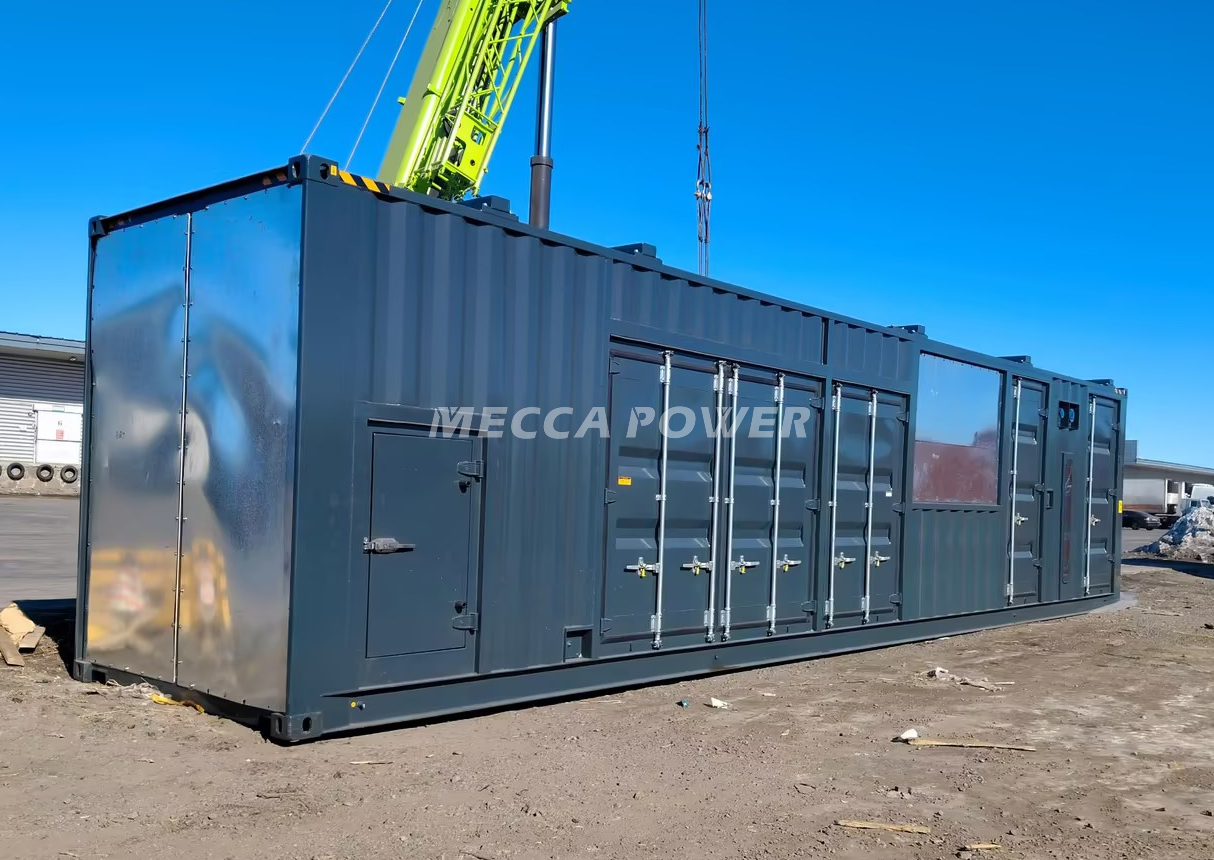
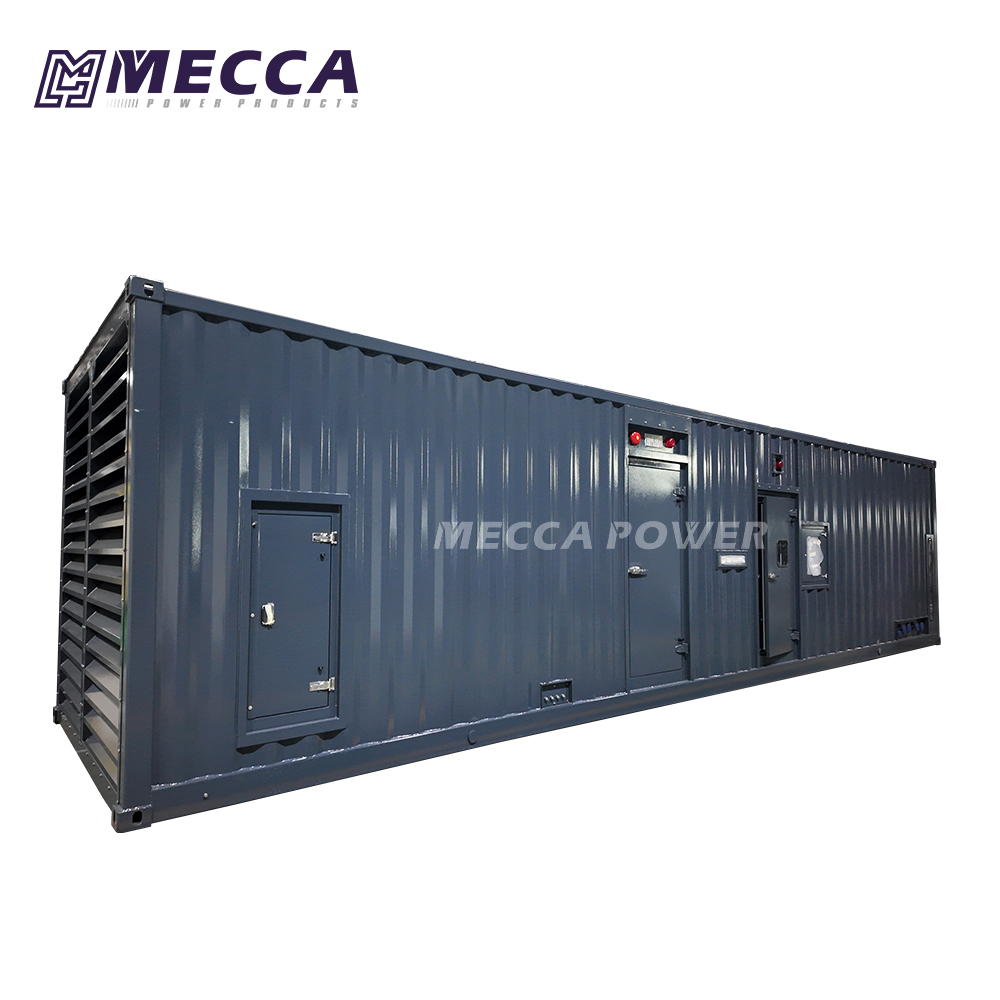
The MC3750C is specified at a power range of 3000kW / 3750kVA and is powered by a US CUMMINS QSK95 engine, built in a containerized format in alloy steel and heat-resistant steel. Its published applicable industries are data center, power plant, mining, construction and oil and gas.
This block ranks first because it addresses the one scenario where unit count is the dominant cost: base load and continuous-running power plant duty. Where a site must carry a steady multi-megawatt load around the clock, the number of running units directly determines maintenance intervals, spare parts consumption, synchronization complexity and the number of maintenance touchpoints per year. A 3MW block reduces all four at once. For a power plant or an islanded industrial site, the arithmetic is straightforward: fewer, larger blocks mean fewer paralleled units to synchronize, fewer exhaust and cooling interfaces, and a smaller switchgear and cabling surface per megawatt delivered.
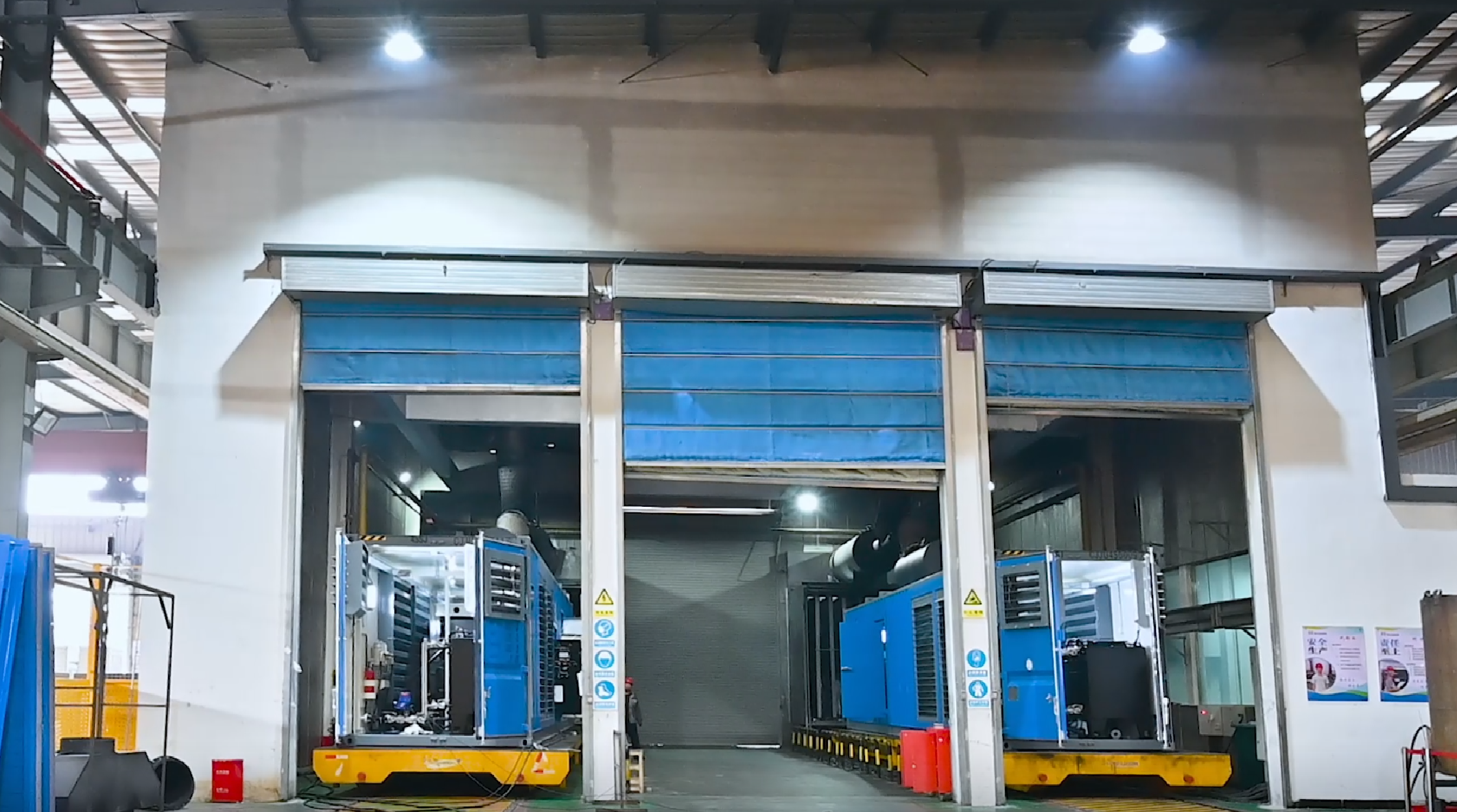
The constraints are equally clear. A 3MW unit concentrates risk in a single asset, so projects that require N+1 redundancy at that block size must fund a second full unit rather than a partial spare. Logistics also step up: containerized sets at this rating require heavy lifting and prepared hardstanding, and transport planning moves from routine to project-managed. MECCA POWER's Nanchang factory, which focuses on generator sets of 1000kW and above, is equipped with a maximum lifting capacity of 45 tons and can support simultaneous production testing of three units exceeding 2000kW — the factory-side capability that makes blocks in this class testable before shipment.
#2 — 2500kW Diesel Generator (MC2500, MC2750, MC3500): Peak Shaving and Balanced Redundancy
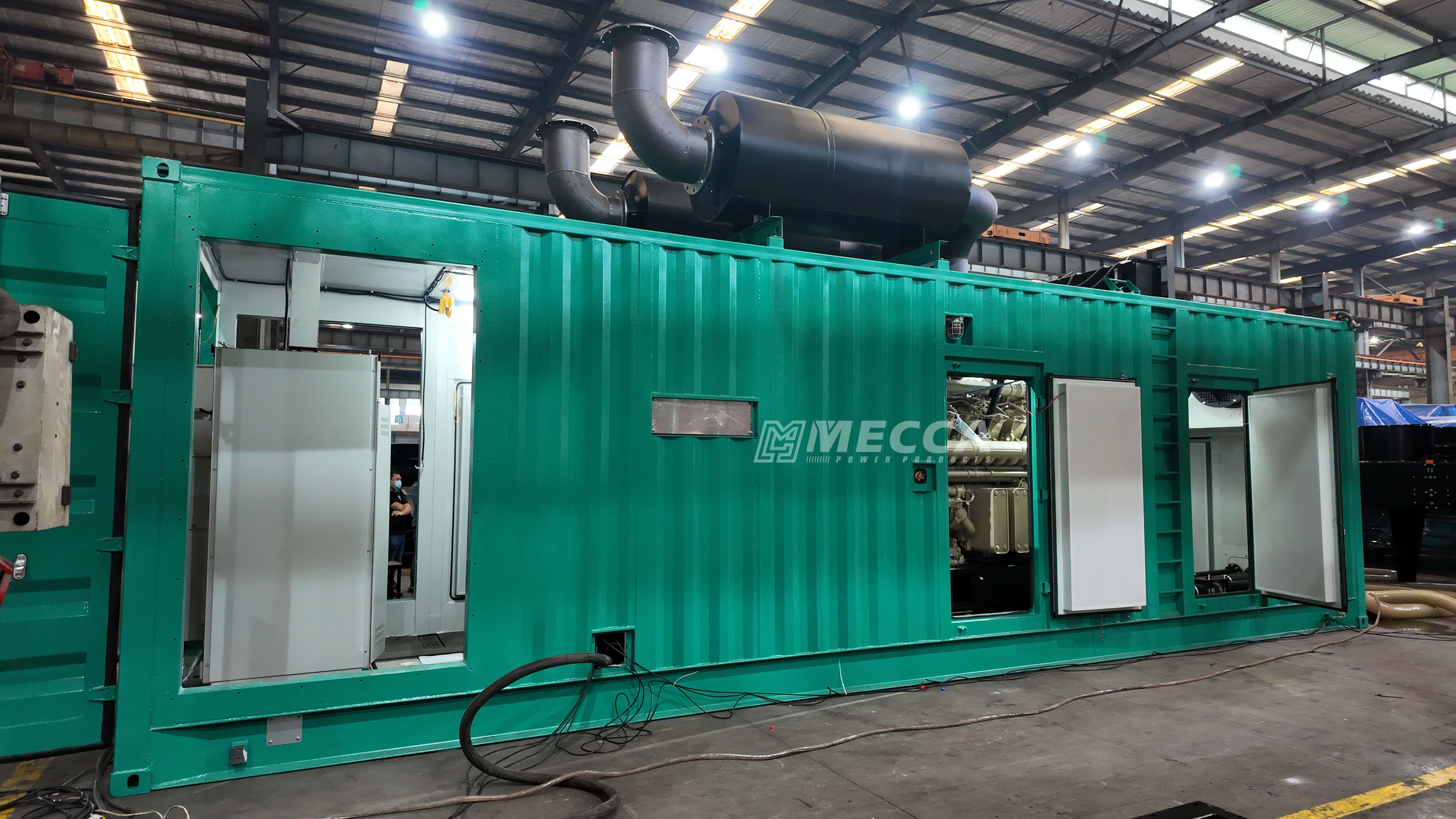
The 2500kW platform is published as prime power 2500kW / 3125kVA and standby 2750kW / 3500kVA, offered in both open type and containerized type, and built in alloy steel and heat-resistant steel. Its listed applicable industries — data center, power plant, oil and gas, mining and construction — make it the widest-coverage configuration of the three.
Two features explain the second position. First, the standby rating sits above the prime rating (2750kW / 3500kVA versus 2500kW / 3125kVA), which gives projects headroom to use the same block for short-duration peak pickup as well as normal duty. This is the configuration that best supports peak shaving and grid-support style duty, where a block must take on load quickly and then return to a lower operating point. The application data behind MECCA POWER's large-frame sets describes exactly this requirement: rapid load bearing, with the generator set expected to start and take full load in a very short time, typically under 10 to 15 seconds.
Second, the 2500kW block is the natural building unit for balanced N+1 redundancy. As an illustrative calculation — not a design substitution — three 2500kW prime-rated blocks with one held as standby give a site 5 MW of running capacity with a single-unit failure margin; four of the same blocks would provide the same margin for a larger load while keeping every unit in a size class that is easier to source, ship and service than a 3MW unit. The trade-off is that the 2500kW approach requires more units, more paralleling gear and more container positions for the same total capacity than a 3MW block would.
Because this platform is offered in both open and containerized types, it is also the configuration most often used where a buyer wants a fixed electrical footprint but flexible housing — for example, open sets inside an existing plant building versus containerized sets on an exposed site.
#3 — 2000kW Diesel Generator (MC2000, MC2750): Modular Expansion and Phased Build-Out
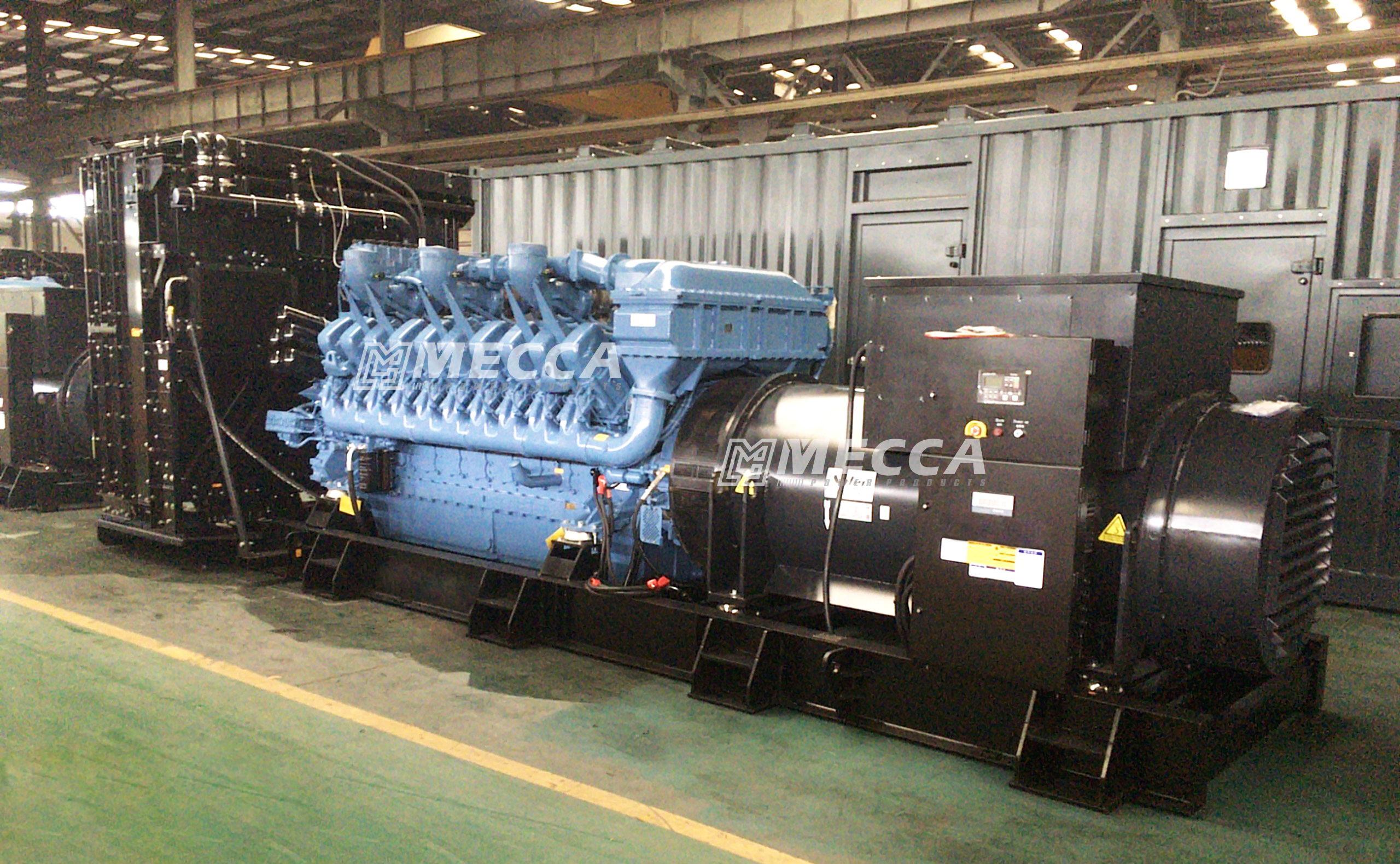
The 2000kW configuration is published as prime power 2000kW / 2500kVA and standby 2200kW / 2750kVA, described as a 2MW diesel generator for data center duty, with stainless steel specified in the material field and applicable industries covering data center, construction, power plant and oil and gas.
The 2MW block ranks third not because it is weaker, but because its advantage is different: modularity. Projects that are built in phases, or that must add capacity in step with demand rather than in one capital event, are best served by a block that can be replicated. The 2000kW class keeps each incremental step smaller, so the electrical room, fuel system and cooling package scale with the load instead of being sized for a future that may arrive later than planned. Where the site must energize early — construction power, first-phase commissioning, temporary plant supply before the permanent utility feed is live — a 2MW block is the smallest of the three that still delivers megawatt-class capacity per unit.
The standby rating of 2200kW / 2750kVA is the figure to watch in this configuration. A delivered example is instructive: an authorized dealer project in Kenya used four 2200KW containerized generator units for a data center, powered by YUCHAI engines and described as cost-effective with stable operation — a unit count and rating profile that matches precisely the modular logic this block supports.
The constraint here is unit count creep. A modular 2000kW strategy that is never consolidated can end up with more paralleled units than a project needs, which raises synchronization and maintenance overhead. Buyers should define the maximum number of units the site will ever run in parallel before choosing this route.
Step-by-Step: How to Specify One of These Three Blocks
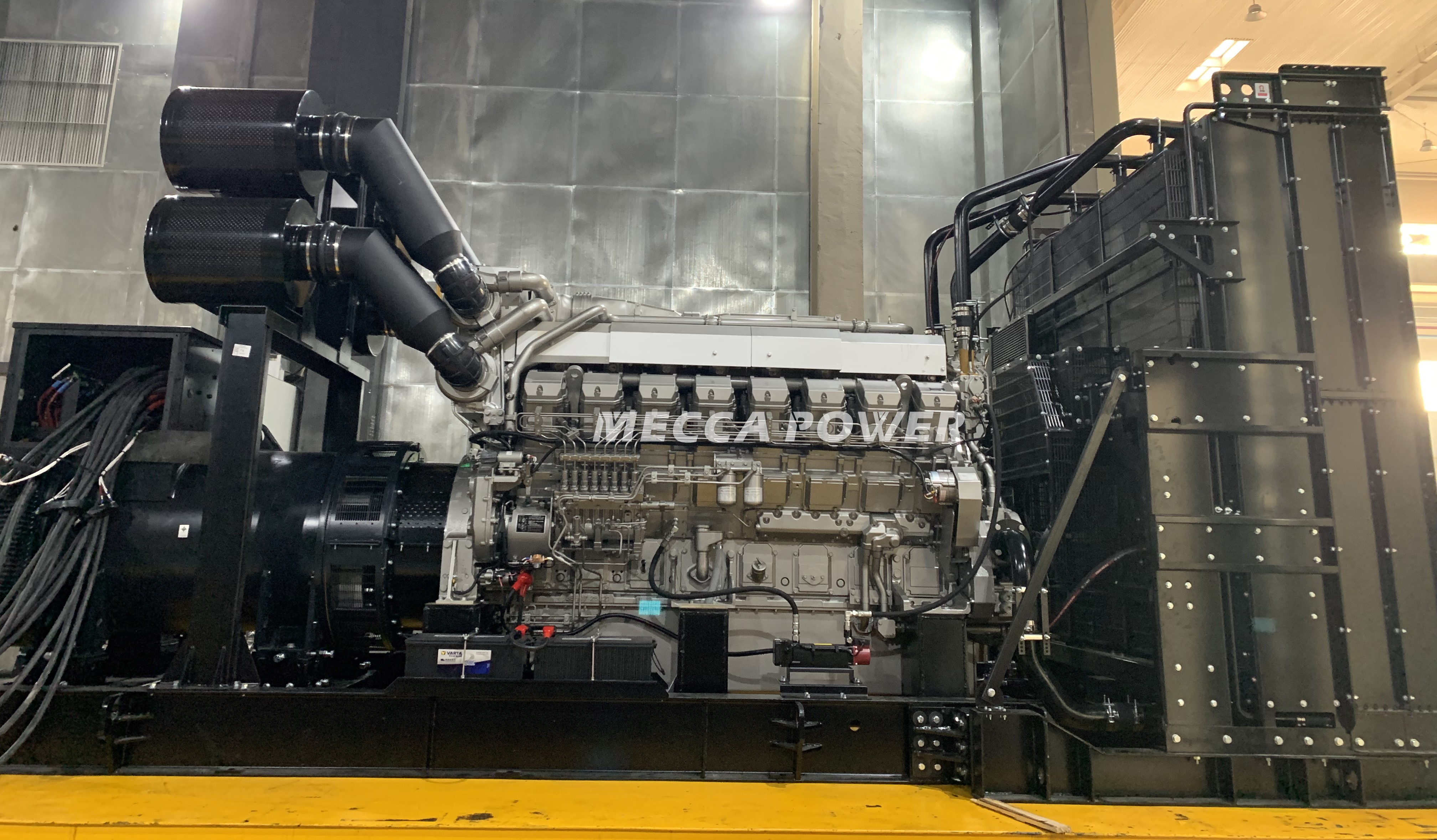
The sequence below applies whether the project is a data hall, a power plant extension, an off-grid mine or a large construction site. Each step uses information a buyer can obtain from the supplier's published configuration data.
- Define the duty class before the rating. Prime and standby ratings are different products. The 2000kW model carries 2000kW / 2500kVA prime and 2200kW / 2750kVA standby; the 2500kW model carries 2500kW / 3125kVA prime and 2750kW / 3500kVA standby; the 3MW model is published at 3000kW / 3750kVA. Match the duty class to how the site will actually run the set — continuous, prime, or emergency standby.
- Fix the redundancy philosophy and the unit count. Decide whether N+1 is provided at block level or at unit level. Block-level N+1 at 3MW concentrates capital; unit-level N+1 at 2000kW or 2500kW distributes it. Write the maximum paralleled unit count into the specification before selecting a block size.
- Test the block against the site footprint. Containerized delivery is the standard route at this scale. MECCA POWER's containerized range covers 1000kVA to 4000kVA across models MC1000 to MC4375 in 20HQ, 40HQ and non-standard containers, built from Corten steel, aluminum or stainless steel. Confirm container type, hardstanding, lifting plan and cable routing at this stage rather than after award.
- Confirm electrical integration scope. Matched equipment published for these project types includes ATS, parallel control panels, UL fuel tanks, containers and high voltage cabinets. Where the site distributes at medium voltage, confirm whether a high voltage generator is required — a delivered example used 10.5KV high voltage 1800KW generators for a data center emergency power supply project with a Chinese SME engine.
- Specify testing and load acceptance before shipment. Under ISO 8528-10 and NFPA 110 practice, load acceptance and periodic load bank testing are not optional for critical standby systems. MECCA POWER states 100 percent testing of its sets and operates six testing stations with digital tightening, intelligent oil and water filling, and cloud-based production data management using APS+MES systems. Ask for the test regime in writing, including load bank testing scope.
- Verify the environmental envelope. The industrial diesel generator line is published for -50°C to 50°C, with operating conditions documented from -45°C to +50°C, corrosion-resistant canopies and stainless steel components. The application data also lists low-noise design with industrial-grade silencers, enhanced heat sinks for high ambient temperatures, and derating design for altitude. In cold-region data center work, non-standard low-noise containers have been delivered — for example, five 1800KW YUCHAI containerized units in Russia.
- Lock commercial terms and delivery. MECCA POWER lists a minimum order quantity of one unit, a lead time of 30 to 50 days, a monthly capacity of 300 units and an annual output of 3,600 units. The Nanchang factory in Jiangxi province, which focuses on 1000kW and above, reports monthly output increasing from 132 units to 212 units.
Use Cases: Matching Each Configuration to a Project Type
The scenario mapping below is an editorial reading of published applicable-industry and project data, not a performance guarantee. Buyers should validate each mapping against their own load profile.
Data centers
Data center projects typically split between the 2000kW and 2500kW blocks for modular hall-by-hall builds, and the 3MW block where a single large bus is preferred. Delivered profiles include the 2200KW containerized data center project in Kenya (four units) and the low-noise containerized data center project in Russia (five 1800KW units).
Power plants and continuous running
Continuous-running duty favors the 3MW containerized block for base load, with 2500kW and 2000kW units used where the plant is built in stages. A European power station project delivered six 2500KVA units powered by UK CUMMINS QSK60 engines for continuous running duty.
Mining and off-grid sites
Off-grid mining power solutions are listed among the supported project types alongside high voltage and continuous-running solutions. Off-grid sites generally prefer replicable blocks — 2000kW or 2500kW — because load grows with the pit and can be added in steps.
Oil and gas
The 2500kW and 2000kW platforms both list oil and gas among applicable industries. A delivered oil and gas project in Saudi Arabia used two 1800KW UK CUMMINS generators, powered by the QSK60-G8 engine manufactured in the UK.
Construction
Construction is listed as an applicable industry for the 3MW, 2500kW and 2000kW configurations and for the general industrial range. Construction sites usually select the smallest megawatt-class block that covers peak demand, then redeploy it to permanent standby duty once the build is complete.
Comparison Table: 2000kW vs 2500kW vs 3MW
| Comparison point | 3MW containerized | 2500kW | 2000kW |
|---|---|---|---|
| Model | MC3750C | MC2500, MC2750, MC3500 | MC2000, MC2750 |
| Prime power | 3000kW / 3750kVA | 2500kW / 3125kVA | 2000kW / 2500kVA |
| Standby power | Not specified in the product data reviewed | 2750kW / 3500kVA | 2200kW / 2750kVA |
| Engine reference | US CUMMINS QSK95 | Not specified in the product data reviewed | Not specified in the product data reviewed |
| Enclosure / type | Containerized | Open type or containerized type | Published as 2MW diesel generator for data center |
| Material | Alloy steel / heat-resistant steel | Alloy steel / heat-resistant steel | Stainless steel |
| Listed applicable industries | Data center, power plant, mining, construction, oil and gas | Data center, power plant, oil and gas, mining, construction | Data center, construction, power plant, oil and gas |
| Best-fit scenario logic | Base load, continuous running, minimum unit count | Peak shaving, grid support, balanced N+1 | Modular expansion, phased build-out, early energization |
| Project scenario | Recommended configuration | Reasoning basis |
|---|---|---|
| Continuous base load / power plant | 3MW (MC3750C) | Largest single block of the three; containerized; US CUMMINS QSK95; listed for power plant duty |
| Data center modular halls | 2000kW or 2500kW | Replicable blocks; 2000kW unit listed for data center; 2200kW containerized units delivered to a data center project |
| Peak shaving / short-duration pickup | 2500kW | Standby rating of 2750kW / 3500kVA above prime; rapid load bearing requirement documented at under 10 to 15 seconds |
| Off-grid mining and phased industrial load | 2000kW or 2500kW | Off-grid mining power solution listed among supported project types; smaller incremental steps |
| Oil and gas sites | 2500kW or 2000kW | Both platforms list oil and gas as applicable industries |
| High voltage distribution sites | Any of the three with high voltage configuration | High voltage cabinet listed as matched equipment; 10.5KV high voltage units delivered for data center backup |
Reading note: Where a field is marked as not specified in the product data reviewed, no value is published for that configuration. Buyers should request the rating from the manufacturer rather than assuming a value from an adjacent model.
FAQ: Large-Scale Diesel Generator Configuration Questions
What standards and tests apply to 2000kW, 2500kW and 3MW diesel generator configurations?
ISO 8528-10 specifies requirements for load acceptance test procedures for reciprocating internal combustion engine-driven generating sets, and NFPA 110 governs the installation, maintenance and testing of emergency and standby power systems, including required periodic load bank testing. MECCA POWER states that its generator sets are 100 percent tested and lists UL/CSA certification as a customizable option on its industrial diesel generator range, which is published from 500kW to 4.5MW prime power.
Can the same supplier deliver 2000kW, 2500kW and 3MW units in containerized, open and paralleled configurations?
MECCA POWER's containerized range covers 1000kVA to 4000kVA across models MC1000 to MC4375 in 20HQ, 40HQ and non-standard containers, and the 2500kW model is offered in both open type and containerized type. Its OEM/ODM scope covers voltage and frequency, silent, open, containerized or mobile formats, logo and noise requirements. Matched equipment published for these project types includes ATS, parallel control panels, UL fuel tanks, containers and high voltage cabinets.
What drives the cost difference between 2000kW, 2500kW and 3MW configurations?
The configuration data itself indicates the main variables: engine platform, enclosure format, materials and electrical integration. The 3MW MC3750C uses a US CUMMINS QSK95 engine in a containerized format; the 2500kW models are offered open or containerized in alloy steel and heat-resistant steel; the 2000kW models are specified with stainless steel. Additional variables include paralleling and medium-voltage equipment such as parallel control panels and high voltage cabinets. Buyers should request a scope-based quotation rather than comparing headline ratings alone.
Can a buyer validate a 2000kW, 2500kW or 3MW configuration before placing a full order?
MECCA POWER lists a minimum order quantity of one unit, 100 percent testing and six testing stations, with a maximum lifting capacity of 45 tons and the ability to support simultaneous production testing of three units exceeding 2000kW. After-sales scope includes remote technical support, on-site commissioning and maintenance, spare parts supply and a 24/7 hotline.
What is the lead time and production capacity behind these large power blocks?
MECCA POWER lists a lead time of 30 to 50 days and a monthly capacity of 300 units. Its Nanchang factory in Jiangxi province focuses on generator sets of 1000kW and above, reporting monthly output growth from 132 units to 212 units. Buyers can review the full configuration scope in the MECCA POWER product brochure, or send project details to mecca@meccagen.com for configuration confirmation.
Conclusion: Match the Block to the Project, Not the Project to the Block
The choice between 2000kW, 2500kW and 3MW is a choice about project structure. The 3MW containerized MC3750C suits base load and continuous-running duty where a low unit count matters most. The 2500kW platform suits peak shaving, grid support and balanced N+1 redundancy, supported by a standby rating of 2750kW / 3500kVA above its 2500kW / 3125kVA prime rating. The 2000kW platform suits modular expansion and phased builds, supported by a 2200kW / 2750kVA standby rating and a unit profile that has already been delivered in four-unit containerized data center configurations.
Whichever block a buyer selects, three checks protect the decision: confirm the duty class rather than the headline rating, confirm the container and lifting plan before award, and confirm the load acceptance and load bank test regime in writing. MECCA POWER's large-frame production base — three production lines across container, open-type and mixed-assembly formats, six testing stations, and 45-ton lifting capacity for units above 2000kW — is structured to support that verification step.
Next step: confirm your configuration
Send your load profile, duty class, site temperature range and container preference, and MECCA POWER will confirm whether a 2000kW, 2500kW or 3MW block fits. Request a quotation, a technical specification sheet, or the full product brochure from meccapower.com.cn.
- Email: mecca@meccagen.com
- WhatsApp / WeChat: +86 15659994455
- Brochure: MECCA POWER product brochure (PDF)
Have Questions or Need More Details?
Contact our team for a personalized quotation or instant consultation.
Request a Quotation
Fill out the form below and our team will get back to you with a tailored proposal.
WhatsApp Direct Chat
Prefer to chat in real-time? Message us on WhatsApp for instant assistance & quick answers.
- Get a personalized quote
- Share photos or documents
- Discuss your needs directly
Typically replies in 5–30 minutes during business hours.