
How to Select an Industrial Diesel Generator Partner for Long-Term Project Success
The data center generator market is expected to reach USD 19.66 billion by 2030, and the broader diesel generator market is projected to grow from USD 22.33 billion in 2025 to USD 38.09 billion by 2034, based on published industry research. Those numbers explain why procurement teams are now having a different conversation. Instead of asking which industrial diesel generator should we buy, they are asking which manufacturer can support this project now and for the next ten years.
This guide is written for buyers in the Decision-to-Execution stage. It focuses on the criteria that separate a one-time generator seller from a long-term power equipment partner: manufacturing depth, component supply, testing rigor, compliance control, and after-sales infrastructure.
Why 'Supplier' Is No Longer Enough: The Real Procurement Problem
A failed generator set can take down a data center, stop a mining operation, or delay an EPC schedule. The procurement problem is not whether a generator starts during the factory handover; it is whether the same design, parts, and service network will keep the equipment running after months or years of continuous duty.
Industrial buyers have a limited window to check manufacturing risk before contracting. If a supplier cannot control design, manufacturing, testing, and operational safety inside its own factory, the buyer inherits those risks. Common failure patterns include weak safety protection, inconsistent assembly, incomplete factory testing, and a spare-parts supply that depends on too few component partners.
For long-term projects, the buyer should be looking for four things: proven manufacturing capacity, access to established engine and alternator brands, repeatable factory testing, and a documented life-cycle support process.
Industry Background: Demand Surge and Compliance Pressure
China's exports of high-capacity diesel generator sets for data centers surged 131.81% year-on-year in the first two months of 2026, according to customs data reported through China Daily. This surge reflects global demand from hyperscale data centers, mining expansions, and EPC contractors procuring containerized power plants.
At the same time, compliance has become more complex. ISO 8528 remains the primary international standard for generator set ratings, including Emergency Standby Power (ESP) and Continuous Operating Power (COP). In the U.S. market, EPA Tier 4 Final standards require near-90% reduction in particulate matter and nitrogen oxides for non-road diesel engines used in non-emergency applications. A long-term partner must align each project with the correct rating definition and local emission class from design onward.
Detailed Solution: What a Long-Term Industrial Diesel Generator Partner Should Offer
MECCA POWER (MECCA POWER CO.,LTD.) offers an example of a manufacturing-oriented partner with self-owned factory assets. Founded in 2013, the company operates a 34,000 m² factory, employs 311 people, has a 41-person R&D team, and produces about 3,600 units per year. Its product range covers industrial diesel generators from 10 kVA to 4,000 kVA, serving telecom, data centers, mining, power plants, construction, and oil and gas.
1. Manufacturing Depth and Production Control
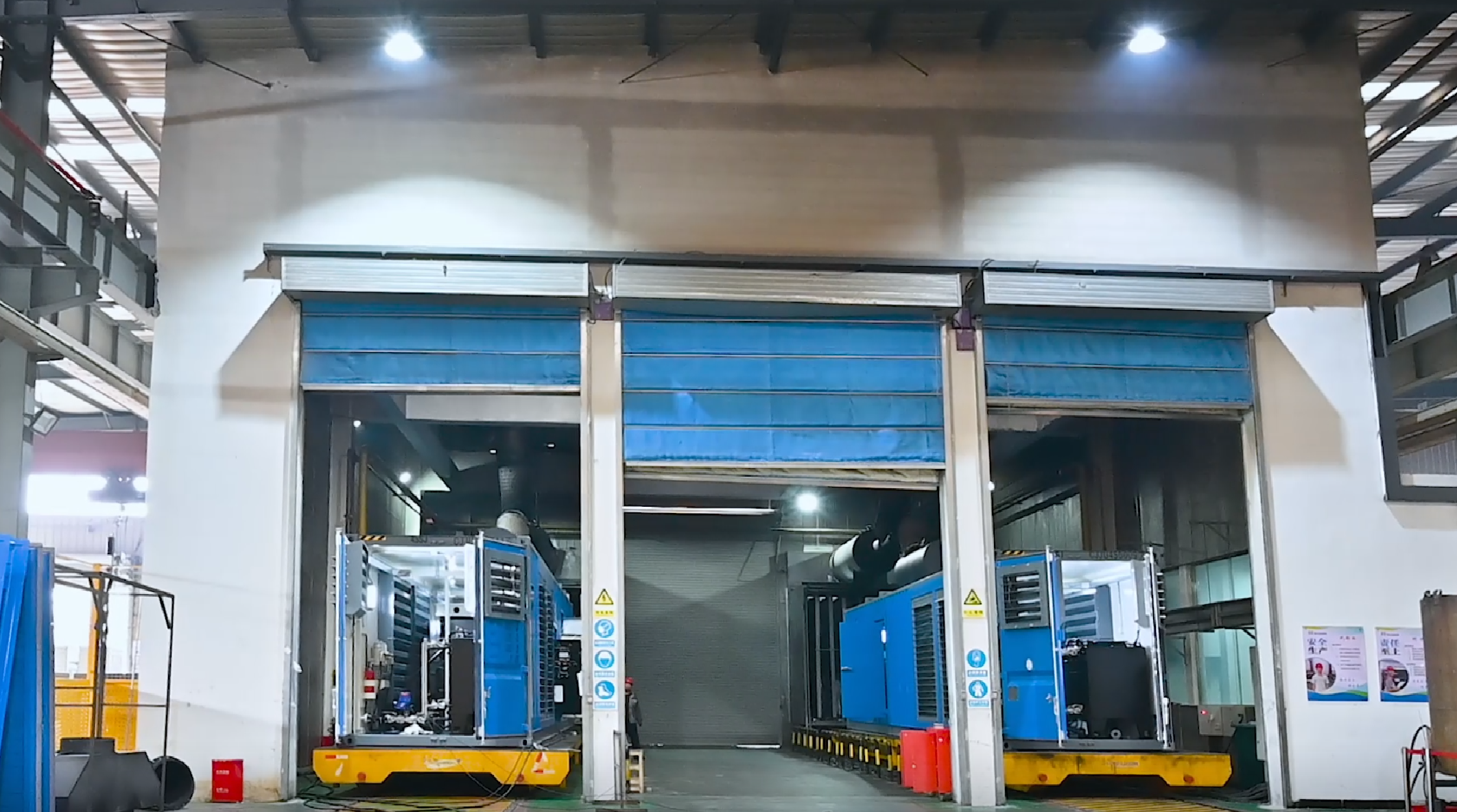
MECCA POWER operates from two locations: Fujian Province and Jiangxi Province. The Nanchang factory in Jiangxi focuses on high-power generator sets of 1,000 kW and above. Its monthly output increased from 132 units to 212 units, allowing the factory to handle large containerized units without slowing down regular production.
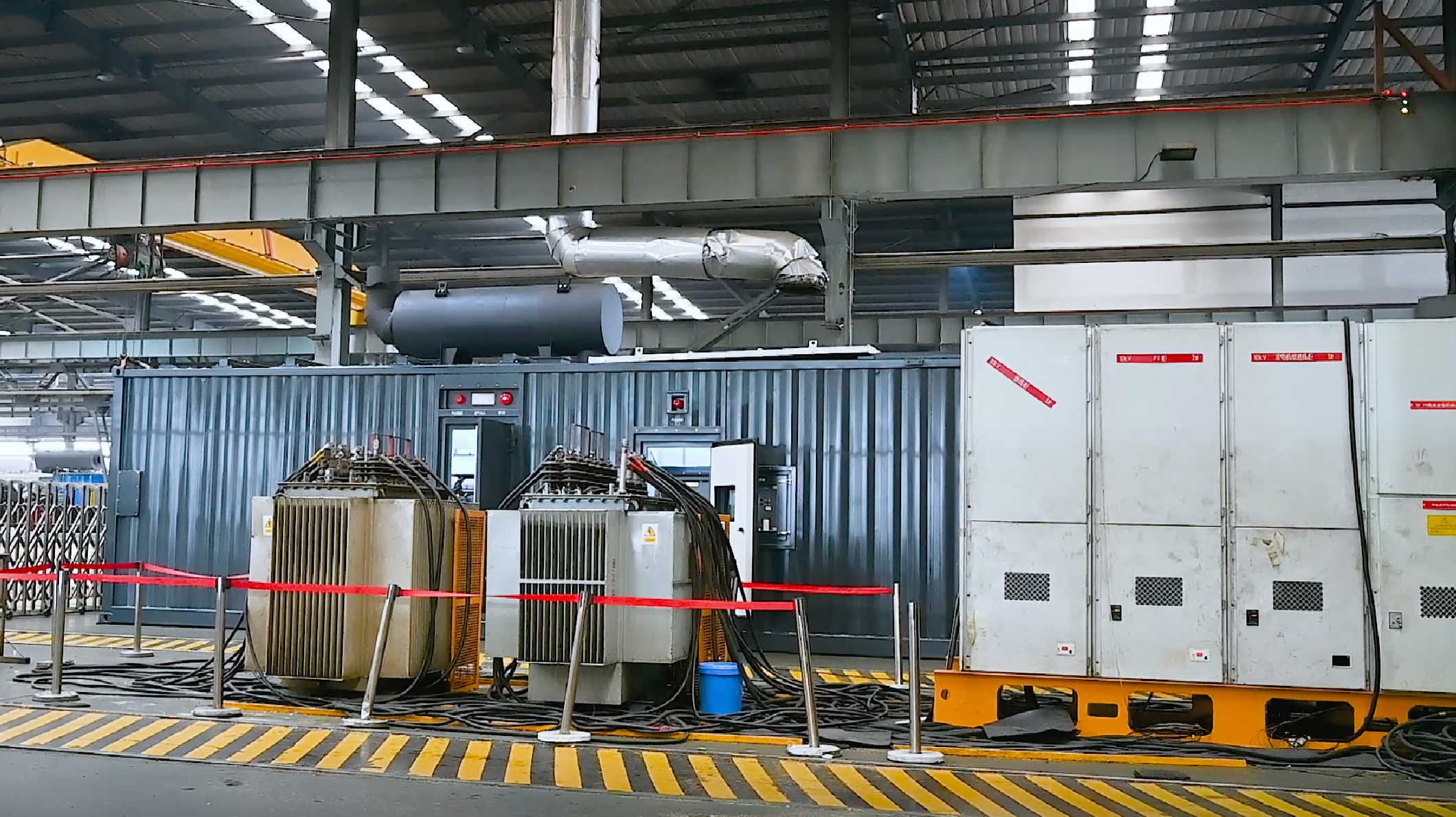
The factory has three specialized production lines: a container line, an open-type line, and a mixed-assembly line. It also has six testing stations equipped with digital tightening, intelligent oil and water filling, and cloud-based data management. Production control uses APS and MES information systems. The factory's hardware includes a maximum lifting capacity of 45 tons, so it can support simultaneous production testing of three units above 2,000 kW.
2. Component Supply Ecosystem
A long-term partner needs stable access to core components. MECCA POWER's OEM relationships include Cummins, Perkins, MTU, Mitsubishi, FPT, Volvo, and Baudouin for engines, plus Stamford, Leroy Somer, and Mecc Alte for alternators, and DeepSea and ComAp for controllers. The company also works with Chinese engine brands. This breadth lets buyers select an engine and controller combination based on project preference, lead time, and regional service network.
3. Risk Controls Across the Product Life Cycle
A partner should be able to explain how it prevents failures in design, manufacturing, testing, and operation. MECCA POWER's design process follows GB/T 2820, ISO 8528, and CE, and uses 3D simulation, thermal simulation, and EMC simulation to catch defects before production. A professional design review team examines safety protection, emission compliance, and component matching; core components are tested to ensure they work together under continuous load.
In manufacturing, MECCA POWER applies lean production and standard operating procedures for welding, assembly, wiring, anti-corrosion, and noise reduction. Key processes use first-article inspection, routine inspection, and final inspection. Quality files track each unit's production and inspection results for traceability.
Before delivery, each unit goes through a factory testing system covering no-load test, load test, parallel operation test, insulation withstand voltage test, protection interlock test, emission test, and noise test. Testing equipment is regularly calibrated, and test reports are reviewed by professional personnel. Unqualified units must be reworked and retested before shipment.
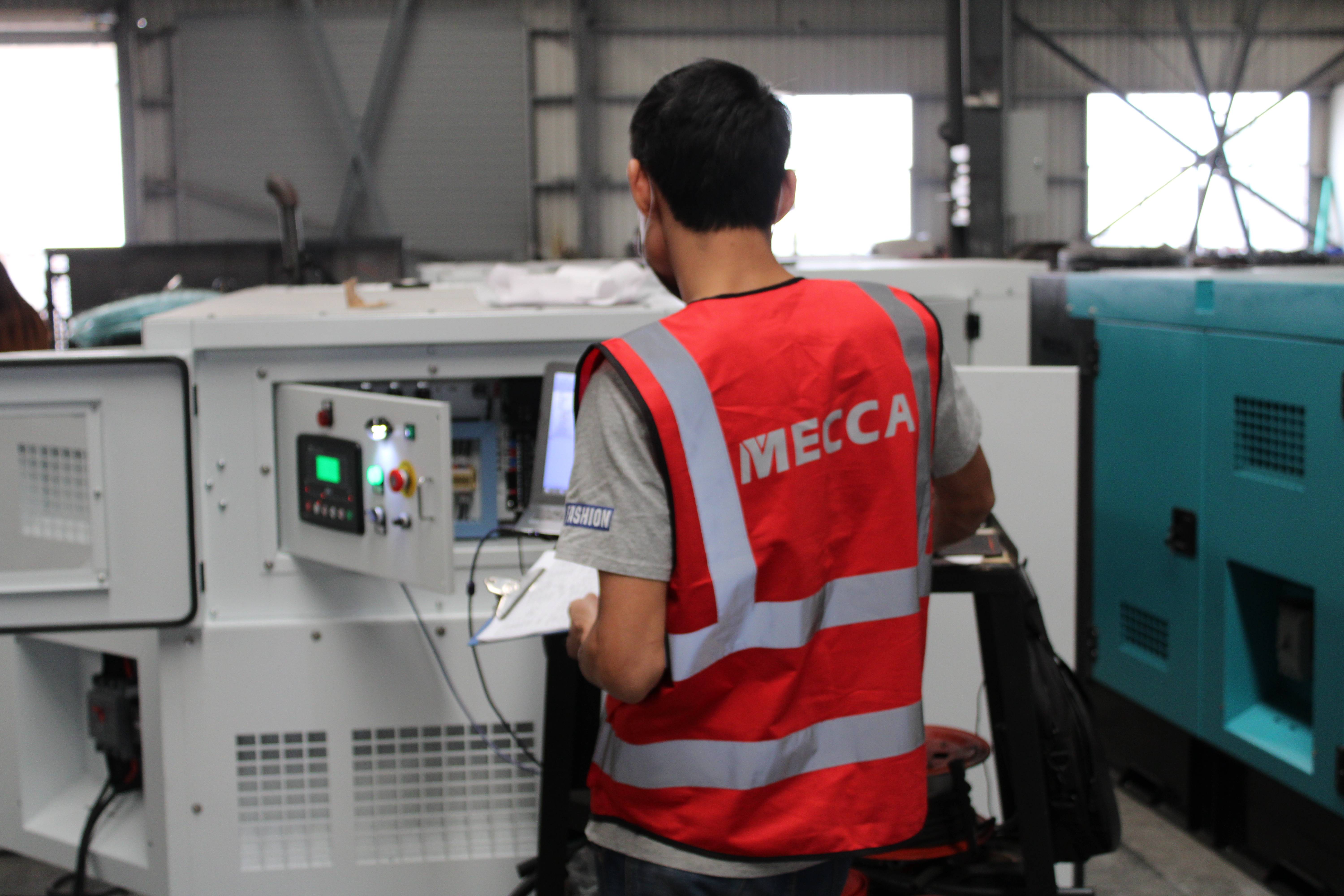
After delivery, MECCA POWER's operational safety plan includes intelligent monitoring and multiple safety protection devices. The genset detects overload, overspeed, low oil pressure, high water temperature, and electric leakage, then gives an early warning or automatic shutdown. Professional technicians can provide on-site installation and commissioning. Customer operators receive training and an operation manual, and MECCA POWER can establish a genset operation file to remind customers of regular inspections and maintenance.
4. Commercial Structures That Fit Long-Term Programs
For distributors, EPC contractors, and OEM buyers, the commercial starting point matters. MECCA POWER's procurement terms include a minimum order quantity of 1 unit, payment by T/T with a 30% deposit and the 70% balance before shipment, and delivery under EXW, FOB, or CIF. Every delivered set is reported as 100% tested. These terms make it possible to start with a single containerized unit or a pilot set before committing to a full plant program.
Step-by-Step: How to Evaluate and Qualify an Industrial Diesel Generator Partner
Use the following steps to turn a shortlist of good-looking suppliers into one qualified execution partner.
Step 1: Define Duty Profile and Compliance Boundary
Establish prime power and standby power requirements, site temperature range, altitude, noise limit, fuel system, and target standard. For example, MECCA POWER's 2,000 kW diesel generator model MC2000 has prime power 2,000 kW/2,500 kVA and standby power 2,200 kW/2,750 kVA. A 2,500 kW unit (MC2500) offers prime power 2,500 kW/3,125 kVA and standby 2,750 kW/3,500 kVA. These numbers become the baseline for supplier bidding.
Step 2: Audit Design and Engineering Resources
Ask how the supplier uses simulation, design reviews, and component matching. Confirm the OEM engineering team can handle containerization, high-altitude ratings, low-noise enclosures, and plant-level integration. MECCA POWER's 41-person R&D team and simulation-based design process are relevant evidence for custom projects.
Step 3: Visit or Audit the Factory
Look at factory layout, lifting capacity, production lines, testing stations, and quality files. MECCA POWER's 45-ton lifting capacity and six testing stations are concrete evidence that large units can be built and tested in-house.
Step 4: Confirm Testing Coverage
Use a checklist: no-load, load, parallel operation, insulation withstand voltage, protection interlock, emission, noise. A 100% test policy means every unit, not just a sample, passes before shipment.
Step 5: Map After-Sales Support and Spare Parts
Clarify commissioning, training, operation manuals, remote monitoring, and routine maintenance reminders. A partner with documented operational safety controls supports uptime after the warranty period.
Step 6: Align Commercial and Logistics Terms
Confirm MOQ, Incoterms, payment schedule, and plant load capacity. For a large-scale project, ask how the factory will break production into batches and how each batch will be tested.
Step 7: Plan for Scale-Up
If you need 10 units this year and 30 next year, will the same factory still be your preferred partner? Confirm that the supply chain, engine brand, alternator, controller, and custom canopy can scale with your project pipeline.
Use Cases: Where a Long-Term Power Partner Makes the Biggest Difference
Data Center and Critical Infrastructure
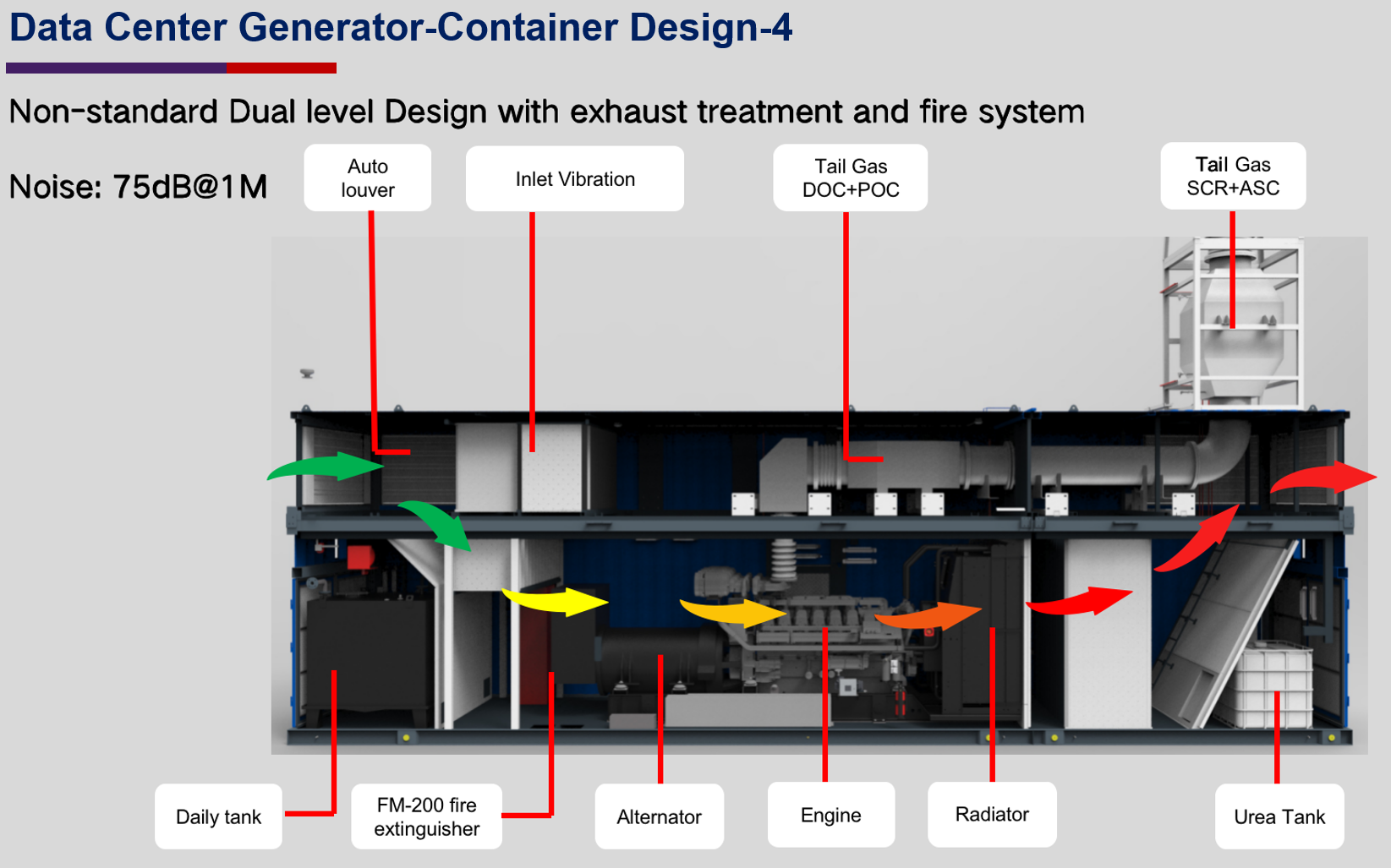
Data centers need generators that meet high-power, low-noise, and redundant operation requirements. For example, MECCA POWER's 2000KW diesel generator MC2000 and 2500KW diesel generator MC2500 are designed for data center standby and prime applications. The 3MW containerized diesel generator model MC3750C uses a US Cummins QSK95 engine and provides 3000KW/3750KVA. For urban core sites, a non-standard dual-level container design can reduce noise to 75-80 dB at 1 meter, roughly 10-15 dB lower than a standard single-layer design. That makes it suitable for campus-style IDC data centers, Tier III/Tier IV facilities, and sites near residential, school, or hospital zones.
Mining and Heavy-Duty Remote Sites
Mining projects often run at high altitude and in severe temperatures. A containerized diesel generator adapted for cold areas can operate outdoors from -45 degrees Celsius to +55 degrees Celsius, with adaptability for high-altitude, high-temperature, high-humidity, and high-cold conditions. Compared with a standard container set, these units are engineered for less maintenance and higher efficiency, which reduces total cost over a multi-year mine life.
Oil and Gas and Remote EPC Projects
EPC contractors need turnkey partners that can deliver containerized power plants, not just bare generators. MECCA POWER's containerized diesel generator line covers 1000KVA-4000KVA in 20HQ, 40HQ, and non-standard configurations. The company reports extensive experience in power plant EPC projects both domestically and internationally, providing technical support and after-sales maintenance. For a 50MW project, containerized modules can be staged and paralleled in groups, with the factory's high-power test stations verifying each module before shipment.
Construction and Urban Projects
Civil contractors may need silent-type and containerized units for urban sites, where noise and footprint are restricted. Open-type and containerized configurations, with high ambient temperature design and optional stainless steel materials, give project teams a choice between cost and environmental performance.
Comparison Tool: Long-Term Partner Selection Scorecard
Use the table below as a due-diligence scorecard. Evidence is drawn from MECCA POWER's published corporate and product data.
| Evaluation Area | Questions to Ask the Supplier | Evidence from MECCA POWER |
|---|---|---|
| Compliance and standards | Does the factory design and test to ISO 8528, CE, and project-specific emission standards? | Design follows GB/T 2820, ISO 8528, and CE; UL/CSA certification customizable. |
| Manufacturing scale | Can the factory handle high-power units and containerized production? | 34,000 m² factory; about 3,600 units per year; Nanchang line for 1,000 kW and above; monthly output up to 212 units. |
| Engineering depth | Is there an in-house R&D team for custom projects? | 41-person R&D team; simulation tools and design review process. |
| Factory testing | Is every unit tested before shipment? | Six testing stations; 100% test policy; no-load, load, parallel, insulation withstand voltage, protection interlock, emission, and noise tests. |
| Component partners | Which engine, alternator, and controller brands can be integrated? | Cummins, Perkins, MTU, Mitsubishi, FPT, Volvo, Baudouin; Stamford, Leroy Somer, Mecc Alte; DeepSea, ComAp; Chinese engine brands. |
| Risk controls | How are safety and quality risks controlled across the lifecycle? | SOPs, first-article and final inspection; intelligent monitoring; automatic shutdown and fault locking. |
| Commercial terms | Can the buyer test with one unit? | MOQ 1 unit; T/T 30% deposit and 70% before shipment; EXW/FOB/CIF; 100% tested. |
| Long-term service | What happens after commissioning? | On-site installation and commissioning support, operator training, operation manuals, operation files, and inspection reminders. |
Frequently Asked Questions
What compliance standards should a long-term industrial diesel generator partner meet?
A partner should design to the international standard ISO 8528 and, where applicable, local standards such as GB/T 2820 or CE. MECCA POWER's design process follows GB/T 2820, ISO 8528, and CE, and UL/CSA certification can be customized for export projects. For U.S. data center or mining applications, confirm that the selected engine and rating meet EPA Tier 4 Final requirements for non-emergency diesel engines.
Can MECCA POWER act as an OEM partner or turnkey supplier for a large containerized power plant?
Yes, as an OEM manufacturer with its own factory and R&D team. MECCA POWER sells diesel generators from 10kVA to 4000kVA, including containerized units from 1000KVA to 4000KVA. It has three production lines, six testing stations, and a Nanchang factory focused on 1,000 kW and above units. The company also has domestic and international power plant EPC project experience, providing technical support and after-sales maintenance.
What are the minimum order quantity and payment terms for wholesale or distributor programs?
MECCA POWER's published procurement terms are a minimum order of 1 unit, payment by T/T with a 30% deposit and 70% before shipment, and delivery under EXW, FOB, or CIF. This structure allows distributors and EPC buyers to qualify the product with one unit before committing to a larger program.
Can I order a single unit as a pilot before scaling up?
Yes. The MOQ is 1 unit, so a pilot order is practical. Each unit is 100% factory tested before shipment using procedures that include no-load, load, parallel operation, insulation withstand voltage, protection interlock, emission, and noise tests. A pilot unit gives the buyer a chance to inspect build quality, documentation, and performance data before mass production.
How does MECCA POWER manage lead time for high-power or containerized diesel generator projects?
Lead time depends on the exact engine specification, container configuration, and factory schedule. MECCA POWER's Nanchang factory is dedicated to high-power generator sets of 1,000 kW and above, with monthly output increased from 132 to 212 units. The factory's 45-ton lifting capacity allows simultaneous testing of three units above 2,000 kW, which shortens the final test phase for large orders. For a specific project schedule, contact the MECCA POWER team for a production plan based on current engine-brand availability. You can also request a sample, quote, or factory test schedule through the official contact channels.
Conclusion: Choose the Ecosystem, Not Just the Engine
Procurement in the Decision-to-Execution stage is about reducing risk across the life of a power asset. The right industrial diesel generator partner supplies not only a machine but a stable manufacturing base, component access, testing transparency, and after-sales control.
MECCA POWER's 34,000 m² factory, 41-person R&D team, six testing stations, and OEM relationships with established engine and alternator brands make it a practical manufacturing partner for data center, mining, oil and gas, and EPC programs. To evaluate a specific project, request a factory test plan and commercial proposal. A practical next step is to order one fully tested unit, confirm it meets your site conditions, then scale up with the same factory standards.
Download the MECCA POWER corporate brochure for the full product range and factory capabilities, or email mecca@meccagen.com.
Next step: request a factory test plan or commercial proposal. Email mecca@meccagen.com or visit www.meccapower.com.cn.
Have Questions or Need More Details?
Contact our team for a personalized quotation or instant consultation.
Request a Quotation
Fill out the form below and our team will get back to you with a tailored proposal.
WhatsApp Direct Chat
Prefer to chat in real-time? Message us on WhatsApp for instant assistance & quick answers.
- Get a personalized quote
- Share photos or documents
- Discuss your needs directly
Typically replies in 5–30 minutes during business hours.