
What Compliance Rules Apply to 2000KW–3MW Containerized Diesel Generators?
Compliance Guide · 2000KW to 3MW

Short answer: Three layers of rules apply to a 2000KW–3MW containerized diesel generator. The first is performance and load-acceptance testing under ISO 8528-10, which specifies requirements for load acceptance test procedures for reciprocating internal combustion engine-driven generating sets. The second is installation, maintenance and testing regulation where the set serves as an emergency or standby power system — in the United States, NFPA 110 governs the installation, maintenance and testing of emergency and standby power systems, including required periodic load bank testing. The third is the electrical, environmental and grid-connection rules enforced at the project location by the local authority having jurisdiction. For a 2000KW, 2500KW or 3MW containerized unit, compliance is not a certificate attached to a quotation — it is a set of acceptance conditions that must be written into the purchase contract.
Project teams usually reach this question at the research stage, after the power study is complete and before the purchase order is issued. The problem is that most supplier quotations are organised around power rating, engine brand and price, while the owner's engineer, insurer and commissioning agent are organised around standards, test records and documentation. This guide sets out the compliance categories that actually apply in the 2000KW–3MW range, how to convert them into procurement terms and acceptance criteria, and how the specific containerised models in this class — including MECCA POWER unit families — map against those requirements.
Why Compliance, Not Power Rating, Decides Acceptance at 2000KW and Above
A containerized diesel generator in this range is rarely rejected because it produces too few kilowatts. It is rejected because the documentation does not match the installation the site actually built, or because a test that the authority having jurisdiction expects to see was never witnessed or recorded. At 2000KW and above, three specific gaps reappear across projects.
- Prime and standby ratings are used interchangeably. The MECCA POWER 2000KW diesel generator family (models MC2000 and MC2750) carries a prime power rating of 2000KW / 2500KVA and a standby rating of 2200KW / 2750KVA. If a design submittal uses the prime figure as the basis for an emergency load block — or the standby figure as the basis for continuous operation — the equipment schedule and the nameplate will disagree at commissioning, even though the physical unit is identical to the one quoted.
- Emergency-system testing obligations are treated as an optional extra. Where a containerised set is installed as an emergency or standby power system in a jurisdiction that follows NFPA 110, the standard covers installation, maintenance and testing, including required periodic load bank testing. That turns load bank capacity from a one-off commissioning expense into a recurring compliance tool for the life of the installation.
- Environmental limits are assumed rather than verified. The application data for this class of equipment describes a working range of –45°C to +50°C, a low-noise design using an industrial-grade silencer and low-noise enclosure, and enhanced cooling through high-ambient heat sinks or derating for high-altitude capacity. Cooling strategy and acoustic treatment are compliance items, not cosmetic options, because they drive site permits and neighbour noise conditions.

The practical consequence is that compliance work has to happen before the quotation is compared, not after the equipment arrives. A buyer who asks three suppliers for a 2500KVA set and compares only the number will receive three technically different offers that appear identical on a spreadsheet.
Industry Background: Why This Power Class Is Under Compliance Pressure
The commercial context explains the tightening. Grand View Research values the global diesel generator market at approximately USD 19.33 billion in 2025, projected to reach USD 40.9 billion by 2033. Within that total, the data centre segment is expanding fastest: ResearchAndMarkets and Business Wire report the data centre generator market at USD 8.43 billion in 2024, expected to reach USD 19.66 billion by 2030, driven by AI workloads and hyperscale expansion.
Those numbers should be read with care. Third-party estimates diverge: Strategic Market Research values the data centre generator market at USD 6.1 billion for the same 2024 base year, against the USD 8.43 billion figure from ResearchAndMarkets. Buyers who quote market size in internal business cases should note that the estimates are not reconciled between sources.
Two further data points show why testing and documentation have moved to the centre of procurement. The Observatory of Economic Complexity records China's exports of generators and alternators at USD 968 million in 2024, with the United States, Mexico and Russia as the top destinations — meaning most high-power projects are now sourced across borders, where documentation standards differ between the factory and the site. Separately, Zion Market Research values the global load bank market at USD 278.45 million in 2024, projected to reach USD 445 million by 2034 at a CAGR of 4.8%. Load banks grow because compliance testing grows.
Fortune Business Insights lists Caterpillar, Cummins, Rolls-Royce (MTU), Kohler Energy (Rehlko) and Generac among the major global competitors in the data centre and industrial generator market. MECCA POWER works in the same supply chain at the OEM integration level: the company operates its own factory assets with an independent R&D team and supplies diesel generators, high voltage generators and load banks across a 10kVA–4000kVA range, with 100% export orientation and markets spanning Europe, Africa, Asia, Australia, the Middle East, the Americas, South America, Oceania and Latin America. Manufacturing is based in Fujian and Jiangxi provinces, and the company maintains OEM relationships with engine, alternator and control-system suppliers including Cummins, Perkins, MTU, Mitsubishi, FPT, VOLVO, Baudouin, Stamford, Leroy Somer, Mecc Alte, DeepSea, ComAp and Chinese engine brands.
The Compliance Categories Buyers Must Verify
1. Load acceptance and performance testing — ISO 8528-10
ISO 8528-10 specifies requirements for load acceptance test procedures for reciprocating internal combustion engine-driven generating sets. For a 2000KW–3MW containerised unit, load acceptance is the single most valuable piece of acceptance evidence, because it demonstrates behaviour under step loading rather than steady-state output. Data centre and critical-facility applications typically require the set to start and accept full load in a very short window — commonly under 10 to 15 seconds — which places the load acceptance profile, not the nameplate rating, at the centre of the commissioning argument.
What to ask for: the test procedure to be used, the load steps applied, the instrumented parameters recorded, and the identity of the unit tested against the serial number on the nameplate.
2. Emergency and standby system rules — NFPA 110
NFPA 110 governs the installation, maintenance and testing of emergency and standby power systems, including required periodic load bank testing. It applies where the set is installed as an emergency or standby source, and it is the reason load bank testing appears repeatedly in project specifications rather than once at commissioning.
The scoping question matters here. A containerised set used for continuous prime power — for example an off-grid mining power solution or a power plant continuous running power solution — sits under a different rule set than a data centre emergency standby installation. Buyers should classify the application before writing the compliance section of the specification, because the same 2500KW machine is governed differently depending on how the site uses it.
3. Certification scope and nameplate consistency
Certification is where assumption causes the most damage. The product specification for the MECCA POWER MC-series diesel generator range lists UL/CSA as customizable certification, which means the certification scope is confirmed per project and per configuration rather than assumed to cover every build. A 2000KW open-type set and the same output in a non-standard container are not automatically the same certified article.
Buyers should require written confirmation of three things: the exact certified model and configuration, the validity and scope of the certificate, and the correspondence between certified configuration and the equipment scheduled for delivery. Nameplate data — prime power, standby power, voltage, frequency, engine and alternator identification — should reconcile across the quotation, the drawing set, the test report and the physical plate.
4. Container structure, materials and environmental limits
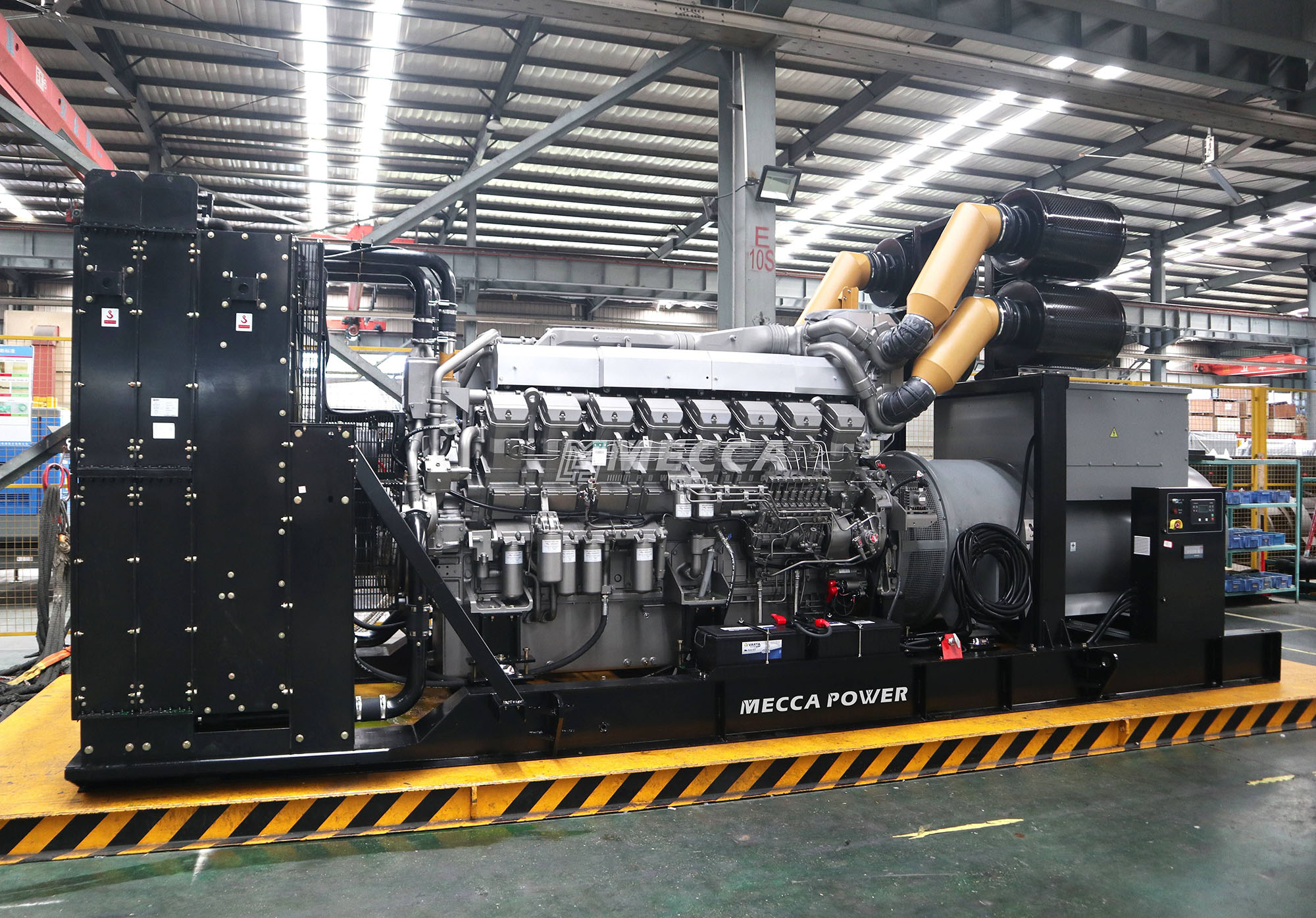
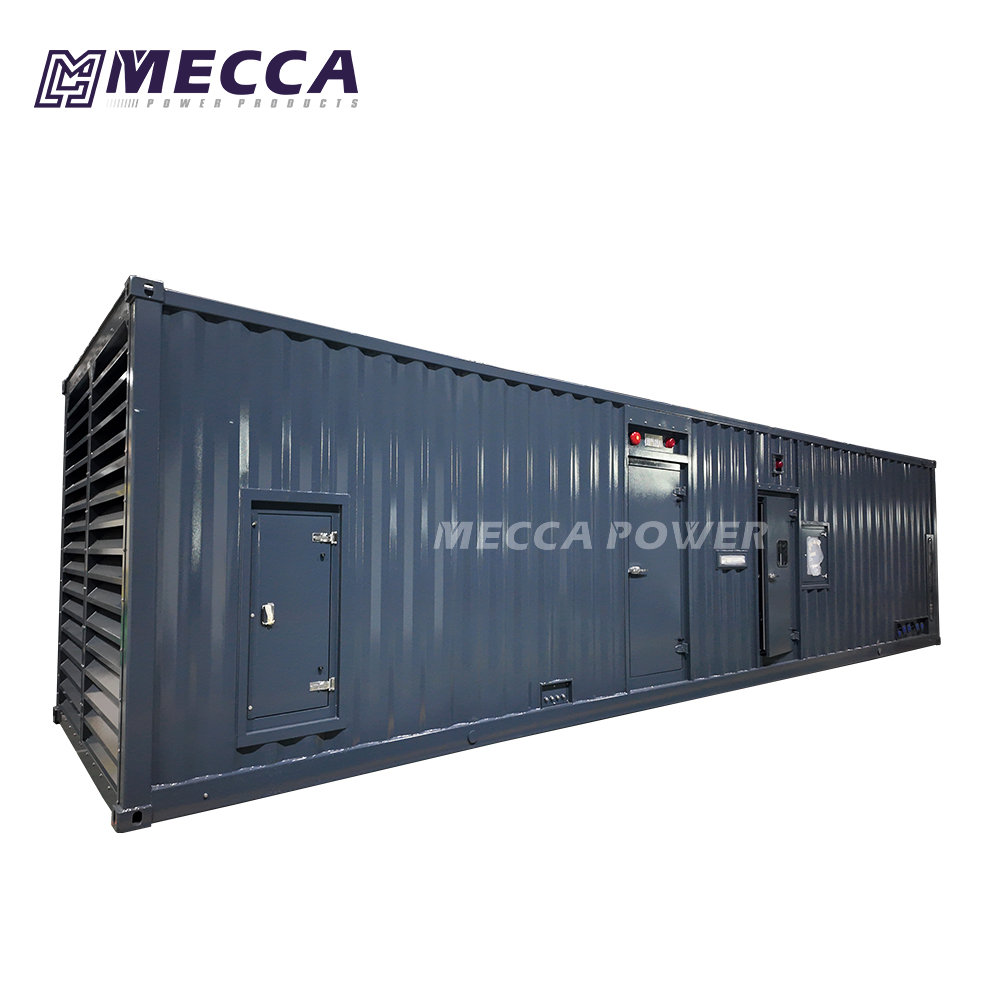
The containerised diesel generator range spans 1000KVA to 4000KVA in 20HQ, 40HQ and non-standard container configurations, with structural materials including corten steel, aluminium and stainless steel. Within the high-power tiers, material choices tighten: the 2000KW models (MC2000, MC2750) are specified with stainless steel, while the 2500KW models (MC2500, MC2750, MC3500) and the 3MW containerised model MC3750C are specified with alloy steel and heat-resistant steel.
Environmentally, the diesel generator product specification covers operating conditions from –50°C to 50°C, while the application data for critical facilities describes a working condition range of –45°C to +50°C and requires low-noise design with an industrial-grade silencer and low-noise enclosure, plus high-efficiency cooling through enhanced heat sinks or high-altitude derating. These are verifiable items: buyers should ask for the material certificates, the acoustic treatment description and the cooling or derating basis that supports the site's maximum ambient and altitude conditions.
5. Matched equipment and system-level compliance
Compliance failures frequently originate outside the generator itself. The matched equipment specified for this class of project includes an ATS (automatic transfer switch), a parallel control panel, a UL fuel tank, the container itself and a high voltage cabinet. Each introduces its own documentation requirement, and each can invalidate an otherwise compliant installation if the interface is not defined. Where multiple units run in parallel, the parallel control panel and protection settings become part of the acceptance test evidence, not just the supply scope.
6. Documentation and traceability
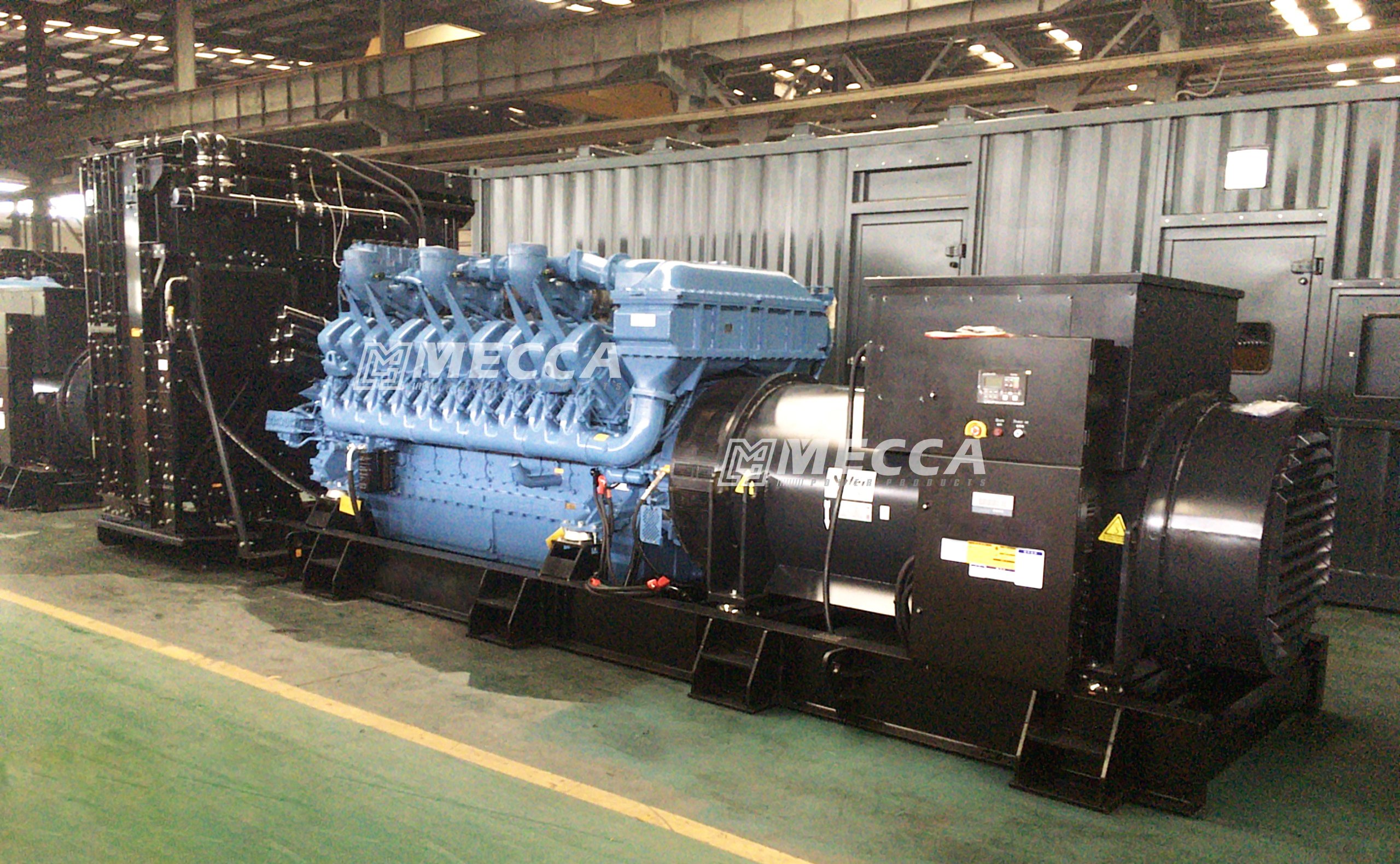
Traceability is now a factory capability question. MECCA POWER's Nanchang facility focuses on generator sets of 1000kW and above, where reported monthly output increased from 132 to 212 units. The plant runs three specialised production lines — one container line, one open-type line and one mixed-assembly line — and operates six testing stations with digital tightening, intelligent oil and water filling and cloud-based data management of the production process, supported by APS+MES information systems. Maximum lifting capacity is 45 tons, sufficient to support production testing of three units above 2000KW simultaneously. For buyers, the relevant point is not the equipment list itself but whether production and test records can be retrieved and matched to a specific serial number after delivery.
Step-by-Step: Building a Compliance-First Procurement Package
- Classify the application before anything else. Decide whether the set is emergency/standby, continuous prime, or a hybrid (for example, standby duty with periodic parallel running). This determines whether NFPA 110 obligations apply and which test regime governs the site.
- Lock the rating language. State prime and standby values explicitly. For the 2000KW class, that means 2000KW / 2500KVA prime against 2200KW / 2750KVA standby. For the 2500KW class, 2500KW / 3125KVA prime against 2750KW / 3500KVA standby. Never let a single figure carry both meanings in a specification.
- Publish a written standards list with the RFQ. Include ISO 8528-10 for load acceptance test procedures, NFPA 110 where emergency or standby systems are involved, the local electrical and grid-connection requirements, and the container and material requirements for the site environment.
- Match container and auxiliary equipment to the actual site. Confirm 20HQ, 40HQ or non-standard container configuration, then list the ATS, parallel control panel, UL fuel tank and high voltage cabinet as discrete supply and documentation items.
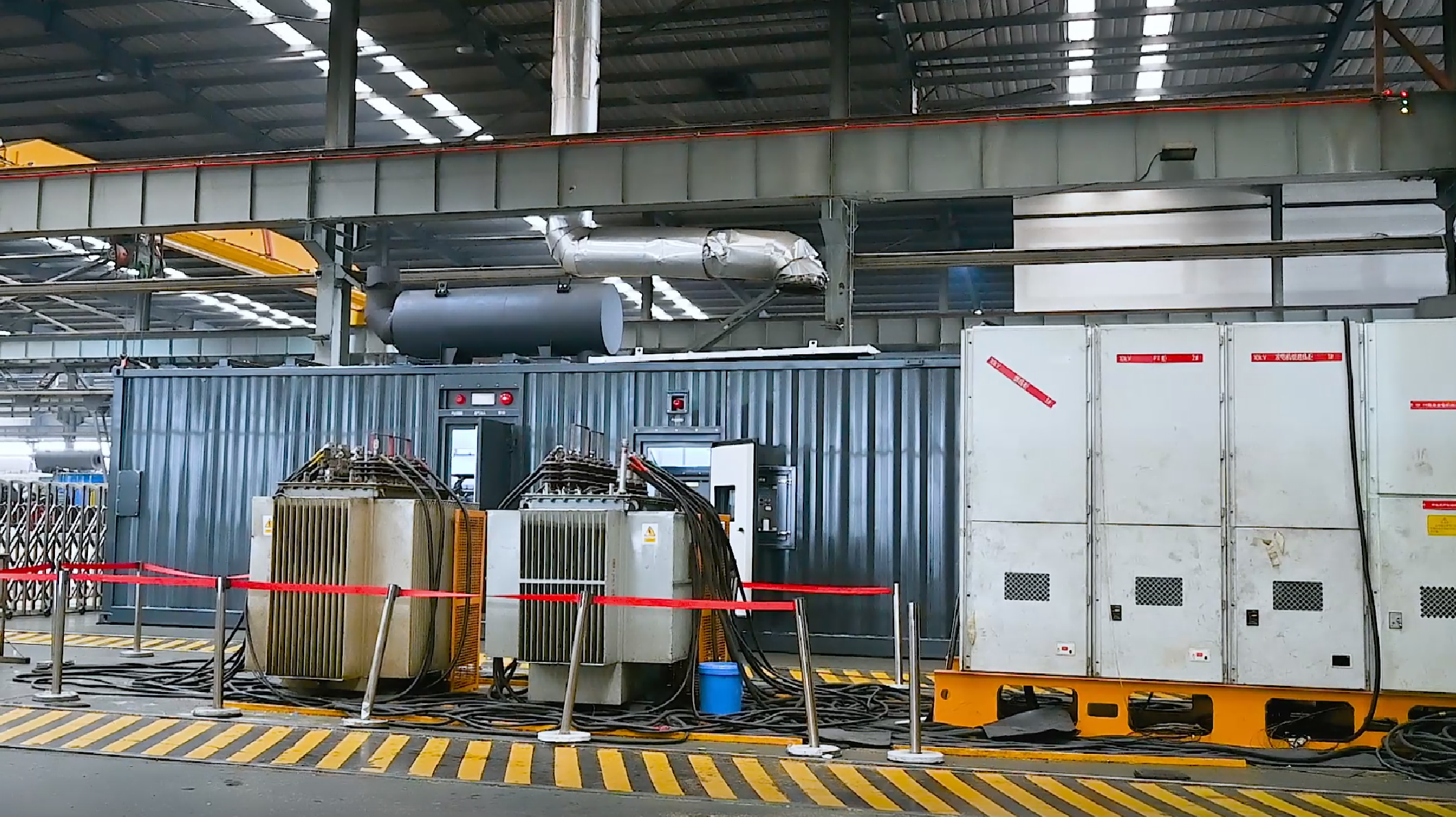
- Define the factory acceptance test scope in writing. Specify what will be witnessed, which load steps will be applied, which parameters will be recorded, and how the record will be tied to the serial number. Confirm the test station capability for the unit size — for example, whether the plant can test 2000KW-plus units under simultaneous load.
- Confirm certification scope per configuration. Treat UL/CSA as a project-specific confirmation item, not a default statement, and require the certificate scope to match the configuration being purchased.
- Bind documents to payment and acceptance milestones. Documentation is the only part of compliance that can be contractually secured before delivery, so it should appear as a milestone condition rather than a post-delivery deliverable.
Use Cases: Where These Rules Bite Hardest
Data centres
Rapid load bearing dominates the test discussion: the set must start and accept full load within a very short period, typically under 10 to 15 seconds, which requires strong speed and voltage regulation. Low-noise design and high voltage generator solutions are frequently specified together with ATS and parallel control panels. This is the segment where a missing load acceptance record is most likely to delay energisation.
Power plants
Continuous running power solutions shift the compliance emphasis from emergency testing to sustained output, cooling adequacy and long-duration documentation. A 3MW containerised unit with a US Cummins QSK95 engine, such as model MC3750C at 3000KW / 3750KVA, is typically specified in this context alongside high voltage cabinets.
Mining
Off-grid mining power solutions remove the grid-connection layer and replace it with fuel logistics, derating for altitude and ambient, and material durability. Stainless and heat-resistant steel specifications in the high-power tiers exist for this reason.
Oil and gas
Site classification and hazardous-area interfaces usually add documentation that is not part of a standard generator datasheet, so the auxiliary equipment list — fuel tank, control panel, container — carries more compliance weight than in other segments.
Telecom and construction
Telecom and construction projects commonly run smaller multiples of the same platform, but the compliance logic is identical: rating language, test evidence and documentation traceability. Buyers running mixed fleets should standardise the compliance package rather than rebuilding it per site.
Compliance Comparison: 2000KW vs 2500KW vs 3MW Containerized
The table below compares the three containerised power tiers against the compliance and acceptance items discussed above. Entries are drawn from published product specifications and applicable standards; where a specification does not state a value, the table says so rather than filling the gap.
| Compliance / acceptance item | 2000KW containerized (MC2000, MC2750) | 2500KW containerized (MC2500, MC2750, MC3500) | 3MW containerized (MC3750C) |
|---|---|---|---|
| Prime power rating | 2000KW / 2500KVA | 2500KW / 3125KVA | 3000KW / 3750KVA |
| Standby power rating | 2200KW / 2750KVA | 2750KW / 3500KVA | Not stated in the supplied product specification — confirm with supplier |
| Engine reference | OEM engine platform selected per project | OEM engine platform selected per project | US CUMMINS QSK95 |
| Container configuration | 20HQ / 40HQ / non-standard | 20HQ / 40HQ / non-standard | Containerized configuration within the 1000KVA–4000KVA container range |
| Structural / enclosure material | Stainless steel | Alloy steel / heat-resistant steel | Alloy steel / heat-resistant steel |
| Load acceptance test reference | ISO 8528-10 | ISO 8528-10 | ISO 8528-10 |
| Emergency / standby system testing | NFPA 110 applies where the installation is an emergency or standby power system | NFPA 110 applies where the installation is an emergency or standby power system | NFPA 110 applies where the installation is an emergency or standby power system |
| Certification position | UL/CSA (customizable) | UL/CSA (customizable) | UL/CSA (customizable) |
| Matched equipment in scope | ATS, parallel control panel, UL fuel tank, container, high voltage cabinet | ATS, parallel control panel, UL fuel tank, container, high voltage cabinet | ATS, parallel control panel, UL fuel tank, container, high voltage cabinet |
| Typical application sectors | Data center, construction, power plant, oil & gas | Data center, power plant, oil & gas, mining, construction | Data center, power plant, mining, construction, oil & gas |
Note on the table: UL/CSA is listed in the product specification as a customizable certification, and the 3MW standby rating is not stated in the supplied specification. Both items should be confirmed in writing against the exact configuration being purchased.
Frequently Asked Questions
Which standards and certifications should a buyer require for a 2000KW–3MW containerized diesel generator?
Three categories should appear in the specification. For performance, ISO 8528-10, which specifies requirements for load acceptance test procedures for reciprocating internal combustion engine-driven generating sets. For installation, NFPA 110 where the set is an emergency or standby power system, since that standard governs installation, maintenance and testing including required periodic load bank testing. For equipment, the certification position stated for the MECCA POWER MC-series range is UL/CSA (customizable), which means certification scope must be confirmed for the specific configuration ordered. Local electrical and grid-connection rules enforced by the authority having jurisdiction should be added to the list before the RFQ is issued.
Can 2000KW to 3MW containerized units be supplied in the container configuration the site needs?
MECCA POWER produces containerised diesel generators across a 1000KVA to 4000KVA range, with 20HQ, 40HQ and non-standard container configurations available. Specific models in this band include the 2000KW family (MC2000, MC2750) at 2000KW / 2500KVA prime and 2200KW / 2750KVA standby, the 2500KW family (MC2500, MC2750, MC3500) at 2500KW / 3125KVA prime and 2750KW / 3500KVA standby, and the 3MW containerised model MC3750C at 3000KW / 3750KVA with a US Cummins QSK95 engine. MECCA POWER is a generator manufacturer established in 2013, supplying diesel generators, high voltage generators and load banks, with a 34,000 m² factory footprint, 311 employees, an annual output of 3,600 units and a 41-person R&D team.
What drives the cost of a compliant 2000KW–3MW containerized generator?
Cost in this class is driven by configuration decisions that are also compliance decisions. These include the engine platform selected from the available OEM relationships (Cummins, Perkins, MTU, Mitsubishi, FPT, VOLVO, Baudouin and Chinese engine brands), the container class and structural material (corten steel, aluminium, stainless steel, alloy steel or heat-resistant steel), the matched equipment scope (ATS, parallel control panel, UL fuel tank, container, high voltage cabinet), and the cooling and acoustic design required for the site's ambient and altitude conditions. Test scope and documentation depth also affect cost, because witnessed load acceptance testing, production records and traceable serial-number documentation require factory time. Buyers should carry these items in the quotation comparison from the start rather than adding them after supplier selection.
Can a buyer validate a unit before shipment?
Validation depends on factory testing capability, so the question should be asked directly. MECCA POWER's Nanchang facility focuses on generator sets of 1000kW and above and operates six testing stations, with digital tightening, intelligent oil and water filling and cloud-based data management of the production process supported by APS+MES systems. Maximum lifting capacity is 45 tons, which supports simultaneous production testing of three units above 2000KW. Buyers should define the factory acceptance test scope in the contract — load steps, recorded parameters, witnessing arrangements and the link between the test record and the unit serial number — and align load acceptance testing with ISO 8528-10.
How should compliance documentation be tied to delivery and acceptance terms?
Documentation should be treated as a contractual milestone rather than a post-delivery deliverable. A practical sequence links four gates: rating and nameplate confirmation at order acknowledgement; material and container certificates before production release; witnessed or recorded test evidence before shipment; and final document handover — test records, matched equipment lists, control and protection settings — before final payment. Lead time itself depends on configuration, test scope and documentation requirements, so it should be quoted against a defined compliance package rather than a bare power rating. MECCA POWER's reported monthly output at the Nanchang plant increased from 132 to 212 units for sets of 1000kW and above, which supports scheduling for large orders, but specific delivery dates still need to be confirmed project by project.
To move from research to evaluation, request a configuration-specific quotation with the compliance package attached, or arrange a factory test review for the model under consideration. The MECCA POWER product catalogue (PDF) lists the containerised and high-power model families, and the team can be reached at meccapower.com.cn or via mecca@meccagen.com.
Conclusion: Compliance Is a Procurement Artefact, Not a Datasheet Line
For 2000KW–3MW containerized diesel generators, the applicable rules are more specific than most procurement templates assume. ISO 8528-10 defines the load acceptance test procedures that prove the set performs under step loading. NFPA 110 defines the installation, maintenance and testing regime, including periodic load bank testing, wherever the unit serves as an emergency or standby power system. Everything else — certification scope, container structure, environmental limits, matched equipment and documentation traceability — has to be confirmed against the exact configuration, not against the product family.
The buyer's advantage is that all of these items can be settled before the purchase order. Rating language can be written precisely, standards can be named in the RFQ, test scope can be defined in advance, and documents can be attached to payment milestones. Teams that do this convert compliance from a commissioning risk into a procurement checklist — and in a market where data centre generator demand is projected to grow from USD 8.43 billion in 2024 toward USD 19.66 billion by 2030, procurement discipline is what separates projects that energise on schedule from those that wait on paperwork.
Next Step
Send your project parameters — power tier (2000KW, 2500KW or 3MW), container configuration, ambient and altitude conditions, and the standards your authority having jurisdiction requires — and MECCA POWER will return a configuration-specific proposal with the matching compliance and test documentation scope.
Email: mecca@meccagen.com | WhatsApp / WeChat: +86 15659994455 | Website: www.meccapower.com.cn
Have Questions or Need More Details?
Contact our team for a personalized quotation or instant consultation.
Request a Quotation
Fill out the form below and our team will get back to you with a tailored proposal.
WhatsApp Direct Chat
Prefer to chat in real-time? Message us on WhatsApp for instant assistance & quick answers.
- Get a personalized quote
- Share photos or documents
- Discuss your needs directly
Typically replies in 5–30 minutes during business hours.