
Pre-Grid Power Gaps: 2000KW, 2500KW & 3MW Gensets
Solving Pre-Grid Power Gaps with Industrial 2000KW, 2500KW, and 3MW Containerized Diesel Generators
A pre-grid power gap is the window in which a project must carry critical load before the utility connection is energized, or while the available grid capacity remains below the design load. The practical answer is a bridging generator block sized to the critical load, specified on an explicit rating basis, and accepted through a documented factory test and site handover. For data center, mining, and EPC projects, that block is usually assembled from three options: 2000KW diesel generators for fine-grained modular capacity, 2500KW units to reduce the machine count per megawatt, and a 3MW containerized diesel generator where the highest capacity is required in a single package.
The decision is rarely settled by engine brand alone. It is settled by how the load is split into modules, how the modules are integrated with switchgear and fuel systems, and how performance is proven before the unit is accepted. MECCA POWER CO.,LTD. is a China-based manufacturer of industrial diesel generators, load banks, and related power equipment, founded in 2013, with a stated product range of 10kVA to 4000kVA and a factory footprint of 34,000 m². Its model listing covers 2000KW, 2500KW, and 3MW containerized configurations, which makes the three-option comparison concrete rather than theoretical.
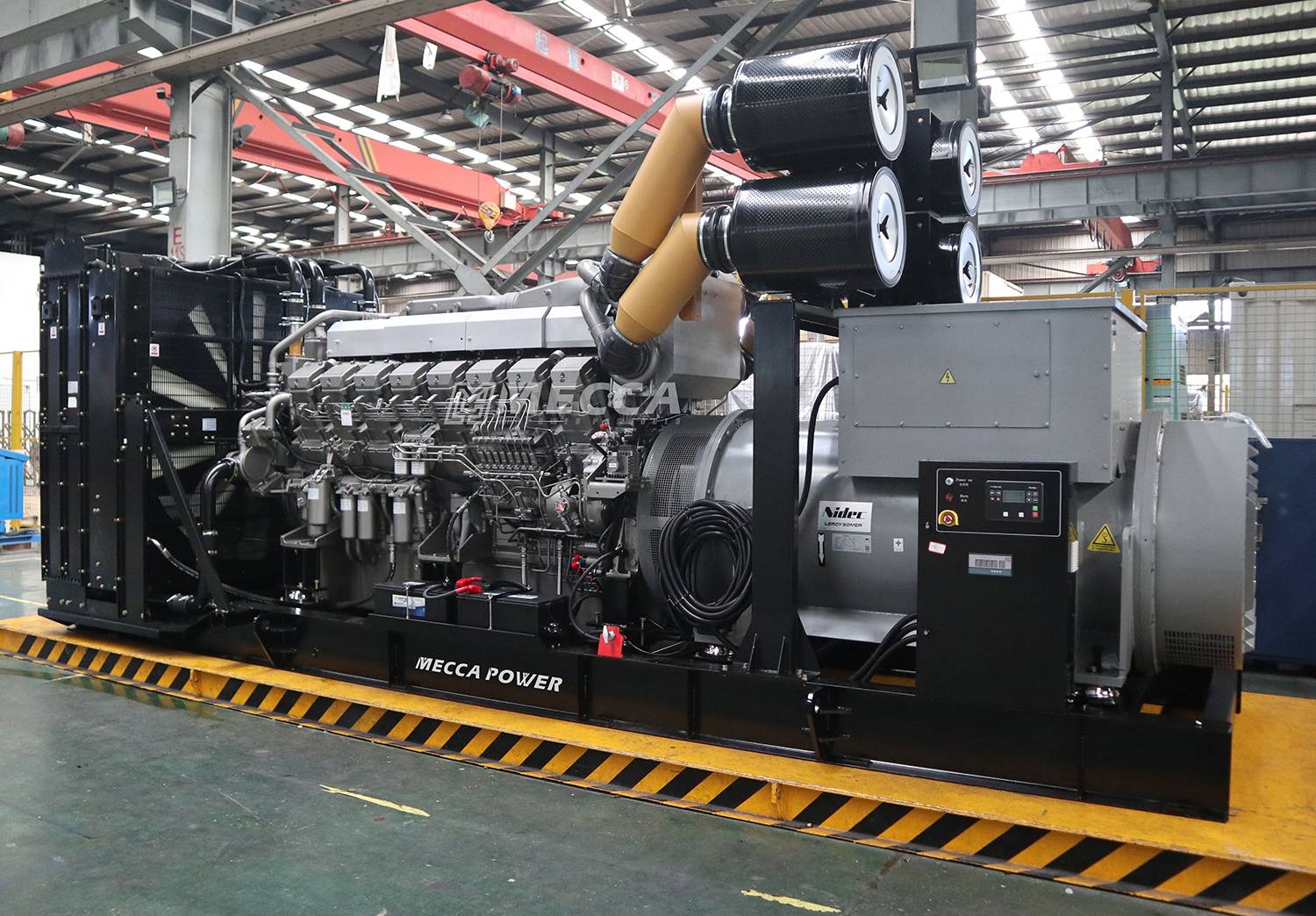
What a Pre-Grid Power Gap Actually Looks Like
The gap is a schedule and capacity problem, not a single equipment problem. Four patterns account for most industrial inquiries.
- Delayed utility energization. The substation, transformer, or utility interconnection is late while commissioning, IT load staging, or production trials cannot wait.
- Partial grid allocation. The site receives less capacity than the design load, so generation must cover the difference for an extended period rather than for a few hours.
- Phased load growth. Load arrives in blocks, and the temporary plant must scale without rebuilding the whole electrical room.
- No grid at all. Remote mining, oil and gas, and construction sites rely on on-site generation as prime power, not as standby.
Each pattern forces the same three questions: how much capacity, in what increments, and on what rating basis. Most commercial disputes in this segment trace back to those questions rather than to engine quality. A unit described as 2000KW can be quoted as a standby rating, a prime rating, or a continuous rating, and those numbers are not interchangeable. ISO 8528-1:2018 defines the classifications for application, rating, and performance of alternating-current generating sets driven by reciprocating internal-combustion engines, and it explicitly covers continuous, peak-load, and standby applications. That standard is the reason a tender should state the rating basis in writing before prices are compared.
Industry Background: Why Containerized Blocks Became the Default Bridge
Diesel generation remains the dominant bridging technology for mission-critical sites. The global diesel generator market was valued at USD 22.33 billion in 2025, and more than 68% of data centers worldwide maintained diesel-powered backup systems in that year. Those two figures explain why pre-grid projects rarely wait for a permanent solution: the equipment, the fuel supply chain, and the service model already exist.
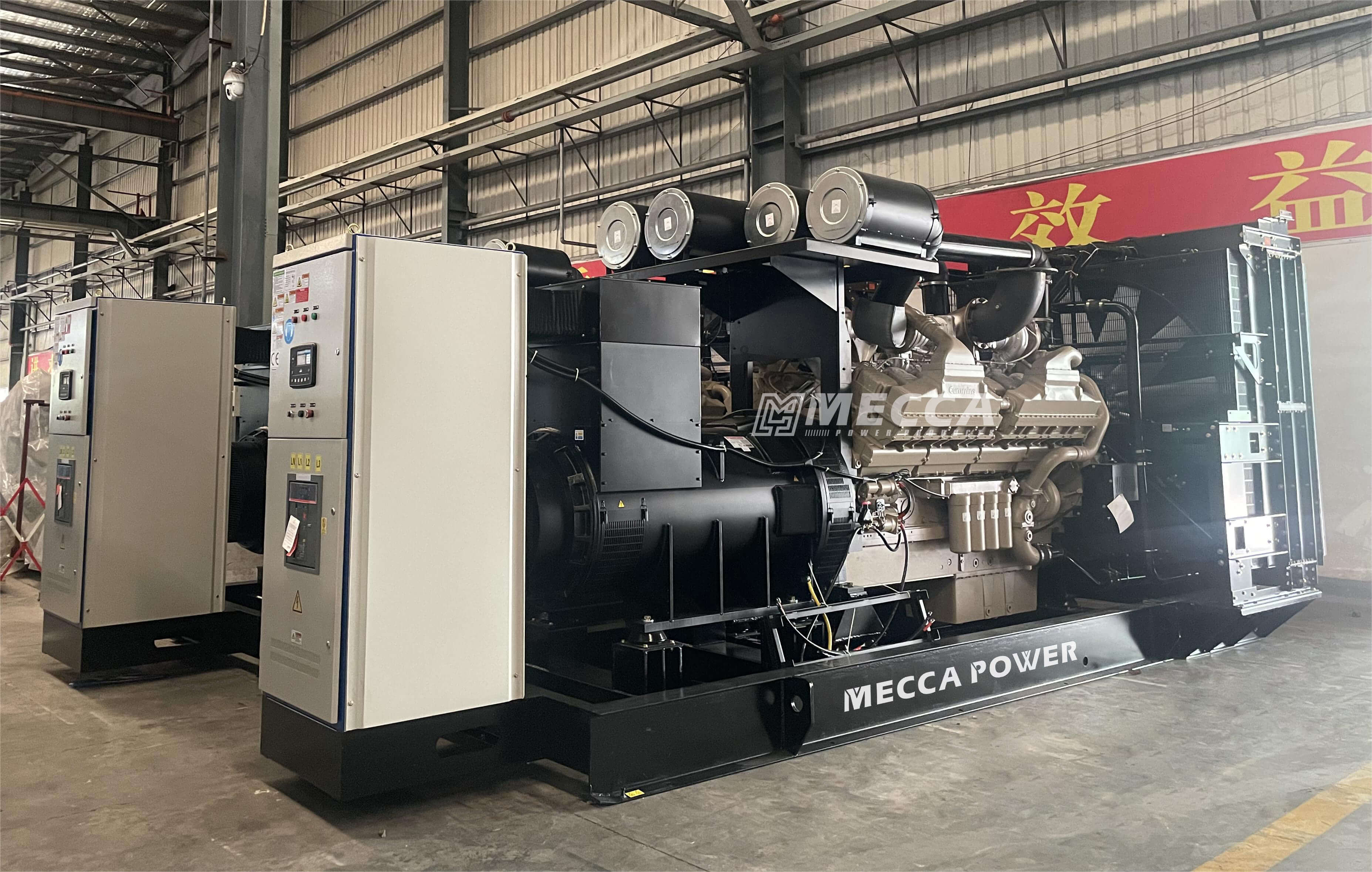
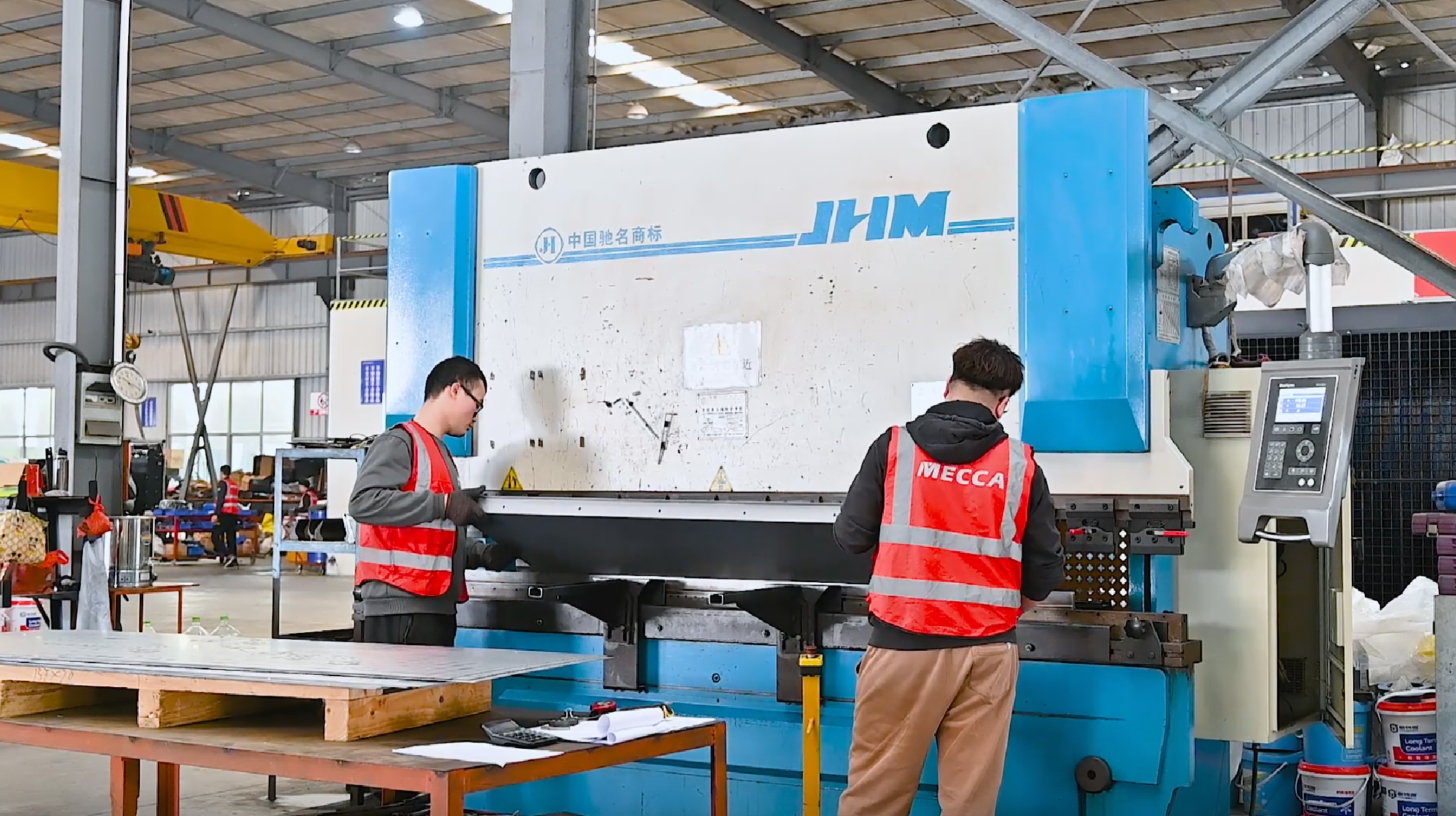
Containerization changed the delivery model. A factory-built container package moves cable termination, cooling, noise control, and control panels into a single transportable unit, which shortens site works and reduces the number of trades on site. MECCA POWER operates three production lines, one for container units, one for open-type units, and one for mixed assembly, supported by six testing stations. The factory has a maximum lifting capacity of 45 tons and can support production testing of three units above 2000KW at the same time. Its Nanchang facility focuses on generator sets of 1000kW and above, with monthly output increasing from 132 units to 212 units and output value rising from 180 million to 380 million, as reported by the company.
Compliance now shapes the shortlist as much as capacity does. In the United States, new diesel engines above 560kW manufactured after 1 January 2015 must meet Tier 4 Final standards for non-emergency use under 40 CFR Part 1039, which makes the emergency or non-emergency classification a procurement decision, not an afterthought. For European projects, MECCA POWER holds CE certificate M.2024.206.C101740 issued by UDEM, valid from 2024-06-05 to 2029-04-06, with a scope covering diesel generators and standards EN ISO 12100:2010, EN ISO 8528-13:2016, EN 60204-1:2018, EN 61000-6-2:2019, and EN 61000-6-4:2019. The certificate lists the MC2000, MC2500, MC2750, MC3500, and MC3750C models, together with a containerized range from MC1000 to MC4375.
The Three Building Blocks: Detailed Solution
The choice between 2000KW, 2500KW, and 3MW is a choice about granularity. A 6MW bridging requirement can be met by three 2000KW units, two 2500KW units plus standby, or two 3MW containerized units. Each arrangement produces a different switchgear count, a different redundancy profile, and a different transport plan.
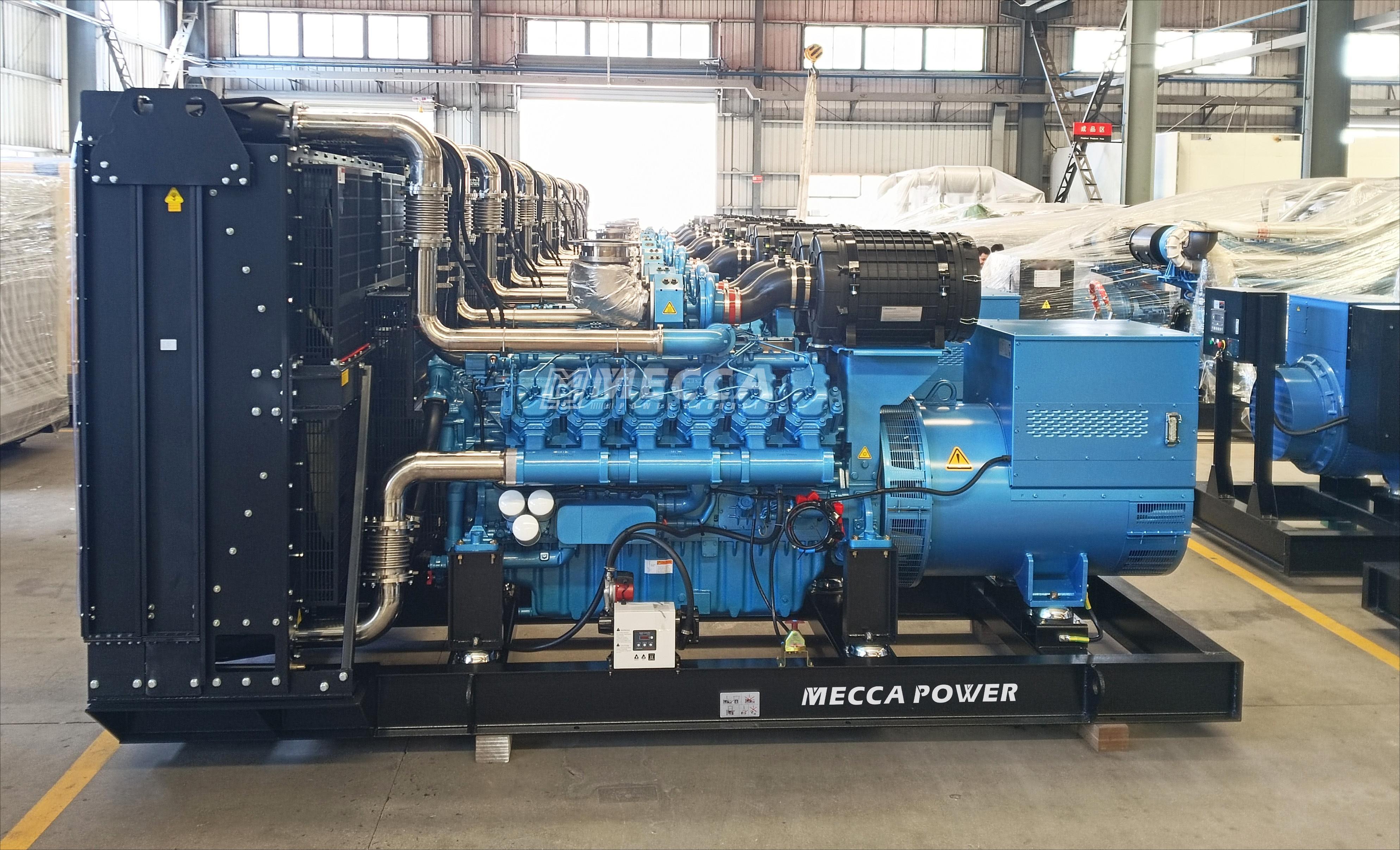
2000KW: Granular Modular Capacity
The 2000KW class, referenced in the certificate listing as model MC2000, is the most flexible building block for a gap whose final load is still uncertain. Two units produce a 4000KW block, and three units produce 6000KW with one machine held as standby at a 2000KW increment. Smaller increments make it easier to match generation to phased load, to take one unit out for maintenance while the rest carry the load, and to move equipment through restricted site access.
The boundary is unit count. Every additional machine adds a circuit breaker, protection settings, cabling, control logic, floor area, and maintenance hours. Paralleling also imposes a minimum stable load per unit, so a block of many small units can run inefficiently when the actual load is far below the installed total. Buyers should confirm the minimum load per unit and the load-sharing behaviour with the supplier before fixing the unit count.
2500KW: Fewer Machines per Megawatt
The 2500KW class, listed as MC2500, MC2750, and MC3500, sits between modularity and concentration. Two units deliver 5000KW, and three units deliver 7500KW with one unit as standby. For bridge requirements in the 4MW to 6MW range, this class often reduces the number of interconnections and the number of maintenance points without moving to a single large package.
The boundary is logistics and electrical rating. A larger unit changes the transport weight, the lifting plan, the foundation design, and the rating of the upstream switchgear. It also reduces the number of spare-part commonalities if the fleet mixes 2000KW and 2500KW machines. Projects that expect load growth should check whether the chosen frame size can be paralleled with a later addition of the same class.
3MW Containerized: Maximum Capacity per Package
The 3MW containerized class, listed as model MC3750C, is the compact high-capacity option. MECCA POWER describes 3MW as approximately 3750kVA, so the power factor basis must be confirmed in the model datasheet before the figure is used in a load calculation. The container format concentrates the engine, alternator, cooling, control, and noise treatment into one transportable package, which reduces site interfaces and shortens the installation window.
The boundary is concentration risk. A single 3MW unit is a single point of failure unless a standby unit or a parallel arrangement is included, and that decision changes both cost and footprint. Transport permits, lifting capacity at site, foundation loading, and the local emissions and noise requirements also need early review. For space-constrained data center yards, the container format is often the reason the project can proceed at all.
Sizing the Block Before Choosing a Model
Sizing starts with a load list, not with a generator catalogue. The load list should separate running kW, starting kVA, step-load changes, and the largest single motor or UPS block. It should also record the expected load profile over the bridging period, because a twelve-week bridge and a three-year prime-power installation are different duty cycles.
- Rating basis. State whether the figure required is continuous, prime, or standby, and require every quotation to declare the same basis under ISO 8528-1 terminology.
- Power factor and units. Keep kW and kVA separate. Mixed units across a supplier product listing are a known source of comparison error, and the power factor must be stated for any kVA figure.
- Site conditions. Altitude and ambient temperature affect available output. Request the derating curve for the specific model rather than applying a generic percentage.
- Redundancy. Decide whether the block must survive one unit outage. A 2N approach doubles the block; an N+1 approach adds one machine to the installed total.
- Fuel autonomy. Define the run hours required between refuelling and confirm that the fuel storage and polishing arrangement matches the duty cycle.
- Transient performance. Data center and process loads impose step changes. Define the acceptable voltage and frequency deviation, and test it at the factory.
Step-by-Step: From Load Assessment to Handover
- Define the gap window and the critical load. Record the start date, the expected utility energization date, and the loads that must remain online in between. Treat the bridging plant as a project deliverable with its own schedule.
- Convert the load into a specification. Fix the rating basis, the voltage and frequency, the power factor, the altitude and ambient conditions, and the redundancy requirement in the tender document.
- Choose the granularity. Compare 2000KW modules, 2500KW modules, and the 3MW containerized package against the load profile, the site access, the switchgear budget, and the maintenance plan.
- Design the site integration. Cover foundations, cable routing, medium or low voltage connection, neutral grounding, protection coordination, fuel storage and transfer, exhaust routing, cooling air path, noise treatment, and control or SCADA interface.
- Write the purchasing terms. Use a scope-of-supply matrix that names every interface, the documentation package, the test standard, the spare-parts list, the warranty terms, the training scope, and the delivery terms.
- Run the factory acceptance test. Verify rated load, load steps, protection trips, alarms, paralleling behaviour, fuel consumption measurement, and control response. MECCA POWER applies 100% testing, and its six test stations and 45-ton lifting capacity support testing of large units before shipment.
- Commission and hand over on site. Repeat the critical tests at site, confirm protection settings against the actual network, and record as-built drawings and setpoints.
- Close the documentation loop. Hand over the operation and maintenance manuals, test reports, certificate copies, spare-parts list, and the service contact path, including the remote technical support and on-site commissioning support that MECCA POWER states it provides.
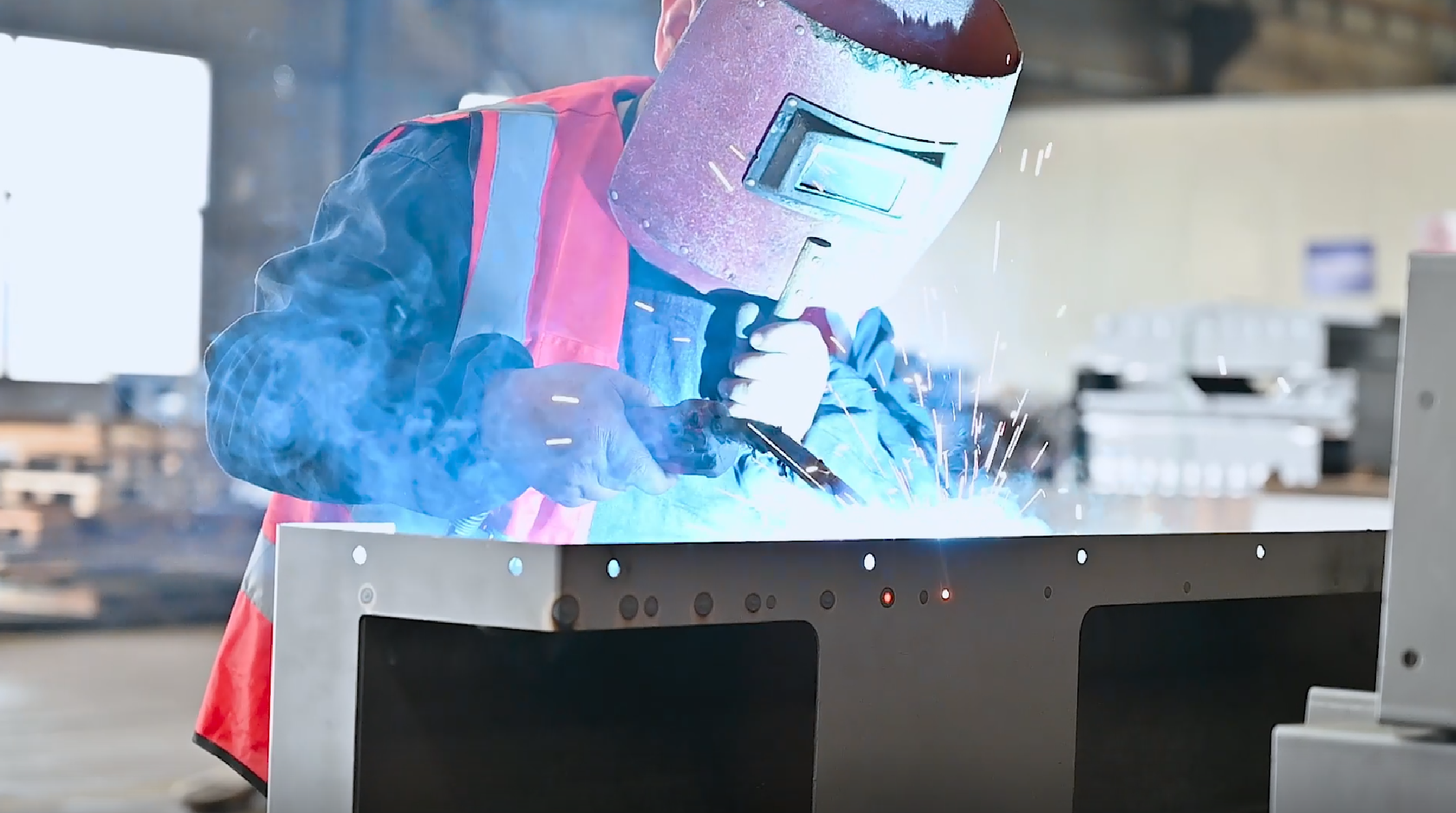
Site Integration, Testing, and Acceptance
Site integration is where pre-grid projects lose time. The generator package is only one part of the electrical system, and the interfaces must be named in the purchase order. A practical interface list includes the point of connection, the cable entry direction, the neutral grounding arrangement, the protection relay settings, the fuel filling point, the exhaust termination, the cooling air inlet and outlet, the fire detection interface, and the communication protocol to the building management system.
Acceptance should be split into factory and site stages. The factory test proves the machine; the site test proves the system. Factory items include rated load, step-load response, protection operation, alarm annunciation, paralleling and load sharing, fuel consumption, and control response. Site items include cable and termination checks, protection coordination with the upstream network, fuel system leak and transfer tests, noise verification against the permitted level, and a full-load run with the actual site load where possible.
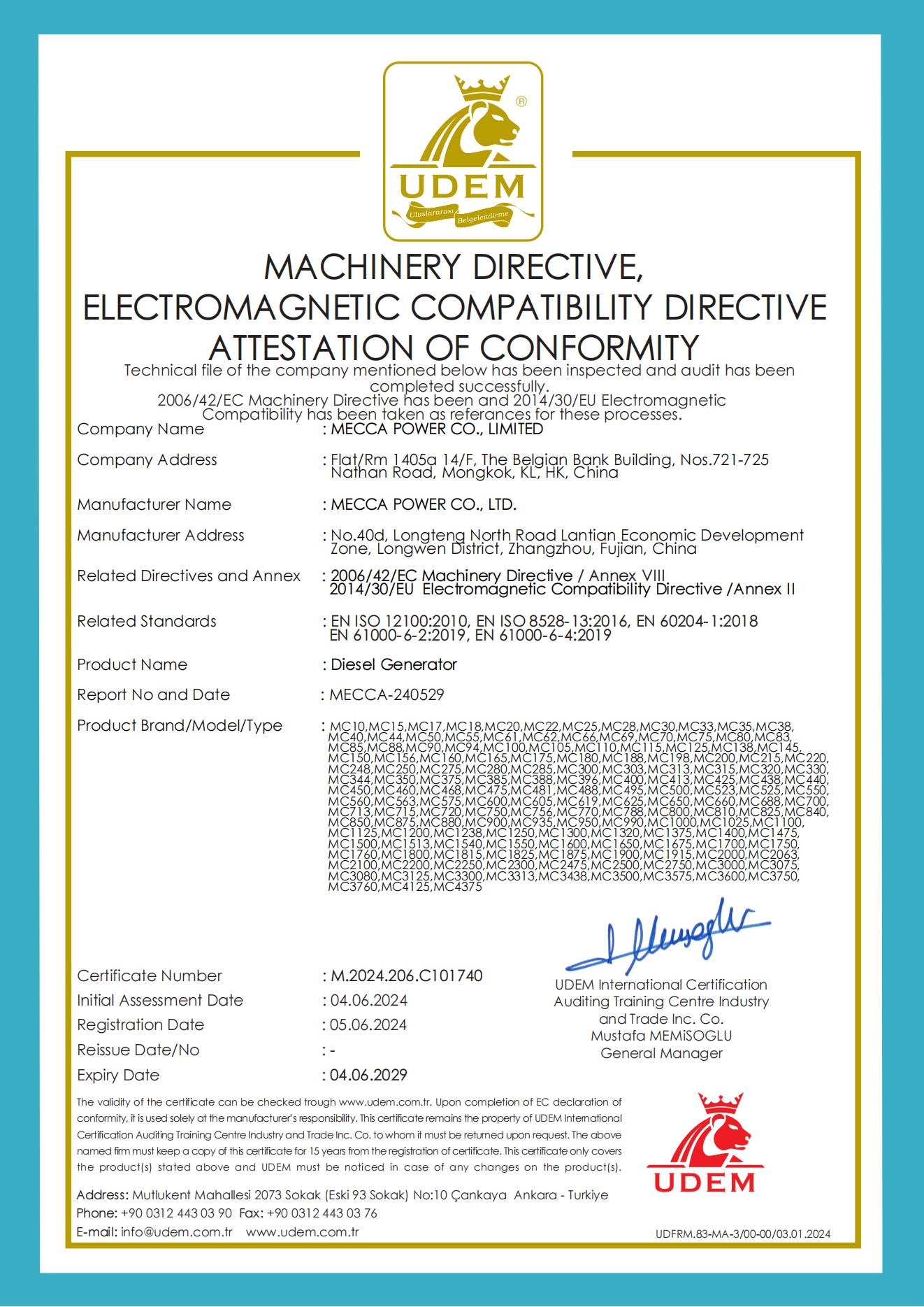
Documentation is part of acceptance, not a follow-up task. Request the certificate copy, the test report with the rating basis stated, the wiring and outline drawings, the operation and maintenance manual, the spare-parts list with recommended first-year stock, and the commissioning record. Where a US project is involved, confirm the emergency or non-emergency classification and the corresponding Tier 4 Final position before the engine platform is frozen, because that classification can change the eligible supplier set.
Use Cases Across Data Center, Mining, and EPC Projects
Data Center Bridge and Pre-Commissioning Power
Data centers need a block that can be tested, paralleled, and expanded as halls come online. MECCA POWER project references include four 2200KW containerized units powered by YUCHAI engines for a data center in Kenya through an authorized dealer, with a stated operating life of 20,000 to 30,000+ hours, and a 10.5kV high-voltage 1800KW installation for a data center in Kazakhstan. A Russian data center project used five 1800KW YUCHAI containerized units with a non-standard low-noise container. These references show the pattern rather than a fixed rule: containerized units at the megawatt scale are used to bridge the gap between construction completion and utility readiness.
Power Plant and Continuous Duty
Continuous duty changes the specification. A European power station reference used six 2500KVA UK CUMMINS generators for continuous running, with a stated service life of 15 to 25 years. For continuous duty the rating basis, fuel quality, maintenance intervals, and the service network matter more than the headline capacity, and the acceptance test should reflect continuous operation rather than a short load bank run.
Oil and Gas and Heavy Industrial Loads
Oil and gas sites typically require prime or continuous power with limited maintenance access. A reference project supplied two 1800KW UK CUMMINS generators powered by the QSK60-G8 engine for an oil and gas application. A separate installation used eight 1500KW Japan Mitsubishi generators for a glass factory, an application where load stability matters as much as capacity.
Mining and Remote Sites
Mining sites usually run generation as prime power, so the pre-grid logic applies for the life of the site rather than for a few months. Altitude and ambient temperature derating, fuel logistics, dust ingress, and maintenance access dominate the specification. A modular 2000KW or 2500KW arrangement allows capacity to follow the mining plan, while a 3MW containerized unit reduces the number of packages to transport and protect.
EPC and Turnkey Delivery
EPC contractors carry the interface risk. The generator supplier should be able to work from a single-line diagram and a load list, return a scope matrix, and provide the documentation needed for the overall substation package. MECCA POWER states that it offers OEM and ODM customization covering voltage and frequency, silent, open, containerized, or mobile configuration, logo, and noise requirements, with a stated lead time of 30 to 50 days, a minimum order quantity of one unit, and a stated monthly capacity of 300 units.
Comparison Table: 2000KW vs 2500KW vs 3MW Containerized
| Decision factor | 2000KW (MC2000) | 2500KW (MC2500 / MC2750 / MC3500) | 3MW containerized (MC3750C) |
|---|---|---|---|
| Stated power class | 2000KW | 2500KW | 3MW, described by the manufacturer as approximately 3750kVA |
| CE certificate coverage | Listed under M.2024.206.C101740 | Listed under the same certificate | Listed under the same certificate |
| Build formats | Open, silent, containerized, or mobile through OEM/ODM customization | Same customization scope | Containerized package |
| Role in a pre-grid block | Fine-grained modules that follow phased load | Fewer machines for the same megawatt block | Highest capacity per package |
| Redundancy logic | Small increments make N+1 straightforward | Balanced between unit count and module size | Requires a deliberate standby or parallel strategy |
| Paralleling | Project references include parallel control systems, for example six 1500kVA units; confirm the paralleling and switchgear scope for the selected model | ||
| Factory testing | 100% test; six test stations; 45-ton lifting capacity; three units above 2000KW can be tested simultaneously | ||
| Stated lead time | 30 to 50 days | 30 to 50 days | 30 to 50 days |
| Minimum order quantity | 1 unit | 1 unit | 1 unit |
| Main item to verify | Unit count, cabling, and switchgear cost | Transport, lifting, and foundation loading | Single-unit concentration and site layout |
Two points in the table deserve emphasis. First, the certificate covers the listed models, but the project still needs the specific model datasheet with the rating basis, power factor, fuel consumption curve, and noise data. Second, the lead time stated by the manufacturer covers production, not the full delivery chain; factory testing, documentation review, freight, and site commissioning should be added to the project schedule.
Frequently Asked Questions
Which certifications and rating basis should a 2000KW to 3MW generator specification include?
Specify the rating basis first, then the compliance documents. ISO 8528-1:2018 defines the application, rating, and performance classifications used to compare generating sets, so the purchase order should state whether the required figure is continuous, prime, or standby. For EU-bound projects, MECCA POWER holds CE certificate M.2024.206.C101740 issued by UDEM, valid from 2024-06-05 to 2029-04-06, covering diesel generators and listing the MC2000, MC2500, MC2750, MC3500, and MC3750C models under EN ISO 12100:2010, EN ISO 8528-13:2016, EN 60204-1:2018, EN 61000-6-2:2019, and EN 61000-6-4:2019. For US projects, new diesel engines above 560kW manufactured after 1 January 2015 must meet Tier 4 Final for non-emergency use under 40 CFR Part 1039, so the emergency classification must be confirmed before the engine platform is fixed.
Can one supplier deliver 2000KW, 2500KW, and 3MW units, including containerization and paralleling?
MECCA POWER states a product range from 10kVA to 4000kVA and operates three production lines, including a dedicated container line, with the Nanchang factory focused on sets of 1000kW and above. The factory has six test stations and 45-ton lifting capacity, and can test three units above 2000KW at the same time. OEM and ODM customization covers voltage and frequency, silent, open, containerized, or mobile configuration, logo, and noise requirements. Paralleling is demonstrated in project references, including six 1500kVA units with parallel control systems, six 2500KVA CUMMINS units for a power station, and four 2200KW containerized units for a data center. The paralleling and switchgear scope for the specific model should still be confirmed in the quotation.
What drives the cost difference between 2000KW, 2500KW, and 3MW configurations?
Cost is driven by the system around the engine, not only by the engine itself. The main variables are the number of units, the number and rating of circuit breakers, the paralleling and protection package, the container or canopy specification, the noise requirement, the engine brand selection, the emissions package for the destination market, the extent of factory testing and documentation, freight and lifting, fuel storage, and site commissioning. A three-unit 2000KW block and a two-unit 3MW block can serve a similar load with very different switchgear and logistics content, so offers should be compared on a scope matrix rather than on a single price per kilowatt.
Can a buyer validate a unit before shipment?
Yes, through a defined factory acceptance test. MECCA POWER applies 100% testing, and the factory is equipped with six test stations, a testing operation room, and 45-ton lifting capacity. A practical acceptance test covers rated load, step-load response, protection trips, alarms, paralleling and load sharing, fuel consumption measurement, and control response. Buyers can specify witness testing, the test report format, and the documentation package in the purchase order. After delivery, the stated after-sales scope includes remote technical support, on-site commissioning and maintenance, spare parts supply, and a 24/7 after-sales hotline.
What lead time and minimum order quantity apply to these units?
MECCA POWER states a lead time of 30 to 50 days and a minimum order quantity of one unit, with a stated monthly capacity of 300 units. For project planning, add factory acceptance testing, documentation review, freight, import clearance, and site commissioning to that production window, and confirm the production slot before committing to a utility energization date. To request a configuration review, quotation, or the product catalogue for a 2000KW, 2500KW, or 3MW containerized block, contact the MECCA POWER team at mecca@meccagen.com or through WhatsApp at +86 15659994455.
Conclusion: Decide the Rating Basis First, Then the Model
Pre-grid power gaps are solved by a block, not by a single machine. The 2000KW class gives the finest control over phased load and redundancy. The 2500KW class reduces the machine count for mid-size bridges without concentrating risk in one package. The 3MW containerized class delivers the highest capacity per transportable unit where site space and schedule are the binding constraints. In all three cases, the purchase order should fix the rating basis under ISO 8528-1 terminology, name every interface, require a factory acceptance test, and define the handover documents before the first unit ships.
MECCA POWER builds industrial diesel generators from 10kVA to 4000kVA, including the MC2000, MC2500, MC2750, MC3500, and MC3750C configurations listed under CE certificate M.2024.206.C101740, and supports projects with OEM/ODM customization and a stated 30 to 50 day lead time. Buyers evaluating a bridging or prime-power block can request the model datasheets, the certificate copy, and a scope matrix against their load list.
Request a Pre-Grid Power Configuration Review
Send the load list, the site conditions, and the required energization date. The MECCA POWER team will return a configuration proposal for 2000KW, 2500KW, or 3MW containerized units, together with the test and documentation scope.
Download the product catalogue: MECCA POWER brochure (PDF)
Email: mecca@meccagen.com | WhatsApp: +86 15659994455 | Website: www.meccapower.com.cn
Address: Room 11, 10th Floor, Building A1#, Cangshan Wanda Plaza, No. 272, Pushang Avenue, Jinshan Street, Cangshan District, Fuzhou, Fujian Province, China
Have Questions or Need More Details?
Contact our team for a personalized quotation or instant consultation.
Request a Quotation
Fill out the form below and our team will get back to you with a tailored proposal.
WhatsApp Direct Chat
Prefer to chat in real-time? Message us on WhatsApp for instant assistance & quick answers.
- Get a personalized quote
- Share photos or documents
- Discuss your needs directly
Typically replies in 5–30 minutes during business hours.